WATER-BORNE BACTERIA AND SHAMPOO SPOILAGE 281 Influence of shampoo volume on the survival and multiplication of bacteria 10 g, 100 g and 1000 g aliquots of the model shampoo were each inocu- lated with either 50 or 400 bacteria contained in 0.2 ml of suspension. After inoculation the shampoo was mixed thoroughly and then incubated at 28 ø . Total viable counts were performed at intervals up to 14 days. Isolation from mains water of bacteria capable of multipIyb•g in a model shampoo To determine the minimum volume of water necessary to contaminate the model shampoo a series of 100 g quantities of the shampoo were inocu- lated with bacteria isolated from volumes of water from 1 ml to approxi- mately 101. With the exception of the 1 ml inoculum the shampoos were not inoculated with water but with bacteria-proof membrane filters through which the water had been passed. Five replicates of each volume of water were inoculated into model shampoo. The water for testing was collected from a tap fed directly from the mains. Before collection the tap was swabbed with alcohol which was then burned off. The tap was then opened fully and allowed to run for 3 min to ensure that the sample was composed of water directly from the mains and excluded water which had stagnated in the pipes. Volumes of water from 10 to 1000 ml were collected in sterile conical flasks and filtered through membranes of mean pore-size 0.22 [tm supported in Millipore Sterifil filter holders. In order to estimate the number of organisms trapped on the membrane total viable counts were performed on the water before filtration. It was not convenient to filter a 10 1. volume of water using the Sterifil filter holder so these volumes were filtered through a 0.22 !•m membrane held in a stainless steel Carlson-Cox Model 1000 filter holder. The filter holder was attached to a length of sterilized flexible plastic hose the other end of which was fitted to the tap. After the water had been passed through the membranes each membrane was transferred to 100 g of sterile shampoo in a 4 oz sterile glass bottle. To dislodge as many organisms as possible from the surface of the membrane the bottle was shaken vigorously in a Griffin flask shaker for 5 min before transferring to an incubator. Total viable counts were performed immediately and at various intervals during incubation at 28 ø .

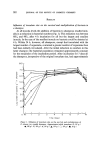
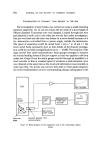
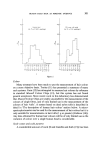
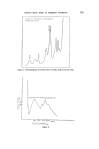
282 JOURNAL OF THE SOCIETY OF COSMETIC CHEMISTS RESULTS Influence of inoculum size on the survival and multiplication of bacteria in a shampoo At all inocula levels the addition of bacteria to shampoos resulted initi- ally in a reduction in bacterial numbers (Fig. 1). This reduction was between 80•o and 90•o after 4 h incubation for all but the largest and smallest inocula. In the case of the smallest inocula no bacteria could be detected at 4 h. Within 24 h, however, all shampoos, except that inoculated with the largest number of organisms, contained a greater number of organisms than had been initially introduced. After the initial reduction in numbers in this latter shampoo the bacterial population remained approximately constant for the remainder of the incubation period. After incubation for 7 days all the shampoos, irrespective of the original inoculum size, had approximately 8,0 o 7'0• I•ß-•• E 6-0 u• 5.0 ß .i o i 4.0 • 3'0 2.0 [ ß I-0 II I I I I I I I // I 0 4h I 2 3 4 $ 6 7 14 Time (doys) Figure 1. Influence of inoculum size on the survival and multiplication of E. cloacae in a model shampoo. Approximate initial inoculum: O, 10 7 g4. O, 106g 4. X, 105 g-X. A, 104 g-X. •., 10 a g-X. [], 102 g-X. I, 10 g-X.
Purchased for the exclusive use of nofirst nolast (unknown)
From: SCC Media Library & Resource Center (library.scconline.org)