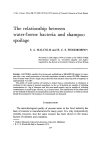
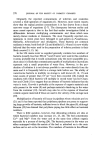
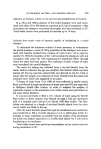
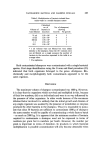
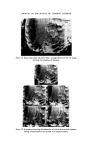
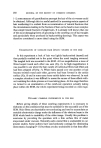
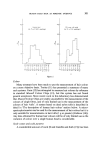
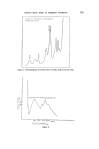
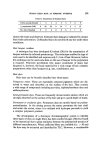
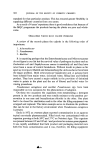
282 JOURNAL OF THE SOCIETY OF COSMETIC CHEMISTS RESULTS Influence of inoculum size on the survival and multiplication of bacteria in a shampoo At all inocula levels the addition of bacteria to shampoos resulted initi- ally in a reduction in bacterial numbers (Fig. 1). This reduction was between 80•o and 90•o after 4 h incubation for all but the largest and smallest inocula. In the case of the smallest inocula no bacteria could be detected at 4 h. Within 24 h, however, all shampoos, except that inoculated with the largest number of organisms, contained a greater number of organisms than had been initially introduced. After the initial reduction in numbers in this latter shampoo the bacterial population remained approximately constant for the remainder of the incubation period. After incubation for 7 days all the shampoos, irrespective of the original inoculum size, had approximately 8,0 o 7'0• I•ß-•• E 6-0 u• 5.0 ß .i o i 4.0 • 3'0 2.0 [ ß I-0 II I I I I I I I // I 0 4h I 2 3 4 $ 6 7 14 Time (doys) Figure 1. Influence of inoculum size on the survival and multiplication of E. cloacae in a model shampoo. Approximate initial inoculum: O, 10 7 g4. O, 106g 4. X, 105 g-X. A, 104 g-X. •., 10 a g-X. [], 102 g-X. I, 10 g-X.

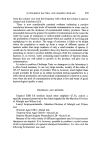
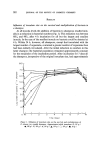
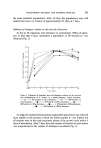
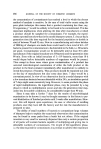
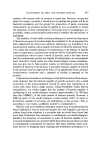
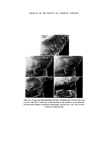
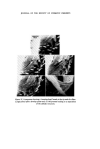
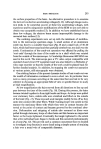
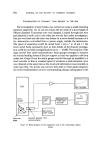
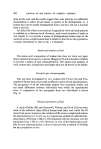
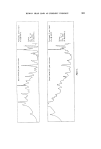
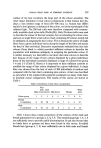
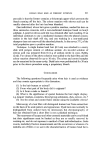
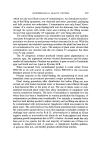
WATER-BORNE BACTERIA AND SHAMPOO SPOILAGE 283 the same bacterial populations. After 14 days the populations were still similar but lower, by a factor of approximately 10, than at 7 days. Influence of shampoo volume on the survival of bacteria As few as 50 organisms were necessary to contaminate 1000 g of sham- poo so that after 4 days' incubation a population of 106 bacteria g4 was obtained (Fig. 2). 8,0 - 7'0 5'0 4.0 3.0 •.o I'O -- 1 04h I 2 3 4 5 6 7 14 Time (doys) Figure 2. Influence of inoculum size and shampoo volume on the survival and multiplication of E. cloacae in a model shampoo. Initial inoculum: --.O = 50 bacteria in 10 g shampoo ---O .... 400 bacteria in 10 g shampoo • = 50 bacteria in 100 g shampoo ---• - 400 bacteria in 100 g shampoo ß = 50 bacteria in 1000 g shampoo ---I .... 400 bacteria in 1000 g shampoo. As might be expected the maximum supportable population was achieved most rapidly in the system in which the initial number g-• was highest but all systems were in the early stationary phase of the growth cycle within 4 days of inoculation. After 7 days the total number of bacteria in each system was proportional to the volume of shampoo inoculated (Fig. 3).
Purchased for the exclusive use of nofirst nolast (unknown)
From: SCC Media Library & Resource Center (library.scconline.org)