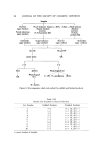
86 JOURNAL OF THE SOCIETY OF COSMETIC CHEMISTS 2. For a nficrobially free condition during the manufacturing processs, the following sterilizing systems were adopted: heating, disinfectant solution, and microporous filters. 3. To get a microbially free condition during the filling operation, full and proper use was made of the clean room, while establishing new control methods. 4. The assurance of a microbially free condition was obtained by the use of sampling and various test methods. Our purpose which was to produce an emulsion on a large scale in a micro- bially free state has been successfully attained. (Received July 12, 1973) I•EFERENCES (1) A. P. Dunnigan, Microbiological control of cosmetics, Drug Cosmet. Ind., 102, 43(1968). (2) S. Most and A. Katz, Cosmetic manufacturing sanitation, Arner. Perfttrn. Cosmet., 85, 67(1970). (3) C. W. Bruch, Cosmetics: sterility versus microbial control, Arner. Perfurn. Cosmet., 86, 45(1971). (4) C. Ishizeki, On the microbial contamination of cosmetics, ]. Japan Cosmet. Chern. Ass., 7, 1(1971). (5) C. R. Woodward, Jr., Some microbiological aspects of cosmetic manufacturing, Arner. Per[urn. Cosmet., 86, 45(1971). (6) J. G. Davis, Fundamentals of microbiology in relation to cleansing in the cosmetic in- dustry, Soap, Per[urn. Cosmet., 46, 37(1973). (7) E. P. Morrish, Shiseido's Evenese, A bio-safe, bio-clean cosmetic line, Drug Cosmet. Ind., 111, 46(1972).

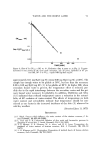
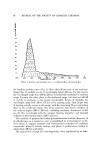
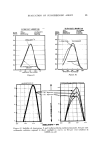
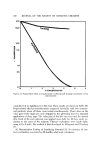
J. Soc. Cosmet. Chem., 27, 87-107 (1976) The Evaluation of a Sunscreening Agent for Safety and Activity LESTER I. CONRAD* Presen.ted August 1974, 8th IFSCC Congress, London, England Synopsis: In the light of current and proposed legislation on SAFETY and efficacy, each new COSMETIC RAW MATERIAL requires extensive testing before it is introduced to the market. The evolution and evaluation of a highly active alkoxylated PARA-AMINO- BENZOIC ACID (PABA) derivative is discussed in detail. Animal studies are employed to provide basic toxicity data. Clinical studies employ maximization techniques to expose possible hazards. Laboratory, clinical, and field tests are used to study efficacy. All of the above comprise a case study of the considerations involved in the introduction of a new chemical raw material to the cosmetic industry. INTRODUCTION In the light of current trends in the cosmetic industry, each new raw ma- terial requires extensive testing before its introduction to the cosmetic market. Raw materials, which are therapeutically active, must be tested as extensively as pharmaceuticals. The development of propoxylated ethyl p-aminoben- zoate? at Amerchol as a new highly functional sunscreen can be considered as a case study of the considerations involved in the introduction of a new chem- ical raw material to the cosmetic industry. Solar radiation has a broad band character extending in the ultraviolet (uv) range from 9,90 to 400 nm at sea level in midsummer. The intensity of sunlight in this range varies greatly with wavelength as does the sunburn effect and the tanning effect of the sun's radiation. Luckiesh (1) and Bener (2) investigated these factors and determined an erythemal flux for various wavelengths measured in E-vitons. This erythemal flux is obtained by multi- plying intensity in microwatts per square centimeter for the wavelengths by one-tenth of an erythemal effectiveness factor. The corresponding erythemaI flux in E-vitons can be indexed by stating each value as a per cent of the 308 nrn peak. The E-viton index is then plotted against the wavelength to produce *Amerchol, a unit of CPC International Inc., Edison, N.J. 08817. ?Amerscreen P, a registered trademark of Amerchol, a unit of CPC International Inc., Edison, N.J.U.S. Patent 3,880,992. 87
Purchased for the exclusive use of nofirst nolast (unknown)
From: SCC Media Library & Resource Center (library.scconline.org)