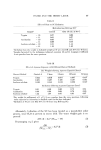
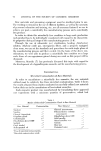
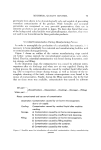
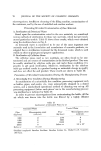
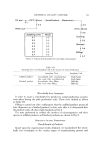
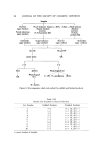
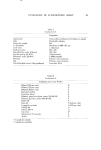
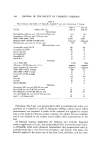
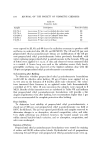
102 JOURNAL OF THE SOCIETY OF COSMETIC CHEMISTS Table V The Irritancy and Safety of Topically Applied 5 per cent Amerscreen 1 • Lotion DATE Subject # 1, LL. Hematology Hemoglobin-GM per cent 11.5-18.0 GM per cent Hematocrit-VOL per cent 34-52 per cent WBC/MM a 4,000-11,850 Platelets / MM a 150,000-475,000 / M M '• Reticulocytes-per cent 0.4-1.2 per cent Differential (per cent) Neutrophils (polys) 25-70 Lymphoeytes 21-56 Monoeytes 2-8 Eosinophils 0-7 B asophils 0-2 Bands 0-11 Urina]ysis S.C. 1.003-1.035 Albumin 30 MG per cent ( 1+) Sugar Negative (0.1 per cent) WBC/HPF 6 / HPF average RBC/HPF 3/HPF average Casts LPF 4/I, PF average Epith Bacteria Crystals Mucus Threads Chemistry Chosesterol MG per cent 260 MG per cent Bun MGM per cent 7-20 MG per cent Fbs MGM l•er cent 60-100 MG per cent Uric acid MGM per cent 3.0-7.0 MG per cent Sgot U 40 Sigma units Day 0 Day 9.9. 8-6-73 8-9.8-73 14.3 13.3 42 40 4,719 4,O49 Adequate Adequate 0.5 0.6 153 66 45 34 0 0 2 0 0 0 0 0 1.024 1.020 negative negative negative negative 4-8 2-3 0 0 0 0 few fexv 0 0 0 0 0 0 10 12 80 82 32 35 Pretesting-The 5 per cent propoxylated ethyl p-aminobenzoate lotion was pretested on 5 subjects in order to determine whether sodium lauryl su]fate pretreatment was required. A patch of the material was applied to normal sites on the backs for 48 hours under occlusion. No subject had any irritation and it was decided to use sodium ]aury] su]fate (SLS) pretreatment in the test. (5) Subtotal Topical Application, for Irritancy and Toxicity: Repeated massive application of 5 per cent propoxylated ethyl p-aminobenzoate lotion on 20 healthy adult male volunteers substantiates that propoxy]ated ethyl p- aminobenzoate has a very low level of irritancy and toxicity. The lotion was liberally applied to the entire area of the chest, back, shoulders, and face once

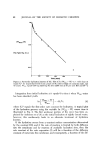
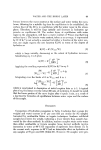
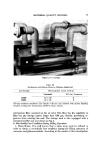
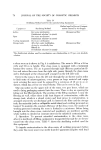
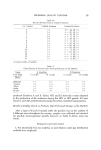
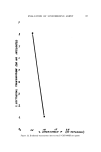
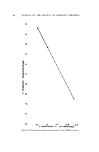
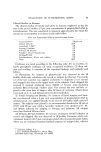
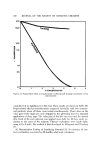
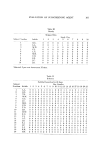
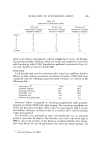
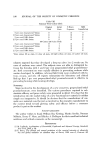
EVALUATION OF SUNSCREENING AGENT 1_03 daily for oe1 days. Clinical exanfinations were made daily. Results are shown in Table IV. Extensive blood and urine chemical and microscopic studies were done before and after the experiment. All laboratory tests were normal before and ,after gl days. Results are shown in Table V for a typical patient. Propoxylated ethyl p-aminobenzoate emerged from phases 1 and 9. as a sun- screen candidate, which absorbs in the correct uv region and is safe to use. The final and all-important step of this investigation is devoted to perfor- mance testing and stability. Phase 3--Performance and Stabilittj MED The respouse of normal human skin to sunlight is a function of the total E- viton units reaching the skin and the length of exposure to the sun's rays. Ap- proximately 9,0 rain exposure during the midday period of 10:00 am to 9,:00 pm in midsummer is requircd to produce minimum perceptible erythema at 40 ø latitude. This amount of radiation is called one MED. Suntan lotions are used to permit longer exposure to the sun's rays. A sunscreen rating of 10 MED means that the first perceptible erythema is not observed until exposure to 10 times the radiation, which wonld produce mild erythema on untreated skin. In more practical terms, a 10 MED rating will protect against mild erythema for 3 hours and 9,0 min. Many factors are involved in the actual effectiveness of a sunscreen. Riegel- man and Penna (9) have shown that the effectiveness of a sunscreen is great- ly influenced by the nature of the solvent in which it has been dissolved. Other factors such as film thickness absorption into the skin, and substantivity after bathing lead to the conclusion that only actual testing on human skin can be used to determine performance of a sunscreen. The first step in determining actual performance on human skin involved the development of prototype formulations. Lotions, creams, oils, lip balms, and lipsticks have been prepared. Since this paper is aimed only at discussing the efficacy and safety considerations involved in the introduction of a new therapeutically active chemical raw material to the cosmetic industry, it suf- fices to say here that a complete range of formulations can be conveniently made. Protective Index (PI) The PI (10) is a numerical rating for sunscreen effectiveness. It is the ratio of radiation required to produce mild erythema on treated versus untreated skin. PI's were determined for various propoxylated ethyl p-aminobenzoate formulations and are presented in Table VI. These values of 90 to 70 MED are far in excess of the protection required. Concentration Effect Under controlled laboratory conditions 6 healthy adult male volunteers
Purchased for the exclusive use of nofirst nolast (unknown)
From: SCC Media Library & Resource Center (library.scconline.org)