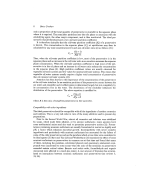
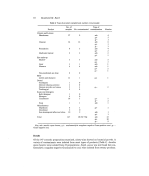
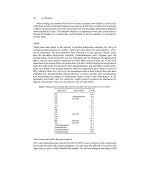
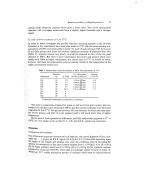
18 Rosamund M. Baird Table I. Type of products sampled and number contaminated No. of Type of Product samples No. contaminated contamination Number Creams and Lotions Handcream 27 9 Cleanser 24 12 Foundation 8 5 Medicated topical 8 2 Eye make-up Shadow 5 5 Liner 3 1 Mascara 6 4 Non-medicated eye drop 8 0 Baby Lotion and shampoo 12 1 Dental Toothpaste 1 0 Denture cleaning solution 2 0 Denture powder and cream 2 2 Teething gel 2 0 Soaps and detergents Bath detergent 1 0 Shampoo 9 0 Conditioner 10 3 Soap 1 1 Miscellaneous Depilatory 6 1 Deodorant 2 0 Sun-tanning and after-sun lotion 10 2 Total 147 48 (32-7 asb 4 g+ 5 g-- 1 asb 6 g+ 3 g- 3 asb 4 g+ 2 asb 2 g+ 1 asb 3 g+ 3 asb 1 asb 1 g+ 2 g-- 1 g+ 1 g- 2 g+ 1 g- 2 asb 1 g+ 1 asb 1 g+ 1 asb 23 g+ 20 g-- 9 Key, asb: aerobic spore bearer g+: non-haemolytic coagulase negative Gram-positive cocci g--: Gram-negative rod. Results Of the 147 cosmetic preparations examined, ninety-nine showed no bacterial growth. A variety of contaminants were isolated from most types of products (Table I). Aerobic spore bearers were isolated from 23 preparations Staoeh. aureus was not found but non- haemolytic coagulase negative Gram-positive cocci were isolated from twenty products.

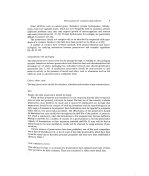
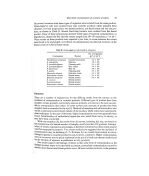
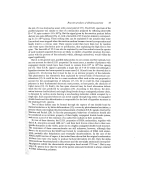
Microbial contamination of cosmetic products 19 On several occasions both these types of organism were isolated from the same product. Gram-negative rods were isolated from nine cosmetic products which included three cleansers, two hair preparations, two dental products, one hand-cream and one eye pro- duct, as shown in Table II. Several free-living bacteria were isolated from the dental powder. None of these preparations showed visible signs of bacterial contamination or degradation, despite the fact that the counts ranged from 10a-10 ø organisms g-• or ml -•. When counts on these products were repeated a year later, in seven instances the counts were found to be unchanged no evidence of contamination was detected, however, in the dental cream or in the moisture cream. Table II. Gram-negative rods found in cosmetics No. of organisms Contaminant Product (g-• or ml -•) t'seudomonas aeruginosa Lanolin hand-cream 1-2 X 10 a t'. maltophilia Mascara 7.0 X 10 5 P. pseudoalcaligenes Cleansing milk 3.1 X 10 4 P. pseudoalcaligenes Hair cream 1.9 x 10 4 t'..fluorescens Hair oil 4.0 x 10 • t'. putida Cleansing jelly 2.5 X 10 • Moraxella osloensis Moisture cream 1.3 x 10 a Enterobacter cloacae Dental cream 2.3 x 10 5 Klebsiella nerogenes Dental powder 3-4 X 10 6 K. oxytoca Dental powder Erwinia herbicola Dental powder Enterobacter cloacae Dental powder Discussion There are a numb'er of explanations for the differing results from the surveys on the :':• incidence of contamination in cosmetic products. Different types of product have been sampled certain products, particularly aqueous products, are known to be more suscept- ible to contamination than others. In some surveys only one type of product has been sampled, such as cosmetics for the eye (5). Methods of sampling and cultivation have also / varied some have involved direct culture of the product, whilst others have used enrich- ment techniques. In the case of the latter, higher contamination rates have generally been '? found. Neutralization of antibacterial agents has also varied from survey to survey, or '.may have been overlooked. :'.. •' With one exception (8), the results from all surveys, including this one, are based on the examination of a limited number of samples, mostly less than 250 products. Interpre- i/:• tation of results, expressed as percentages, is therefore restricted, but these results may be .:Used for comparative purposes. Two recent studies have suggested that the incidence of :contamination may be declining (2, 7). Evidence for an overall improvement in micro- ' biological quality in cosmetic products is not, however, conclusive. Higher contamination ß 'rates in our survey may be partly explained by the use of a broth enrichment method and - by the selection of aqueous, in preference to oily, products. •: Our results support the findings of others in that some form of contamination in the '::i: finished product seems to be inevitable at present, particularly contamination caused by aerobic spore bearers and Gram-positive cocci. Of more concern, however, is the presence
Purchased for the exclusive use of nofirst nolast (unknown)
From: SCC Media Library & Resource Center (library.scconline.org)