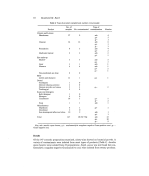
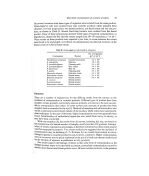
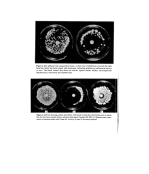
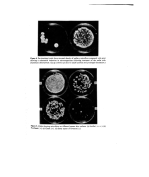
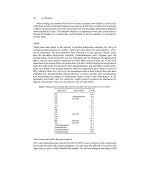
20 Rosamund M. Baird of Gram-negative bacteria and especially Pseudomonas spp. In this study Gram-negative bacteria were isolated from 6.1• of cosmetics and Pseudomonas spp. from 4.1• of cosmetics. This interest in the cosmetic field has been stimulated by the increasing number of reports on the occurrence of these types of organisms in pharmaceutical products. Recently, attention has been drawn to the problem of contamination by some of the less generally considered pathogens. Use of such contaminated preparations in hospitals has in some cases been associated with the development of clinical infections in patients. Certain cosmetics, such as hand-cream and lotions, are frequently used in hospitals to prevent chapping of hands and in the control of cross-infection. Studies at this hospital have shown that these products may be an important source of contamination and that continued use of such products can contribute to the spread of nosocomial infections in the ward (11, 12). Although much of the evidence for the occurrence and significance of contamination in cosmetics and toiletties is conflicting and inconclusive, it would be wrong to assume that the hazard does not exist. More information is required on the incidence of contami- nation in both used and unused cosmetics, using standardized methods of sampling and cultivation. This is a fruitful area for collaboration between the microbiologist and pharmacist in industry and their counterparts in hospital. Acknowledgments I wish to thank Professor R. A. Shooter for interest and encouragement during this work, Mr Z. Awad for technical assistance, and Dr S. P. Lapage and his staff in the Computer Laboratory, Central Public Health Laboratory for confirming the identity of some of the isolates, The work was supported by the Department of Health and Social Security. References 1 Wolven, A. and Levenstein, I. Cosmetics---contaminated or not. T.G.A. Cosmetic J. 1 34 (1969). 2 Wolven, A. and Levenstein, I. Microbiological examination of cosmetics. Am. Cosmet. l•erfum. 87 63 (1972). 3 Heiss, F. Keimgehalt yon Korperpflegemittela. Fette Seifen Anstrichmitte169 365 (1967). 4 Dunnigan, A. P. and Evans, J. R. Report of a special survey: microbiological contamination of topical drugs and cosmetics. T.G.A. Cosmetic J. 2 39 (1970). 5. Wilson, L. A., Keuhne, J. W., Hall, W. and Ahearn, D. G. Microbial contamination in ocular cosmetics. Am. J. Ophthal. 71 1298 (1971). 6 Myers, G. E. and Pasutto, F. M. Microbial contamination of cosmetics and toiletries. Canad. J. Pharm. Sci. 8 19 (1973). 7 Jarvis, B., Reynolds, A. J., Rhodes, A. C. and Armstrong, M. A survey of microbiological contami- nation in cosmetics and toiletties in the U.K. (1971). J. Soc. Cosmet. Chem. 25 563 (1974). 8 The 1974 Scientific Conference Committee Reports. CTFA. Cosmetic J. 7 3 (1975). 9 Tremewan, H. C. Tetanus neonatorum in New Zealand. N.Z. Med. J. 45 312 (1946). 10 Morse, L. J., Williams, H. L., Green, F. P., Eldridge, E. E. and Rotta, J. R. Septicaemia due to Klebsiella pneumoniae originating from a handcream dispenser. New Eng. J. Med. 277 472 (1967). 11 Cooke, E. M., Shooter, R. A., O'Farrell, S. M. and Martin, D. R. Faecal carriage of Pseudomonas aeruginosa by new-born babies. Lancet, ii 1045 (1970). 12 Baird, R. M. A study of the microbial contamination of pharmaceutical products and their possible role in dissemination of infection throughout hospitals. Ph.D. thesis, University of London (1975).

J. Soc. Cosmet. Chem. 28 21-24 (1977) ¸ 1977 Society of Cosmetic Chemists of Great Britain Microbiological applications of a novel replipad skin sampler H. DIXON and A. K. PAN EZAI'• Beecham _Products Research Department, Randalls Road, Leatherhead, Surrey KT22 7RX Synopsis A bacteriological skin sampler which can be used to obtain microbial prints of the axilla is described. Various applications include in vitro and in vivo evaluation of the antimicrobial properties of deodorant and other products using the subject's skin microflora. Introduction The human axillary microflora is of special interest to the cosmetic microbiologist when testing deodorant products, since bacteria have been reported to have association with body odour (1, 2). Various methods have been used for sampling the skin microflora which include contact plate, agar sausage, sticky tape stripping, swabbing, scrub tech- niques and skin biopsy, but because of the peculiar shape of the axillary vault recoveries may be unreliable and few of these methods are suitable in practice. The velvet pad method originates from the well-known replica-plating technique (3) which employs a sterile velvet pad to print bacteria from the master plate onto culture plates containing special media. This method has been extended by other workers and "i'! used for studying the bacterial flora of infected wounds and burns (4), for evaluating the ß 1111'i .relative efficiencies of common skin antiseptics (5), and as a means of making colony : . ':::?::i: counts of pathogenic and commensal flora on the body surface (6). ,: srxN S^m'LER (WLVnT REPL•V^D) "::'i!•.11 The skin sampling device suggested by the authors was developed by *Strands Scientific :•i specially to fit the axillary vault. Bacteria colonizing the skin surface are transferred by •. •:: means of a sterile, moistened velvet pad to a suitable recovery medium. A sufficient :::!':i: number of organisms attach themselves to the velvet pad to enable culture plates to be •::7(.!' successively inoculated. The sampling tool consists essentially of an anodised tapered :::i:11: holder and clamping ring which together hold the circular velvet pad (Fig. 1). When ?:?. assembled, the sampler is enclosed in an autoclavable bag and sterilized in an autoclave ?./• i:.. at 121oc for 15 min. ::.::•.i!i:': Tø obtain a microbial print, the sterile velvet pad is moistened and rendered slightly •!•:.::! sticky, by bringing it into contact with the moist surface of an agar plate (the recovery ? 'i-., Strands Scientific, Scientific House, 32 Bridge Street, Sandiacre, Nottingham NG10 5BA. •'i:•! I::':' • Present address: Bacteriology Dept., Building 320, The Wellcome Foundation, Temple Hill, '!'•:: Dartford, Kent, where requesls for reprints should be sent. 21
Purchased for the exclusive use of nofirst nolast (unknown)
From: SCC Media Library & Resource Center (library.scconline.org)