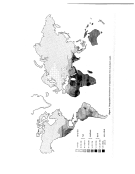
J. Soc, Cosmet. Che•n. 28. 329-342 (1977) • 1977 Society of Cosmetic Chemixts of Great oeritaht Human pigmentation: its geographical and racial distribution and biological significance D. F. ROBERTS Department of Human Genetics, University of Newcastle upon Tyne, Newcastle upon Tyne. _Presented at the symposium on 'Cosmetic and _Pharmacological Aspects of Skin Colour' 9 November 1976 at Stratford-upon-Avon 'Synopsis Skin pigmentation shows a regularity in its geographical distribution. There appears a strong clinal com- ponent to the variation in each of the four quadrants of longitude, apparently independent of a strong continental component. Quantitative studies, based on reflectance spectrophotometry, have resulted in a better understanding of the genetics and biological significance of skin colour variation. The genetic com- ponent of normal pigmentation variation within a population is polygenic. Heritability estimates derived from a Sikh sample centre around 60-80 •o. The genetic basis of differences between populations appears to reside in some four gene pairs for the difference between Europeans and Africans, and two gene pairs for the difference between Indians and Europeans. Quantitation of the geographical distribution shows a remarkably close relationship of mean pigmen- tation with environmental variables, and in particular with latitude, the biological significance of which appears to reside in protection against ultraviolet radiation. It appears that skin colour is also involved in thermoregulation. New hypotheses envisage a role of pigmentation in, among others, disease protection and intracellular metabolism. Introduction Of all biological variation in man, skin pigmentation differences are the most con- spicuous and, after sex, the most emotive. Recognized from early prehistoric times, anecdotes on the origin of variation in skin pigmentation occur in the mythology and folklore of the ancient civilizations. Thus the Babylonians, the dark people, are thought of as the descendants of Ham, the 'curse of darkness' being the consequence of Ham's disobedience to Noah (Genesis 9:29). In Greek mythology differences in skin colour originated from the catastrophe that occurred when Phaeton took the reins of the sun chariot from his father Helios, but was unable to steer accurately so that at some places the sun passed too close to the earth burning the inhabitants black, while at others it rose too high resulting in the inhabitants turning pale. Early attempts to classify races were based on skin colour, following Blumenbach who in 1775 distinguished five races, yellow (Mongolian), brown (Malaysinn), red (American), black (Ethiopian), and white (Caucasian), and such attempts continued right through the nineteenth century and into the twentieth century until the dynamic nature of the race process and the fruitlessness of classification for classification's sake was realized. In the earliest days, therefore, pigmentation was identified with continental group or race of man. But the awareness of colour differences that had become widespread among 329

r• ',4 : .,.4.
Purchased for the exclusive use of nofirst nolast (unknown)
From: SCC Media Library & Resource Center (library.scconline.org)