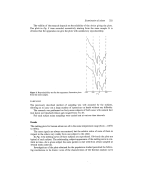
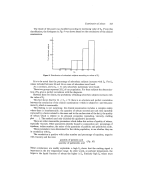
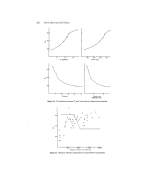
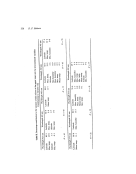
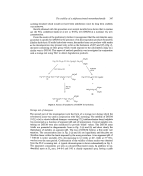
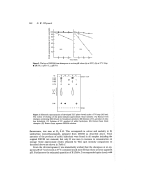
The stability of a sulphosuccinated monoethanolamide 349 Table I. Estimates of breakdown of DSUM from visual spot com- parisons on TLC plates. Loss of DSUM (•o of initial) by formation of II Period of storage at 37 ø ,oH of sham,ooo 8 weeks 12 weeks 5'0 25 25 6'0 25 25 7.0 ,•-, 50 50 the loss of ester function as determined by colorimetry (Fig. 2(b)). These two observations are consistent with a hydrolysis reaction producing II and free sulphosuccinate, III, as shown in Fig. 1. At lower pH values this reaction does not occur and no other degrada- tion products were observed to be produced. It is interesting to note that the product of acidic hydrolysis, IV, was resolved into two separate components by TLC. No further work was done to identify the two components, but the hydrolysis product isolated could well have been a mixture of homologues. Conclusions The colorimetric assay procedure was shown to offer adequate specificity for use in stability studies of DSUM. The results of the storage test show that DSUM is sufficiently stable in the pH range 5 to 6.5 in shampoo formulations for commercial exploitation, but that at pH 7 and above significant loss occurs by hydrolysis with the formation of undecylenic monoethanolamide. The pH of such formulations should be carefully con- trolled to miniraise the loss of DSUM. Loss of DSUM by formation of undecylenic monoalkanolamides may not however be entirely undesirable since these compounds are reported to have antimicrobial activity (5). References 1 British Patent 1 018 302. 2 Bergmann, F. Colorimetric determination of amides as hydroxamic acids. Anal. Chem. 24 1367 (1952). 3 Goddu, R. F., LeBlanc, N. F. and Wright, C. M. Spectrophotometric determination of esters and anhydrides by hydroxamic acid reaction. Anal. Chem. 27 1251 (1955). 4 Critchfield, F. E., Organic Functional Group Analysis, 148 (1968). Pergamon Press Ltd., London. 5 Hoffmann, H. Fungicide alkylamides, Siefen-Ole-Fette-FVachse, 87 397 (1961) Chem. Abstr. 55 27779 f (1961).

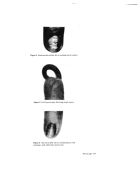
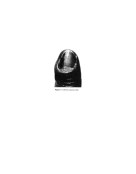
J. Soc. Cosmet. Chem. 28 351-356 (1977) ¸ 1977 Society of Cosmetic Chemists of Great Britain Nail disorders caused by external influences PETER D. SAMMAN DermatologicaI Department, Westminster Hospital and St John's Hospital for Diseases of the Skin, London Presented before the Society of Cosmetic Chemists of Great oeritain on 6 November 1975 Synopsis Damage to nails caused by physical or chemical trauma is outlined. A surprising number of cases axe due to the patients themselves either by biting, fiddling with the nails, attempting to remove non-existent paxasites and occasionally deliberately to obtain sympathy. Nail cosmetics are generally very well tolerated but deformities occur at times and are described. The wearing of footwear can also cause trouble. Chemical damage is rather uncommon but frequent contact with water or soap and water is res- ponsible for much damage to nails. Introduction Many of the commoner nail disorders are due to intrinsic factors and this is especially true of psoriasis, eczema or dermatitis and impaired peripheral circulation. There are, however, many others which are due to trauma in its widest sense and the cause is easily overlooked if not suspected by patient or doctor. Fungal infections are due to invasion from without but are usually part of a more widespread infection and will not be dis- cussed. Chronic paronychia, one of the commonest skin conditions of housewives will be described because it is believed that frequent contact with soap and water is the principal aetiological factor in this disorder. This paper concentrates on the more subtle forms of trauma such as nail biting, fiddl- ing with the nails, damage due to cosmetics and foot wear, accidental contamination with certain chemicals and the effects of soap and water on the nails and surrounding tissues Direct injury such as trapping of a finger in a car door can cause many forms of damage, temporary or permanent, to the nail but the cause is well known and therefore will not be discussed. NAIL BITING This is an extremely common habit and more than one member of a family often indulges in it. Generally the biting is at the tip of the nail resulting in a short ragged nail nibbled right back to the eponychium. Small spicules may be left which form into hang nails and occasionally secondary sepsis develops. One or more often many or all nails are bitten and occasionally one nail is spared for scratching! A common complication is the forma- tion of periungual warts which may affect several fingers. A very similar appearance can be produced by paring down the nails with a razor blade. Many such cases were observed during a short visit to Nigeria some years ago. 351
Purchased for the exclusive use of nofirst nolast (unknown)
From: SCC Media Library & Resource Center (library.scconline.org)