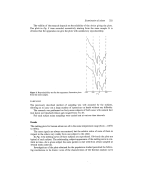
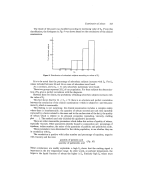
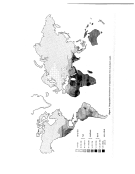
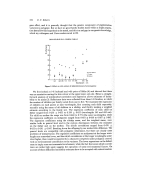
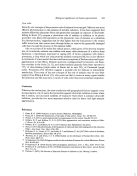
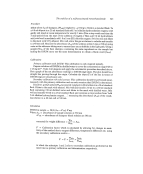
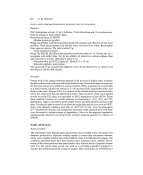
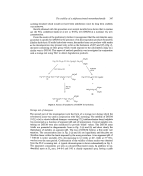
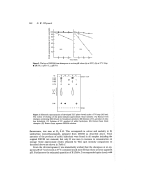
Biological significance of human pigmentation 331 laymen and investigators alike led to the accumulation of descriptive observations of skin colour. These were of necessity highly subjective, but they were the foundations for the more systematic approach to colour measurement of later years. The earliest though crude approach to actual measurement of pigmentation was by arbitrary categorization of the whole range of colour into a number of shades, and subsequently colour scales were developed, such as those devised by Broca and yon Luschan, respectively of paper and coloured porcelain tiles, comparison with which improved the accuracy of description. These continued to be developed until the postwar period, the latest being that of Gates (1). With all their disadvantages, nonetheless they provided the basis for a somewhat more objective comparison of human skin colours. As a result it was possible to draw outline maps of the geographical distribution of pigmentation (yon Luschan's scale) such as in Fig. 1. The general regularity of geo- graphical distribution of pigmentation is clear even from these early studies. First there is a strong continental component to the variation, e.g. Europe is distinguished from Asia. Secondly there is a strong clinal component. There is no doubt about the tendency for darker skins to occur in tropical regions, and lighter in temperate, and this holds in all four quadrants of longitude even in the Americas the generalization holds though the intensity of the gradient is rather less than in the Old World. But then on closer inspec- tion there are further generalizations that appear to emerge. In Africa deepest pigmenta- tion occurs not at the lowest latitudes, but appears to coincide with the great horseshoe of open savanah grasslands, while in north-west Europe pigmentation reaches a particu- larly low level for its latitude. Fleure's (2) discussion drew attention to obvious exceptions to the pigmentation gradient, but his attempts to explain them, in the absence of agreement on the selective function of pigmentation, essentially remain mere specula- tion. In 1951, Weiner (3) described a portable reflectance spectrophotometer (EEL), suit- able for field work. This made it possible to obtain, outside the confines of a laboratory, objective and accurate measures of skin colour on human populations in their native environments in the form of reflectance measures at standard wavelengths. For the first time it was possible to quantitate pigmentation. Thus it was possible to obtain informa- tion from family studies in order to investigate the inheritance of skin pigmentation, from experimental studies to investigate its physiology. The way was open to examine a variety of problems of its biology. GENETICS Though there is some phenotypic variation in skin colour due for example to suntanning or some disease states, there is no doubt of the fundamental genetic basis of skin colour differences, both between and within races. Take a negro child born in Africa and bring him up in Britain, or a white child born in London and raise him in Africa, and they remain respectively dark and light. There are some individual major genes, which segre- gate in Mendelian fashion, which affect skin colour, for example a child with phenylke- tonuria will show appreciably lightened pigmentation, as is dramatically illustrated in a Yemeni family (Fig. 2) phenylketonuria is a recessive condition, the child possessing two deleterious genes, one from his father and one from his mother, which cause deficiency of phenylalanine hydroxylase and inhibit the metabolism of phenylalanine, affecting all subsequent steps in the metabolic sequence. Such major genes are few, there is no indica- tion in normal families of skin colour segregation such as would be explained by a major

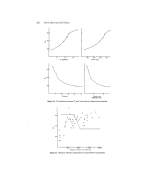
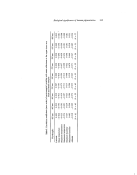
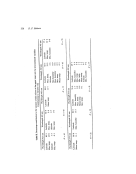
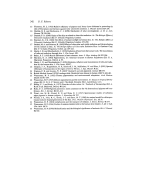
332 D. F. Roberts gene effect, and it is generally thought that the genetic component of pigmentation variation is polygenic. But we have no good family studies made within a single popula- tion that allow this hypothesis to be tested, and this is a sad gap in our genetic knowledge, which my colleagues and I have endeavoured to fill. .., SKIN COLOUR IN A YEMENI FAMILY • 8o •_ 70 Bo 5o 4o o 0 ß O a, Ch,ld (PKU) • ß O • O Father ß O ß Mother ß il I I I I I I I I I 425 465 485 5•5 545 575 595 655 685 Wavelength -- nm Figure 2. Effect on skin colour of phenylketonuria homozygosity. We first looked at 141 husband and wife pairs of Sikhs (4) and showed that was no assortative mating for skin colour at the upper inner arm site. Hence a straight- forward analysis of intrafamilial correlation and regression allows estimates of bility to be made (5). Reflectance data were collected from these 141 families, in which:? the number of children per family varied from one to five. We examined the regression"':.•'•: • of children on each parent at nine wavelengths, first counting each child separately,:?:: secondly using the mean of all children in a sibship, and thirdly making a weighted estimate according to the family size. The regression coefficient of each child father ranged from 0-256 q- 0-053 to 0.399 q- 0.053 (wavelengths 545 and 685 nm). For child on mother the range was from 0-440 to 0-571 (the same wavelengths), while the regression coefficient on midparent ranged from 0.618 4- 0.068 to 0.807 4- 0.062. The regression coefficients usi.ng the sibship mean, and the weighted mean, were similar both in general level and in the curious discrepancy between the estimates on the father and on the mother. The sib/sib correlations ranged from 0.476 0.055 to 0.591 4- 0.047. Breaking down the offspring by sex makes little difference. ,.,
The.i.:? general levels are compatible with polygenic inheritance, but there are clearly some 71 problems of interpretation. The regression coefficients on midparent at the longer wave- lengths are somewhat lower, and the sib/sib correlations at the longer wavelengths some what higher, than would be expected for a character competely under polygenic control, with no environmental contribution to the variance. The lower regressions on the fathers seem to imply some environmental involvement, while the fact that some sib/sib correla- tions are rather high again suggests the operation of some environmental factors. On account of these difficulties heritability estimates have to be accepted with critical caution.
Purchased for the exclusive use of nofirst nolast (unknown)
From: SCC Media Library & Resource Center (library.scconline.org)