The stability of a sulphosuccinated monoethanolamide 345 Procedure Dilute about 5 g of shampoo, (W•ag,) weighed to 4- 0.02 g to 50 ml in a standard flask. To a 4.0 ml aliquot in a 25 ml standard flask add 5 ml alkaline hydroxylamine reagent, swirl gently and stand at room temperature for exactly 5 min. (Use a stop watch and time the 5 min-period from the start of the addition of reagent.) Then add 5.0 ml hydrochloric acid, swirl and immediately add 1-0 ml iron (III) chloride reagent. Swirl to mix and dilute to the mark with 95•o ethanol. Mix well, allow the gas evolution to subside and transfer to a 40 mm cell. Measure the absorbance (Asa) of the solution within 3 min at 530 nm using water as the reference taking care to ensure there are no bubbles in the light path. Using a sample (Wuk of the base shampoo containing the same ingredients as the sample but lacking the DSUM carry out the same determination to obtain a blank result (Ablk). Calibrations Primary calibration with DSUM. This calibration is only required initially. Prepare solutions of DSUM in distilled water to cover the concentration range 0.25 to 1.25 mg ml-L Take 4 ml aliquots and apply the colorimetric procedure described above. Plot a graph of the net absorbance readings vs DSUM (mg) taken. The plot should be a straight line passing through the origin. Calculate the slope (F) of the line in terms of DSUM (mg) per absorbance unit. Secondary calibration with ethyl acetate. This calibration should be performed simul- taneously with the primary calibration and on each occasion that DSUM is determined. Dissolve 1 g ethyl acetate (Wstd) accurately weighed, in 20 ml ethanol in a 50 ml standard flask. Dilute to the mark with ethanol. Mix well and transfer 2-0 ml to a 250 ml standard flask containing 150 ml distilled water and dilute to the mark with distilled water. Mix well and transfer 4.0 ml to a 25 ml standard flask and continue as in procedure from 'Add 5 ml alkaline hydroxylamine reagent...' measuring the absorbance (mstd) of the result- ing solution in a 40 mm cell at 530 nm. Calculation DSUM in sample = 50/4 (As•-A%•k) F'mg Where Asa -- absorbance of sample solution at 530 nm A*uk = absorbance of shampoo blank solution at 530 nm corrected for weight difference - Wb lk -- • ( Ablk F' = Calibration factor which is calculated by allowing for changes in sensi- tivity of the method due to reagent differences, temperature differences etc. using the secondary calibration results :-- Wstdl Astd2 F' = F x A'•-td• x Wstd• in which the subscripts 1 and 2 refer to secondary calibrations performed at the same time as primary calibration and determination respectively.

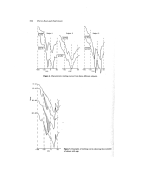
346 D. W. Whymark THIN LAYER CHROMATOGRAPHIC EXAMINATION OF SHAMPOO _Reagents TLC development solvent: 15 ml 1,4-dioxan, 75 ml chloroform and 15 ml carbon tetra- chloride. Prepare a fresh mixture daily. Hydrolysis products of DSUM Alkaline hydrolysis product Weigh 10 g DSUM. Add 100ml m sodium hydroxide solution and reflux for 30 min. Cool and filter. Wash the precipitate with distilled water until free from alkali. Recrystallize from aqueous acetone. The yield is about 3 g. Acidic hydrolysis product Weigh 10 g DSUM, add 100 ml 3M hydrochloric acid and reflux for 1 h. Extract the oil or precipitate with diethyl ether. Dry by the addition of anhydrous sodium sulphate, filter and evaporate to dryness. The yield is about 2.5 g. Precoated silica gel 60 TLC plates (E. Merck) 10 x 20 cm. Ethanolic sulphuric acid solution Add cautiously 10 ml concentrated sulphuric acid to 80 ml ethanol (74 o.p. spirit). Cool and dilute to 100 ml with ethanol. Procedure Extract 4-0 g of the sample with three separate 10 ml portions of diethyl ether. Combine the ether extracts and wash once with 20 ml distilled water. Discard the aqueous wash and dry the ether extract over anhydrous sodium sulphate. Filter, evaporate on a water bath to a small volume, transfer the residue to a 5 ml standard flask using diethyl ether, and dilute to the mark. Prepare 0'4•o w/v solution of the alkaline hydrolysis product and a 0.33• w/v solution of the acid hydrolysis product. These solutions, when 5 p.1 is spotted directly on to the TLC plate, are equivalent to 100•o degradation of the DSUM. Dilute these standard solutions to provide solutions corresponding to 25•o, 50•o and 75• degradation. Apply 5 p.1 portions of the sample extract and these diluted solutions to the plate. Develop the plate to about 15 cm above the origin line, and dry in an oven at 100øC. Spray with ethanolic sulphuric acid. Dry at 140øC for 15 min. View the plate under U.V. illumination (365nm), and compare the intensities of the standard spots with those from the sample to estimate extent of degradation. Allow for the apparent degradation simultaneously detected in an extract from a freshly prepared aqueous 1• solution of DSUM. Results and discussion Assay procedure The colorimetric assay depends upon measurement of an unstable colour. All assays were therefore performed in duplicate working rapidly to ensure that absorbance measure- ments were complete within 3 min of the addition of the iron (III) chloride reagent. The conditions described above have been found to give optimum colour stability. The in- tensity of the colour produced has been found to vary with the batch of prepared reagent used. For this reason ethyl acetate was used as a convenient standard substance to monitor the sensitivity given by a batch of reagent. This avoided the use of DSUM as a
Purchased for the exclusive use of nofirst nolast (unknown)
From: SCC Media Library & Resource Center (library.scconline.org)