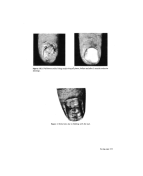
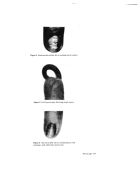
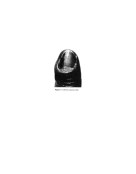
352 Peter D. Samman Quite a different picture results if biting takes place further back on the nail. Biting may be mainly on the cuticle which becomes ragged and broken and a low grade parony- chia is more common. Occasionally biting will actually injure the matrix resulting in a deformed nail easily mistaken for a fungal infection. This type of deformity occurs es- pecially in young children watching an exciting or frightening television programme, and may be confined to one finger. Recently a young boy was seen who managed to destroy all his finger nails by con- stant biting so that very little nail remained on any finger. As the patient also had psoriasis it was very easy to attribute the nail damage to psoriasis but the patient freely admitted to the habit. Another young lady admitted to being a nail biter but said one of her nails would not grow. On close questioning she admitted to having done more damage than usual 1 year previously whilst biting and subsequently she picked away tiny portions of nail as they formed. On examination there was almost no nail present but there seemed no reason why it should not grow normally. Fixed dressing was applied which was changed weekly and at the end of 3 months she had a normal nail (Fig. ! and 2). FIDDLING WITH THE NAILS There are a number of other ways in which nails can be damaged by the patient himself. The first is a habit of fiddling with the nails. The patient picks at the cuticle subcon- sciously usually of the thumb nail with one of his other fingers on the same hand. This produces a rather characteristic deformity of a depression down the centre of the nail and ridges extending from it towards the edges of the nail. (Fig. 3). The patient freely admits to the habit but does not realize that it is the cause of the defect. PARASITTOPHOBIA This very distressing symptom may be confined to the nails and finger tips. The patient is convinced she is infested and this fear may be heightened by being told she has a fungal infection of the nails. The patient is constantly picking pieces off the nails and surround- ing tissues and may bring a collection of them with her in a piece of tissue paper. It is almost impossible to convince these patients that they are not infested. NAIL ARTEFACTS Deliberate trauma in the form of an artefact is even less common. One child punctured the half moon area of her thumb nail and succeeded in producing infection which pro- gressed to granulation tissue projecting through the hole in the nail. The bandaging which was needed to protect the thumb saved her from taking an exam which she feared she might fail. Another patient admitted deliberately inserting a nail file under her cuticles to produce subacute paronychia. She considered she was being imposed on by her daughter and. son-in-law who had taken up residence in her house and expected her to do all the housework. Again the dressings which were required to cover the defects saved her from the housework. She even traumatized some of her toes. This rather gave the game away as chronic paronychia virtually never affects the toes. These patients may get much satisfaction from failures in treatment.

Figures 1 &2. Nail destroyed by biting and picking off' pieces before and after 3 months occlusive dressings. Figure 3. Deformity due to fiddling with the nail. Facing page 352
Purchased for the exclusive use of nofirst nolast (unknown)
From: SCC Media Library & Resource Center (library.scconline.org)