Nail disorders 353 NAIL COSMETICS On the whole nail cosmetics are well tolerated and cause little trouble to the nails. One condition which although quite common is not well recognized, is the staining of the nails from nail varnish. Many patients have been observed with this condition but in the great majority it was an incidental finding, the patient having reported with some other skin or nail defect. The staining is usually quite characteristic starting fairly near the cuticle and extend- ing to the tip and getting progressively darker from base to tip. This indicates that the longer the varnish has been in contact with the nail, the more intense is the staining. The colour is almost always yellowish although the colour of the varnish varies widely. Often the patient is unable to incriminate anyparticular varnish as she may wear various colours. Calnan (1) traced staining in one patient to a pigment Transparent Yellow Lake 16901 in 1967. The following investigation was carried out in connection with this type of staining to see if there was any common factor which might explain it. The names of five varnishes which had been the cause of complaint by their users was provided and the pigment com- position of each was known. A 5•o suspension of each of the dyes in each varnish was provided made up in an otherwise clear base. One of the named varnishes and each of the 5•o solutions was tested on individual nails and left in place for one week and then removed. If there was no staining the varnish was reapplied and continued up to a total of 8 weeks. Staining occurred with the named varnish and with the following four colours :- Red 25777 (= D & C Red No. 7) Maroon 26095 (= D & C Red No. 34) Red 26094 (= D & C Red No. 6) Yellow 25776 (= FD & C Yellow No. 5 lake). The last named produced only slight coloration. One of these dyes was present in each of four of the named varnishes and appears to have been the worst offender--it was Red 26094. It seems almost certain that other pigments can leak out of the varnish base and stain the nail. Patients reporffng this symptom only represent the tip of the iceberg, others remain- ing hidden below the varnish. The condition is of course quite harmless and grows out with the nail. Sensitive patients may however be very upset by it and many doctors including some dermatologists fail to recognize the cause of this complaint. There are other causes of nail staining, nicotine being perhaps the most obvious. This tends to be more selective affecting two or three fingers only and is more intense than varnish staining. Henna hair dye will also stain the nails and is occasionally used for this purpose in some countries. Very occasionally long term tetracycline therapy will stain the nails and finally there is the yellow nail syndrome when all nails, fingers and toes take on a yellow colour. None of these conditions should be confused with staining from varnish. Nail cosmetics cause remarkably little other damage. A few cases of onycholysis due to the use of nail hardeners containing formaldehyde are seen. The condition is usually limited to the distal one third of several nails and may be a sensitivity reaction. Very occasional cases may be due to a nickel sensitivity, the nickel being derived from metal pellets put in the varnish bottle to help keep the varnish liquid. False nails if closely attached to the nail may damage the nail surface and more rarely may cause complete disruption of the nail. Cases have recently been seen of damage caused by nail improvers based on dental plate materials. It is probable that the materials sometimes cause a true sensitivity reaction but they may also act as primary irritants in- ducing local sepsis and possibly even nail loss. This type of reaction was recorded as long ago as 1957 (2) but seems to have been overlooked. It is apparent that nail cosmetics

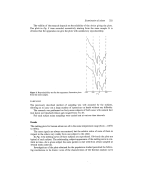
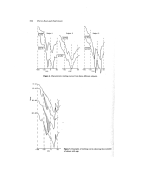
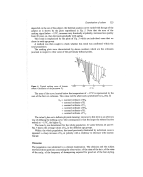
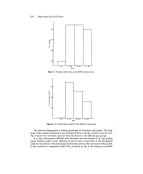
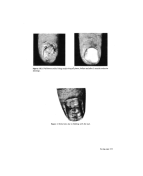
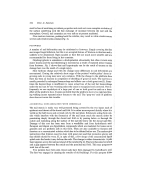
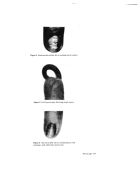
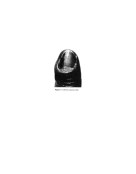
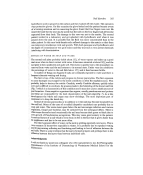
354 Peter D. Samman must be free of sensitizing or irritant properties and must not cause complete occlusion of the surface interfering with the free exchange of moisture between the nail and the atmosphere. Overall, nail cosmetics are very safe as at present marketed. Over-zealous manicure, pushing back the cuticles, may result in white streaks across several nails (leukonychia striata) (Fig. 4). FOOTWEAR A number of nail deformities may be attributed to footwear. Simply covering the feet encourages fungal infection, but this is an accepted feature of Western civilization and is unlikely to be abandoned. Open sandals or bare feet are much more sensible and are recommended for those living in hot countries. Onychogryphosis is sometimes a developmental abnormality but often it starts with :.• minor trauma and the nail thickening is increased as a result of repeated minor trauma from footwear. Fig. 5 shows that nail hypertrophy can be the result of trauma as the damage here was the result of a single injury. Shoe fashions change and with the change some differences in nail deformities are encountered. During the relatively short reign of the pointed 'winkle picker' shoes in- growing nails in young men were very common. With the change to the platform shoe there has been an increase in complaints of shedding of great toe nails. The nail loss is usually preceded by subungual haemorrhage and affects one or both great toes (3). Some- times the haemorrhage is insufficient to cause actual loss of the nail but haemorrhage under the nail can be very worrying unless the cause is recognized and corrected. Not in- frequently we see onycholysis of a large part of one or both great toe nails as a lesser effect of the platform shoe. It seems probable that the platform shoe is too rigid and dur- ing walking causes repeated minor trauma to the nail. The 'peep-toe' style of platform •. shoe does not cause this trouble. ': ACCIDENTAL CONTAMINATION WITH CHEMICALS :'.' .: The nail matrix is really very well protected being covered by the two layers each of epidermis and dermis of the dorsal nail fold. It is rather more exposed distally where it is visible as the half moon and covered only by the nail plate. Substances acting from out- side which interfere with the formation of the nail must reach the matrix either by penetrating deeply through the dorsal nail fold or by passing below or through the ß cuticle and extending along the surface of the nail (4) below the the dorsal nail fold. Damage of this sort has been seen from a weedkiller and from hydrofluoric acid. Paraquat and diquat are dipyridilium compounds which are marketed for home use as ,: granules and are perfectly safe in this form. They are also available to farmers and foresters as a concentrated solution which has to be diluted before use. The makers give instructions that dilution must be done with great care and that protective gloves and face shields should be worn. If, in spite of this, a few drops of the concentrated liquid splash onto the hands it may deform the nails. The change is rather characteristic. A pale band appears across the nail just ahead of the cuticle (Fig. 6). This later becomes brownish and a gap appears between the cuticle and the proximal nail fold. This may progress to total loss of the nail. Two patients have been seen whose nails have been damaged by hydrofluoric acid. The first was engaged in cleaning the outside of old buildings. For this purpose dilute
Purchased for the exclusive use of nofirst nolast (unknown)
From: SCC Media Library & Resource Center (library.scconline.org)