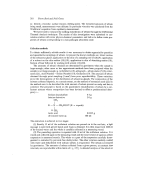
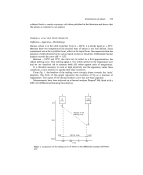
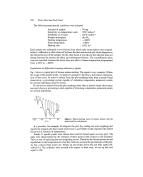
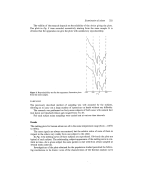
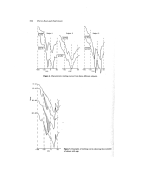
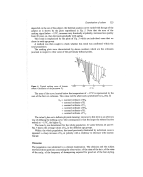
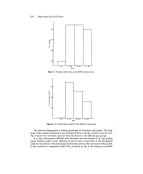
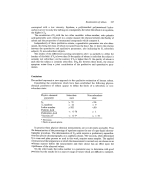
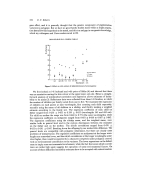
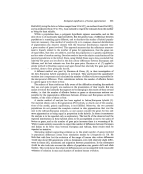
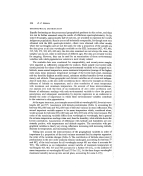
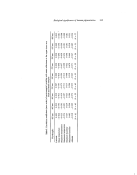
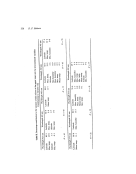
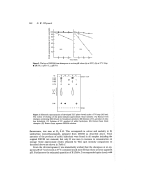
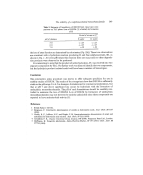
Examination of sebum 327 correspond with a low viscosity. Squalene, a polybranched polyunsatured hydro- carbon is a low viscosity low melting oil, consequently, the richer the sebum is in squalene, the higher is The correlations of • 6 with the two other variables: iodine number ratio palmitic acid/palmitoleic acid illustrate in a similar manner the relation between the fluidity of sebum and the proportion of unsaturated compounds which compose it. Independently of these qualitative criteria, a quantitative parameter was also deter- mined, this being the mass of sebum extracted from the head. Fig. 11 shows the relation between the quantitative and qualitative parameters also indicating by G, seborrheic subjects N, non-seborrheic subjects. ß The results of the differential scantting calorimetry allow us partially to define the borders of this field: if Z6 is lower than 36 the quality of sebum is such that the subject is certainly not seborrheic on the contrary if z6 is higher than 51 the quality of sebum is such that the subject is certainly seborrheic. If Z• lies between these limits, the clinical symptom arises from a joint contribution of the qualitative and quantitative para- meters. Conclusions The method represents a new approach to the qualitative estimation of human sebum. Considering the correlations which have been established the following physico- chemical parameters of sebum appear to define the limits of a seborrheic or non- seborrheic state: Physico chemical Seborrheic Non-seborrheic parameter state state Zo 51 36 •o squalene 12 9 Iodine number 102 80 Palmitic Acid 0.70 1 ?almitoleic Acid Viscosity 25 ø 0.7' 1-5-• * Newtonian $ Plastic or pseudo plastic In practice these physico-chemical measurements are not all easily accessible. Thus the determination of the percentage of squalene requires the use of a gas-liquid chroma- tographic procedure. The determination of C•o acids requires a preliminary saponifica- tion then precise chromatography on a capillary column. The viscosity, when determined by a cone and plate process as used in this work, requires many samples. The applied constraint and the temperature at which the measurement is carried out, are chosen in an arbitrary manner before the measurement and their choice has an effect upon the significance of the observed values. On the other hand, the iodine number is a parameter easy to determine with good precision but the results lie in a narrow range of values which are difficult to interpret.

325 •erre oeor• nnd No•! •oetz The new method supplies more information since by following the thermodynamics of fusion it is possible to measure objectively slow or small changes in sebum, for example in the course of a corrective treatment. This method is easy and can be applied to small amounts of sample (30 rag). One could also consider its application for the study of acnea. References 1 O'Neill, H. J. Fractionation and analysis of sebaceous glandular and allied lipid sources, 181 pp. 1968. Avail. Univ. Microfilms, Ann Arbor, Mich., Order n ø 68-14, 536. From Diss. Abstr. Int. B, 29 1259-1260 (1968). 2 Mackenna, R. M. B., Wheatley, V. R., and Wormall, A. Studies of Sebum. II. Some constituents of the unsaponifiable matter of human sebum. Blochem. J. 52 161-168 (1952). 3 Haahti, E., Horning, E. C. and Castren, O. Microanalysis of sebum and sebum like materials by temperature-programmed gas chromatography. Scand. J. Clin. Lab. Invest. 14 368-372 (1962). 4 Gershbein, B. K., Krotoszynski, K. and Singh, E. J. Fractionation of hydrocarbons of human haii- lipids by chromatography and thermal diffusion methods. J. Chromatog. 27 431-449 (February 1967). 5 Nicolaides, N. Skin lipids. II. Lipid class composition of samples from various species and anatomi- cal sites, J. Am. Oil Chemists' Soc. 42 685-690 (August 1965). 6 Tisnes, P. Le fihu lipido-protidique & la surface de la peau humaine. t'arfums Cosmet. Savons Ft. 1 27-32 (Janvier 1971). 7 Roeth, K. Untersuchungen zur Hauttalgsekretion mit einem neuen Spreittest-Verfahren. Dermatol. Wochschr. 138 901-903 (1958). 8 Deyhle, P. Zur Messung der Hautlipoide mir dem Sebographen. t'arfuem. Kosmetik 43 69-77 (1962). 9 Lorenz, T. H., Graham, D. T. and Wolf, H. G. Collection and determination of sebum. Application to human sebum secretion. J. Lab. Clin. Med. 39 91-104 (1952). 10 Strauss, J. S. and Pochi, P. E. The quantitative gravimetric determination of sebum production. J. Invest. Derm. 36 293-298 (1961). 11 Wilkinson, D. I. Variability in composition of surface lipids. The problem of the epidermal con- tribution. J. Invest. Derm. 52 339-343 (1969). 12 NicolaSdes, N. and Rothman, S. Chemical composition of human hair fat. I. Squalene-cholesterol relation in children and adults. J. Invest. Dermatol. 19 389-391 (1952). 13 Washburn, S. L. and Liese, G. J. Cholesterol content and iodine number of human sebum. J. Lab. Clin. Med. 41 199-207 (1953). 14 Boughton, B., Hodgson-Jones, I. S., Mackenna, R. M. B., Wheatley, V. R. and Wormall, A. Nature origin, and possible function of the squalene and other hydrocarbons of human sebum. J. Invest. Dermatol. 24 179-189 (1955). 15 Nicolaides, N., and Foster, R. C. Jr. Esters in human hair fat. J. Am. Oil Chemists' Soc. 33 404- 409 (1956). 16 Downing, D. T., Strauss, J. S. and Pochi, P. E. Variability in the chemical composition of human skin surface lipids. J. Invest. Dermatol. 53 322-327 (1969). 17 Burton, J. L. The physical properties of sebum in Acne vulgaris. Clin. Sci. 39 757-767 (1970). 18 Ricketts, C. R., Squire, J. R. and Topley, E. Human skin lipids with particular reference to the self- sterilizing power of the skin. Clin. Sci. 10 89-111 (1951). 19 Hodgson-Jones, I. S. and Wheatley, V. R. Studies of sebum. III. Methods of the collection and estimation of small amounts of sebum. Blochem. J. 52 460464 (1952). 20 Hodgson-Jones, I. S., Mackenna, R. M. B. and Wheatley, V. R. The surface skin fat in seborrheic dermatitis. Brit. J. Dermatol. 65 246-251 (1953). 21 Pantlitschko, M. and Raab, W. Zur quantitativen Bestimmung der Talgsekretion der Haut, Angabe einer neuen Methodik. Z. I-Iaut-Geschlechtskrankh, 28 242-244 (1960). 22 Cunliffe, W. J., Cotterill, J. A. and Williamson, B. Variations in skin surface lipid composition with different sampling techniques - I. Brit. J. Dermatol. 85 4045 (1971).
Purchased for the exclusive use of nofirst nolast (unknown)
From: SCC Media Library & Resource Center (library.scconline.org)