J. Soc. Cosmet. Chem. 28 641-650 (1977) ¸ 1977 Society of the Cosmetic Chemists of Great Britain The influence of some formulation variables and valve/actuator designs on the particle size distributions of aerosol sprays R. W. PENGILLY and J. A. KEINER Unilever Research Isleworth Laboratory, 455 London Road, Isleworth, Middlesex, TW7 5AB Received 23 February 1977 Synopsis Knowledge of the size and distribution of particles produced from cosmetic aerosol products is iml• ortant not only from the viewpoint of product optimisation but also from considerations of potential inhalation characteristics. A discussion is given of methods suitable for determination of the respirable fraction of the spray or a complete particle size distribution. Results are presented for the particle size distributions of some aerosol formulations with differing compositions and levels of propellant. The effects of certain actuator designs and valve specifications are also presented. These results are discussed in terms of different particle formation mechanisms due to differences in formulation, mechanical action of the valve and actuator and subsequent changes in size of the particles. It is concluded that the particle size distribution of a cosmetic aerosol product only has meaning when the formulation, dispensing, and sampling details are also specified. INTRODUCTION The production of particulate material from a pressurised pack is a complex sequence of events, much of which is little or poorly understood. Knowledge of the size and dis- tribution of particles produced from cosmetic aerosol products is important for product optimisation and consideration of potential inhalation characteristics. Much of the information in the literature on aerosol spray particle size appears at first sight to be contradictory. For example, in the case of hairspray products, Brunner et al. (1) found that 50 • by weight of the particles were 30 I•m or more, whereas Ripe et al. (2) found that, of the hairsprays they examined, 49 % of the particles had a diameter of less than 15 I•m. These differences may be due to many factors, including variations in sampling and sizing techniques (as suggested by Cambridge (3)), and widely differing formulation/valve-actuator systems. These variables are known to exert a large influence on spray particle size. The object of this paper is to consider some of the methods that have been applied to determining the particle size distributions of aerosol sprays, and to examine the influence of some formulation and hardware design variables on the particle size of some model aerosol systems, with a view to presenting a more unified picture of some of the important variables. 641

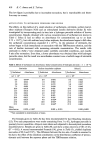
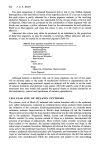
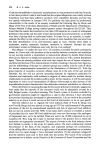
642 R. W. Pengilly and J. A. Keiner CLASSIFICATION OF PARTICLE SIZING TECHNIQUES It is convenient to classify methods suitable for sizing aerosol sprays into three basic categories: (i) The particles are collected and then physically examined. Methods suitable for collection include air elutriation, centrifuging, thermal precipitation, electrostatic precipitation, sedimentation and impaction. Analysis may be by counting (optical or electron microscopy), weighing or other means. These methods have obvious limitations for studying volatile systems (which is the usual case for cosmetic aerosols). (ii) The particles are passed into a probe which is connected to a sensing device. Commercial light scattering counters utilise this principle. (iii) The aerosol is examined without the use of physical sampler or probe (e.g. photography, holography and some light scattering methods). ADVANTAGES AND DISADVANTAGES OF SIZING TECHNIQUES A cursory examination of aerosol sizing literature will immediately reveal that no single sizing method will supply all the information to completely characterise an aerosol spray. For the aerosol technologist or cosmetic chemist, the sizing exercise is frequently one of compromise: how to obtain size data accurately, covering the size range of interest without resort to excessive expenditure on equipment or lengthy analysis time. A selection of sizing methods that have been applied to aerosol sprays, together with their strengths and weaknesses is summarised in Table I. Table I. Summary of particle sizing methods Method Size range (gm) Major problems Optical microscopy 0'2-300 0'2 gm limit of resolution Spreading of larger droplets Cascade impactors Wall losses/disaggregation Rebound/re-entrainment Limited size data 0.1-20 Refractive index, shape, sensitivity, coincidence, cross-sensitivity, calibration isokinetic sampling Lower limit 3 gm Two stages in sizing: formation and reconstruction. Analysis time. Small depth of field Automation difficult but possible. Difficulty in three dimensions. Light scattering counters 0'2-20 Holography 3-1000 Photography 5-1000 Optical microscopy provides a convenient and simple but tedious method for a complete analysis of particle size distribution down to 0.2 I•m. The method has been applied by Tregan and Lefebvre (4), and by Rance (5) who used an image-splitting analyser for more rapid counting. For large liquid particles or non-volatile droplets the problem of droplet spread can be partially overcome by the additional techniques
Purchased for the exclusive use of nofirst nolast (unknown)
From: SCC Media Library & Resource Center (library.scconline.org)