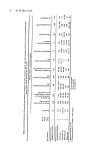
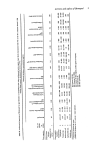
14 D.M. Bryce et al. The polarogram was recorded over the range 0 to -1 V relative to the quiescent mercury pool using the appropriate recorder or galvanometer sensitivity to give a suitable wave. The diffusion current at -0.8 V relative to the mercury pool was measured, and the concentration of Bronopol read from the calibration curve. Since the polarographic response was affected by the composition of the test solution, it was necessary to prepare a calibration curve for each formulation examined. Such calibration curves were obtained by adding known amounts of Bronopol to blank formulations and processing in the required manner. The following are examples of the assay method which have been used. Microbioloical Assay. Bronopol can be assayed microbiologically by agar diffusion using Ps. aeruginosa in agar of the following composition: % w/v Dextrose 0.1 Lemco beef extract 0.15 Difco yeast extract 0.•3 Sodium chloride 0.5 Difco casitone 0.08 Magnesium sulphate (7H•O) 0.004 Oxoid peptone 0.6 Davis agar 1.8 Distilled water to 100, pH adjusted to 5.3. Alternatively Difco Assay Agar No. 11 (pH 7.9) with Bacillus subtills NCIB 8054 can be used. The minimum detectable level of Bronopol in water with Bacillus subtilis is 0'005•o. A rapid diffusion method using Bacillus stearothermophilus has been described by Kabay (18). Gas-liquid Chromatographic Assay. Although Bronopol is a water-soluble compound it can be extracted from aqueous solution into diethyl ether or ethyl acetate after the addition of sodium chloride. The extract can then be evaporated to dryness, the residue acetylated and the Bronopol estimated by means of g.l.c. with electron-capture detection. This procedure offers a means of determining Bronopol in aqueous formulations and has been applied to Bronopol concentrations down to 5 ppm. In aqueous formulations containing concentrations of Bronopol down to 50 ppm, the Bronopol has been determined by a similar procedure, but using n-pentadecane as the internal standard, acetyl chloride in chloroform as an acetylating reagent, carbon disul- phide as the final solvent and flame ionization detection. The following are examples of the methods which have been used to assay Bronopol by g.l.c. Based on the acetylated material. The sample (about 0.15 g accurately weighed) was dissolved in 15 ml of chloroform with the aid of minimum heating, 5 ml of a 2•o solution of n-pentadecane (as internal standard) in chloroform was added and the solution diluted to 25 ml. To 1 ml of this solution in a vial was added 0.3 ml acetyl chloride and the vial was sealed and then heated on a steam bath for 3 h. The mixture (2 [tl) was subjected to g.l.c. in a glass column (183 cm x 3 mm) packed with 10•o of silicone JXR on Gas Chrom Z (70 to 80 mesh), operated at 150øC with nitrogen (20 ml min -x) as carrier gas and flame ionisation detection. The ratio of the product of the peak height and retention

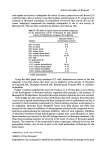
Activity and safety of Bronopol 15 time for the Bronopol diacetate (relative retention time = 1.00) to that for n-pentadecane (relative retention time = 1.54) was calculated and compared with the ratio for a standard containing purified Bronopol which had been similarly treated. The relative standard deviation of the method was found to be 1'5•o. Based on the trimethylsilylatedmaterial. The sample (about 0.15 g, accurately weighed was dissolved in 15 ml of chloroform with the aid of minimum heating, 4 ml of a 1.4•o solution of n-tridecane (as internal standard) in chloroform was added and the solution diluted to 25 ml. To 1 ml of this solution in a vial was added 0.1 ml of silylating reagent (prepared by mixing trifluoroacetic acid (1 part) and hexamethyldisilazane (2 parts) and filtering the mixture rapidly under dry conditions), the vial was sealed and then heated on a steam bath for 1 h. The mixture (1 •tl) was subjected to g.l.c. in a glass column (152 cm x 3 mm) packed with 10•o of silicone JXR on Gas Chrom Q (80 to 100 mesh), operated at 125 ø C. with nitrogen (40 ml min -x) as carrier gas and flame ionisation detection. The ratio of the product of the peak height and retention time for Bronopol di(trimethylsilyl)ether (relative retention time= 1.92) to that for n-tridecane (relative retention time= 1.00) was calculated and compared with the ratio for a standard con- taining purified Bronopol which had been similarly treated. Thin Layer Chromatographic Assay. 10}/o Bronopol solution was examined by t.l.c. and bioautography using 0.25 mm Kieselgel 'G', with chloroform/methanol (4: 1) as developing solvent. 2 [tl aliquots of the solution were spotted on the plates. A similar method for ointment formulations has been devised using an initial water:chloroform extraction system to remove excipients, followed by chromatography on Kieselgel GF•.5• using isopropanol as the developing solvent. Determination of Bromide ion. Bromide ion was determined by potentiometric titration. Bronopol solution (5 ml) was acidified and titrated with 0.02M silver nitrate solution. Determination of Formaldehyde. Formaldehyde was determined by reaction with chromo- tropic acid. 0'2•o Bronopol solution (0.5 ml) was diluted to 25 ml with 12N sulphuric acid. To this solution (1 ml) was added a 5•o solution of chromotropic acid in 12•q sulphuric acid (1 ml) and the mixture heated at 100øC for 30 min. Concentrated sulphuric acid (2 ml) was added and the absorbance at 570 nm measured against the appropriate blank. Determination of Nitrite and Nitrate. Nitrite and nitrate were determined by reaction with 2,6-xylenol before and after decomposition of nitrite with sulphamic acid. This method was not used after the preliminary work as the results were in good agreement with the polarographic estimation of alkyl nitro-groups. TOXICOLOGY Metabolism After oral administration of [•C]Bronopol, radioactivity was rapidly absorbed and evenly distributed in tissues of the rat and dog, Moore et al. (19). Excretion was also rapid, the majority of the dose being excreted within 24 h. Bronopol was rapidly and extensively metabolised so that no unchanged compound was detected in plasma and urine. It has been shown in vitro that Bronopol is unstable in
Purchased for the exclusive use of nofirst nolast (unknown)
From: SCC Media Library & Resource Center (library.scconline.org)