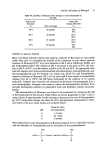
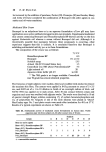
16 D. M. Bryce et al. plasma. The major urinary metabolite, accounting for more than 40}/o of administered radioactivity, was 2-nitropropane-l,3-diol. Other minor metabolites have not been identified. Complete metabolism was demonstrated by the finding of significant amounts of radioactivity in expired air and the appearance of a small amount of radioactivity in the tissues of dosed animals. When applied in acetone solution to rat skin, a smaller proportion of the dose was absorbed than when dosed orally, Moore et al. (20). This may in part be due to the small area of skin to which the dose was applied. When p4C]Bronopol was applied in acetone solution to the skin of rabbits, the radioactivity was mainly localised on the epidermis around hair follicles, suggesting that limited percutaneous absorption may occur through the hair follicles. The pattern of urinary metabolites was similar when the compound was administered orally or percutaneously, indicating no difference in metabolism related to the route of administration. Acute Toxicity Bronopol administered in single doses by the oral and intraperitoneal routes to rodents caused gastrointestinal lesions and peritonitis. The LD50 values are shown in Table VII. A small number of rats were injected subcutaneously with Bronopol and those that died had haemorrhage and oedema at the site of injection, stomach lesions and lung congestion and oedema. The LD50 was approximately 200 mg/kg. After dermal application to rats of acetone solutions of Bronopol using the procedure of Noakes and Sanderson (21), death occurred at 160 mg/kg or more. Oral administration of single doses of 40 or 100 mg/kg to dogs caused gastric irrita- ion but no permanent injury. No methaemoglobinaemia was observed in cats over a 24 h period following a maximum single oral dose of 25 mg/kg of Bronopol, whereas a marked rise in blood methaemoglobin concentration followed 20 mg/kg of acetanilide. Chronic Toxicity In repeated-dose studies the observations and laboratory investigations generally included signs of poisoning, body-weight, food consumption, haematology, blood biochemistry, ophthalmoscopy, organ weights, macroscopic appearance at autopsy and histopathology, Gastrointestinal lesions, respiratory distress and some deaths resulted from daily admini- stration of 80 or 160 mg/kg of Bronopol by oral intubation to male and female rats for 90 days whereas doses of 20 mg/kg were well tolerated. When Bronopol was given in the drinking water, rats maintained on 160 mg/kg/day for six weeks had a reduced water intake and slightly enlarged kidneys while among those given the highest dose level of 300 mg/kg/day a few deaths occurred. In dogs given a maximum daily dose of 20 mg/kg by oral intubation for 90 days, apart from some vomiting, there were no significant toxic reactions. Aqueous 2'5•o methyl cellulose solutions containing 0.2 or 0'5•o Bronopol were applied once daily at a dosage of 1 ml/kg for 3 weeks to the clipped and abraded dorsal skin of rabbits. The vehicle alone and the 0.2• Bronopol solution elicited local skin erythema and the 0.5•o Bronopol solution produced moderate erythema, oedema and scabbing, otherwise the rabbits showed no ill-effects clearly attributable to treatment.

Activity and safety of Bronopol Table VII. Acute toxicity of Bronopol to mice and rats Species Sex Route LD50 mg/kg Mouse male oral 374 female oral 327 Mouse male i.p. 34.7 female i.p. 32.8 Rat male oral 307 female oral 342 Rat male i.p. 22.0 female i.p. 30.2 i.p. =intraperitoneal. 17 Carcinogenicity A carcinogenicity study was carried out in mice by application of 0.3 ml of aqueous- acetone solutions containing 0.2 or 0'5•o Bronopol to the shaved backs three times weekly for 80 weeks. The concentrations were selected after a preliminary tolerance study showed that 1 • or more evoked a local skin reaction. Bronopol did not alter the spontaneous turnour profile either locally or systemically. A 2-year toxicity and tumorogenicity test, in which rats received 10, 40 or 160 mg/kg daily in the drinking water, provided no evidence to suggest that the administration of Bronopol affected tumour incidence. There was no indication of toxicity at 10 mg/kg/day, whereas the higher dose levels adversely affected growth, food intake and survival rate. Renal changes associated with diminished water intake, histological reactions in stomach and gastric lymph nodes probably due to irritancy from prolonged exposure to Bronopol, and an exacerbation of spontaneous morphological alterations in the salivary gland were also observed at the higher dose levels in a dose-related manner. Reproduction Studies The effect of Bronopol on reproduction was investigated in rats and rabbits. In rats dosed from day 1 to 20 of pregnancy with 10, 30 or 100 mg/kg daily by oral intubation, no embryotoxic or teratogenic effects were seen even though the dams had a dose-related retardation in bodyweight gain and some died from gastric and lung lesions. A slight delay in calcification of the foetal skeleton was observed at the highest dose level. Daily application to the clipped dorsal skin of rats of 0.5 or 2•o aqueous solutions of Bronopol thickened with 2'5•o methylcellulose in a dose of 1 ml/kg from day 6 to 15 of pregnancy had no adverse effects on the dams or foetuses apart from causing local skin reactions at the site of application. Oral administration of 1, 3.3 or 10 mg/kg daily to rabbits from day 8 to 16 of preg- nancy also failed to produce embryotoxic or teratogenic effects though the highest dose level suppressed weight gain by the does during the dosing period. Bronopol, 20 or 40 mg/kg daily, given orally to rats from day 15 of gestation and throughout lactation did not affect parturition, litter size or postnatal survival and development of the young. Fertility and general reproductive performance of rats were unimpaired by these dose levels given to males from 63 days before mating and females from 14 days before mating up to day 12 of pregnancy or until the litters were weaned
Purchased for the exclusive use of nofirst nolast (unknown)
From: SCC Media Library & Resource Center (library.scconline.org)