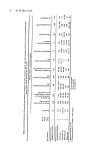
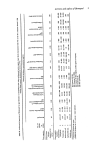
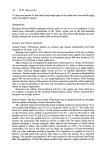
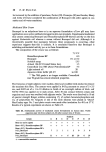
6 D.M. Bryce et al. RESULTS AND DISCUSSION MICROBIOLOGY Antibacterial Activity The bacteriostatic activity of Bronopol in comparison with that of a range of other agents has been determined by serial dilution in 'Oxoid' nutrient agar (see Tables I and II). Plates were inoculated with a multi-point inoculator (13). The bacteriostatic activity against some pseudomonads, including Ps. aeruginosa, Ps. fluorescens and pseudomonads isolated from paints, water, cosmetics and unpreserved pharmaceutical formulations has been compared using a similar technique. Of the antibacterial agents compared only Phenylmercuric Nitrate BP and Chlorhexidine Acetate BPC had similar broad-spectrum activity to that of Bronopol (Tables I and II). 2,4,4'-Trichloro-2'-hydroxydiphenyl ether was more active than Bronopol against most of the organisms tested, but this compound was much less active against Ps. aeruginosa. Of the agents tested against pseudomonads only Phenylmercuric Nitrate BP was more active than Bronopol (see Table III). Table 1II. Comparative activity of Bronopol and other agents against Pseudomonas spp. by agar-dilution. Agar plates inoculated with 0.01 ml of 18 h cultures undiluted incubated for 48 h at 32øC No. of No. of strains with m.i.c. (3tg/ml) of: strains Preservative tested 12.5 25 50 100 200 400 400 Bronopol 23 Propyl Hydroxybenzoate BP 23 Methyl Hydroxybenzoate BP 23 Phenoxyethanol BPC 23 Phenylmercuric Nitrate BP 23 Phenylethyl Alcohol BPC 1963 23 Benzalkonium Chloride 23 Chlorocresol BP 23 Chlorbutol BP 23 Chlorhexidine Gluconate 23 Chlorhexidine Acetate BPC 23 6-Acetoxy-2,4-dimethyl-m-dioxane [1] 12 cis-isomer of 1-(3-chloroallyl)-3,5,7-triaza- 1-azonia-adamantane chloride [2] 12 Substituted imidazolidinyl urea cpd. [3] 6 N-Trichloromethylthio-4-cyclohexene-l,2- dicarboximide [4] 12 Zinc salt of 2-mereaptopyridine-l-oxide [5] 12 2,4,4'-Trichloro-2'-hydroxy-diphenyl ether [6] 6 5 18 0 0 0 0 0 0 0 0 0 0 0 23 0 0 0 0 0 0 23 0 0 0 0 0 0 23 19 2 2 0 0 0 0 0 0 0 0 0 0 23 0 0 0 0 0 19 4 0 0 0 0 0 23 0 0 0 0 0 0 0 23 0 0 3 20 0 0 0 0 4 18 1 0 0 0 0 0 0 0 0 0 12 0 0 0 0 5 3 4 0 0 0 0 2 1 3 0 0 0 0 3 2 7 4 1 2 0 2 2 1 0 0 0 0 0 0 6 [1] Giv-Gard DXN. [2] Dowicil 200. [3] Germall 115. [4] Vancide 89 RE. [5] Zinc pyrithione. [6] Irgasan DP 300. The effects of organic matter and some possible antagonists are shown in Table IV. Bryce and Smart (14) reported that nonionic surface active agents, e.g. polysorbate 80 and lecithin, have little or no effect on the antibacterial activity of Bronopol, although

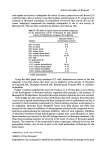
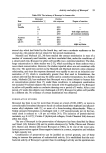
Activity and safety of Bronopol 7 such agents are known to antagonise the action of many preservatives and Brown (15) confirmed that a plot of activity versus the log phase concentrations of Ps. aeruginosa for solutions of Bronopol containing 1• polysorbate 80 showed that activity did not de- crease. Sulphydryl compounds are markedly antagonistic to the in vitro activity of Bronopol (3). This has been confirmed by Stretton and Manson (I6). Table IV. The effect of organic matter and possible antagonists on the bacteriostatic activity of Bronopol by Agar dilution (strains of Pseudornonas aeruginosa test organism) Decrease (-fold) in Additive bacteriostatic activity* 10•o ox serum 0-2 50•o ox serum 4-8 10• human serum 2 50•o human serum 4 10• oxalated horse blood 4-8 50•o oxalated horse blood 32-64 10•o milk 0 1• polysorbate 80 0 0.1Yo lecithin 0 0.1 •o cysteine hydrochloride 16-64 0'1•o sodium thioglycollate 8-16 0'1•o sodium thiosulphate 4-16 0.01% sodium metabisulphite 8-16 * 2-fold serial dilution. Using the filter paper strip technique (17) with Staphylococcus aureus as the test organism, it has been shown that there was no inhibition of the activity of Bronopol by Cetrimide BP, Domiphen Bromide BP, Benzalkonium Chloride BPC or trichloro- carbanilide. Further work has confirmed the report by Croshaw et al. (3) that there is no evidence of the development of Bronopol-resistant organisms after passage in the presence of Bronopol for 20 subcultures. In practice Bronopol-resistant organisms have not occurred. Some insight into the mode of action of Bronopol has been obtained. Since Bronopol is more active against metabolising cells than resting cells and its antibacterial activity is reversed by thiol-containing compounds (3), thiol-containing enzymes would appear to be implicated. Bronopol forms disulphide bonds from thiol groups and these may account for the observed inhibition of dehydrogenase activity by the compound at con- centrations approximating the minimum inhibitory value for each organism. Inhibition of microbial membrane-bound dehydrogenase enzymes may cause alterations in mem- brane structure and account for the cell leakage observed on Bronopol treatment (16). Thus thiol-containing enzymes are involved in the mode of action of Bronopol against bacteria. The selectivity of the compound for micro-organisms, indicated by its very low mammalian toxicity, may be due in part to the rapid metabolism of Bronopol by the body tissues. CHEMICAL AND ANALYTICAL Stability of Pure Bronopol Experiments were conducted to establish the stability of Bronopol on storage in the pure
Purchased for the exclusive use of nofirst nolast (unknown)
From: SCC Media Library & Resource Center (library.scconline.org)