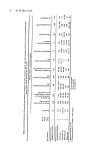
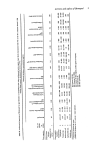
8 D.M. Bryce et al. solid state. The results, shown in Tables V and VI, demonstrate no evidence of instability over a period of one year's storage at temperatures up to 45 ø, and at elevated humidity. No photodecomposition was observed at room temperature over this period. Samples of Bronopol stored in the dark at room temperature over periods up to 2 years also show no evidence of decomposition. All the assays were carried out by gas-liquid chromato- graphy (g.l.c.) using the trimethylsilylation procedure described later in the section on analytical methods. Both the internal standard and normalisation methods were utilised. Initial assays were by g.l.c. using n-pentadecane as the internal standard after acetyla- tion. Since that time, the trimethylsilylation procedure described later has been developed in order to achieve an improvement in precision. Assays after storage were done by this latter method, using the internal standard technique. Table V. Stability of Bronopol during storage g.l.c. (internal standard method) g.l.c. (normalisation method) Bronopol Bronopol Impurity at RT(rel) 0.62 Storage conditions % % •o Initial 100.0 99.6 0.45 weeks, at 20 to 25øC (a) at normal RH 99.5 99.6 0.43 (b) at 90•o RH 100.3 99.6 0.41 at 37øC 99.9 99.6 0.39 at 45øC 99.7 99.6 0.39 in north window 100.4 99.6 0.43 weeks at 20 to 25øC (a) at normal RH 99.7 99.6 0.40 (b) at 90•o RH 99.9 99.6 0.39 at 37øC 100.0 99.6 0.41 at 45øC 99.4 99.6 0.41 in north window 100.1 99.6 0.44 12 weeks at 20 to 25øC (a) at normal RH 99.8 99.5 0.49 (b) at 90•o RH 100-1 99.6 0.41 at 37øC 100.2 99.5 0.46 at 45øC 99.6 99.6 0.44 in north window 99.8 99.6 0.44 52 weeks at 20 to 25øC (a) at normal RH 100.2 99.5 0.50 (b) at 90•o RH 99-2 99-5 0.47 at 37øC 100.3 99.5 0.46 at 45øC 100-3 99.5 0.46 in north window 99.3 99.4 0.51 RH =relative humidity. Rx(rel)--relative retention time.

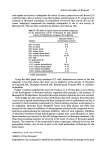
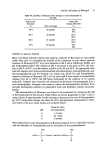
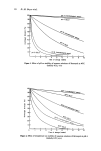
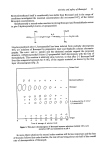
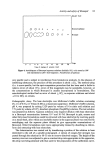
Activity and safety of Bronopol Table VI. Stability of Bronopol after storage at room temperature in the dark Initial assay Assay after Bronopol storage, Bronopol •o Time of storage • 99.2 24 months 98.2 99.2 101.1 22 months 101.5 102-2 100.2 21 months 101.4 102.4 99.9 18 months 99.7 99.5 Stability in Aqueous Solution Bryce and Smart (14) have shown that aqueous solutions of Bronopol are reasonably stable when acid. To investigate the stability of the compound in more detail, aqueous solutions of Bronopol (0.2• w/v) were prepared at pH 4 and 6 (McIlvaine buffer) and pH 8 (phosphate buffer). The solution at pH 4 was stored in the dark at 50øC, the solu- tion at pH 8 at 30øC, and the solution at pH 6 at 30, 40 and 50øC. At appropriate time intervals aliquots were removed and examined microbiologically, polarographically, gas- chromatographically and for bromide ion, nitrate ion, nitrite ion and formaldehyde. Aqueous solutions of Bronopol (10• w/v) at about pH 6 were stored at temperatures ranging from 40 to 100øC, the pH being maintained by the addition of 5N sodium hydroxide. Aliquots were removed and examined by thin-layer chromatography (t.l.c.) and bioautography. Attempts were made to isolate the decomposition products from partially decomposed solutions by preparative layer and Sephadex column chromato- graphy. The decomposition of Bronopol was found to be accelerated by increasing the pH or the temperature of the solution. These effects are shown graphically in Figs. I and 2 using a factor of approximately 4 as the increase or decrease in the rate of decomposition per 10øC temperature change, the times for 50• decomposition extrapolated to 20øC, and based on the g.l.c. assay results, are as shown below: Time for 50Yo pH decomposition 4 • 5 years 6 1« years 8 2 months The initial process in the decomposition of Bronopol appears to be a retroaldol reaction with the liberation of formaldehyde and the formation of bromonitroethanol' NO• NO, I I HOCH•-- C -- CH•OH •CH• + HOCH•-- CH I I Br Br
Purchased for the exclusive use of nofirst nolast (unknown)
From: SCC Media Library & Resource Center (library.scconline.org)