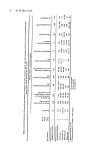
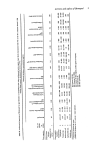
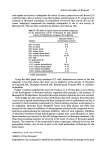
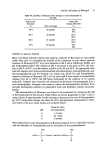
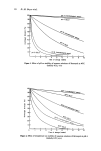
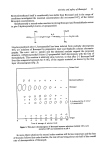
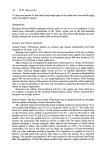
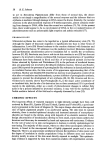
10 D.M. Bryce et al. I00 PH 4 (m•rob•ologi•al assay._..•) IO[ PH • (G LC)•og,½al assoy) I 2 5 4 5 6 7 8 9 I0 Time of storoge (weeks) Figure 1. Effect of pH on stability of aqueous solutions of Bronopol at 40øC (initially 0'2•o w/v) 100 8O 2O 10 ß . .-'•--•_ 500C (G/C) • I • I I I• I I I I 2 5 4 5 6 7 8 9 I0 Time of storage (weeks) Figure 2. Effect of temperature on stability of aqueous solutions of Bronopol at pH 6 (initially 0'2•o w/v)

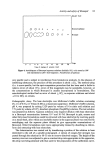
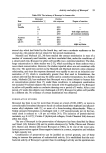
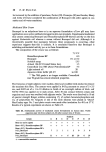
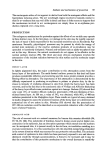
Activity and safety of Bronopol 11 Bromonitroethanol itself is considerably less stable than Bronopol and in the range of conditions investigated the maximal concentrations did not exceed 0'5•o of the initial Bronopol concentrations. Simultaneously a second-order reaction involving Bronopol and formaldehyde occurs to give 2-hydroxymethyl-2-nitro- 1,3-propanediol: NO• iH• OH I H20 HOCH2•C CH'•OH+ CH•O • HOCH• C CH•OH +HBr I I Br NO• 2_hydroxymethyl-2-nitro-l,3-propanediol has been isolated from partially decomposeu 10•o w/v solutions of Bronopol by preparative layer and Sephadex column chromato- graphy. The n.m.r. and i.r. spectra and the elemental analysis support the proposed structure. 2_Hydroxymethyl-2-nitro-l,3-propanediol itself decomposes with the loss of formaldehyde. This reaction is relatively slow, however, so that after 2-3 Bronopol half lives this compound accounts for 8-10•o of the organic material, as shown by the thin layer chromatogram (Fig. 3). Solvent front 0 0 0 O 0 o o OOoooooo o o o 0 0 0 o o o o 0 0 0 0 o ø o oo oo000o0 o o o o o 0 o o o o o • o o---o 0 0 CL Time of storage of solution (min) Bromonitroethanol Bronopol 2-hy droxymet hyl- 2 -nitro - 1,3-propanediol Origin Figure 3. Thin-layer chromatogram of Bronopol aqueous solutions (initially 10•o w/v) stored at 100 ø and maintained at pH 6 In more dilute solutions the second order reaction will be less important and the loss of bromine follows first order kinetics, the rate of loss being about one-half of the overall rate of decomposition of Bronopol.
Purchased for the exclusive use of nofirst nolast (unknown)
From: SCC Media Library & Resource Center (library.scconline.org)