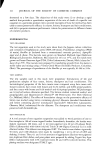
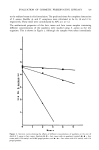
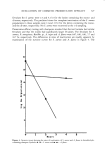
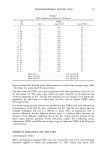
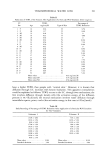
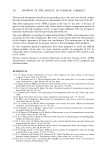
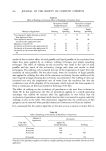
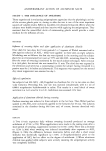
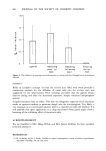
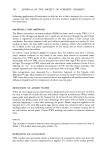
354 JOURNAL OF THE SOCIETY OF COSMETIC CHEMISTS Table II Effect of Rubbing on Occlusive Effect of Emollients in Emulsion Form Occlusivity of Solid Paraffin Emulsion Occlusivity of Liquid Paraffin Emulsion Simple Simple Method of Application Rubbing Spreading Rubbing Spreading Time required to begin showing occlusivity 15 25 15 45 after application (rain) Time required to reach to the maximum -- -- 60 90 occlusivity after application (min) Maximum occlusivity (%) 54 66 18 28 Occlusivity at 60 minutes after application (%) 44 40 18 12 Occlusivity at 90 minutes after application (%) 52 58 10 28 Occlusivity at 120 minutes after application 54 66 5 19 (%) results of the occlusive effect of solid paraffin and liquid paraffin in the emulsion form when they were applied by an ordinary rubbing technique and simple spreading technique. The effect of rubbing on the occlusivity was small in the case of solid paraffin and the trend of the occlusivity change with time was similar in both techniques. The rubbing only increased the rate of the evaporation of water from the emulsion of solid paraffin. On the other hand, when the emulsion of liquid paraffin was applied by rubbing, the value of the maximum occlusivity became smaller and the time required to begin showing the occlusivity was shortened. The rubbing in this case increased not only the evaporation rate of water from the emulsion but also the coalescence rate of the droplets of the emulsion, which reduced the time required to form a continuous oil film and resulted in thinning of the film. The effect of rubbing on the occlusivity of petrolatum in the neat form is shown in Table III. In this experiment, the film of petrolatum applied by a simple spreading technique was rubbed 90 minutes after the application. It was found that the occlusivity of petrolatum decreased with time but that it recovered to a great extent by rubbing, as seen in the table. This observation suggested that the continuous oil film property can be restored when partially destructed continuous oil films are rubbed. It is considered that the surface lipid film on the skin acts as a natural occlusive film to Table III Effect of Rubbing on Occlusivity of Petrolatum in Neat Form Method of • Application Time After • Application • Occlusivity Applied by Simple Spreading Rubbing 30 minutes 89% -- 60 minutes 75% -- 90 minutes 58% 84% 120 minutes -- 72% *The film of the petrolatum applied to the skin by a simple spreading technique was rubbed after 90 min of the application.

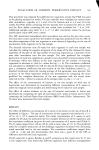
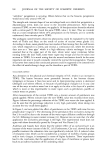
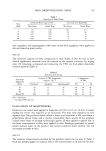
OCCLUSIVITY OF OIL FILMS 355 Table IV Relationship of Casual Lipid Level with TEWL(C), Skin Surface Temperature, and Occlusivity of Solid Paraffin in Emulsion Form Range of Casual Number Average Average Skin Lipid Level of TEWL(C) Temperature (mg/cm •) Persons (mg/cm2/h) (øC) Average Occlusivity of Solid Paraffin Emulsion After 120 minutes (%) 30-40 2 0.92 33.7 32 40-50 6 0.59 32.8 57 50-60 5 0.36 31.4 72 60-70 2 0.53 32.7 59 prevent the skin from drying (13). Therefore, it is possible that the occlusive effect of oil films in those subjects having a high lipid level may be rather higher than in the subjects having a low lipid level even if the application method is the same. In order to verify this, the experimental results obtained in the above experiments were examined in relation with the surface lipid level. The results are summarized in Table IV. Although the number of the subjects examined were not large enough for statistical analysis, it was observed a tendency of smaller value of TEWL(C) and higher occlusive effect of oil films in the subjects with a higher lipid level. This implied that the occlusive effect of emollients was smaller on dry skin than oily skin by the same application method, which presented an interesting aspect from a standpoint of skin care. CONCLUSION It has been known that the occlusive effect of oils depends on the type of oils and their coating amount. However, it was further found in the present work that the occlusive effect also depended on other factors such as physical form of the oils, emulsion type, and droplet diameter of the emulsions. It was found that differences in the adhering states of the oil films on the skin were responsible for the observed changes in the occlusive effect. Although emulsions are generally used for cosmetic creams because of their sensory advantages, it was also found that they played an important role from a standpoint of skin care. Namely, solid paraffin showed a remarkable occlusive effect when applied uniformly on the skin surface, but it showed no occlusive effect when applied nonuniformly. In order to apply solid paraffin uniformly, the use of its emulsion was found to be the most suitable technique. In other words, it is possible to obtain a liquid state of solid paraffin at room temperature when emulsified, thus solid paraffin can be applied uniformly on the skin surface, forming a flexible and occlusive film. It was shown that the occlusive effect was low for persons having a low lipid level. This implied that the use of a cream with a high occlusive effect is important for dry skin. Therefore, for dry skin, it is suitable to apply those creams having fine emulsion droplets of solid oils since the occlusive effect of solid oils increases with the decrease in their emulsion droplets.
Purchased for the exclusive use of nofirst nolast (unknown)
From: SCC Media Library & Resource Center (library.scconline.org)