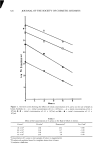
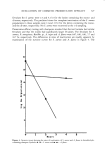
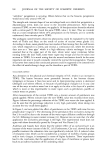
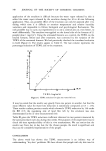
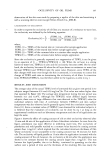
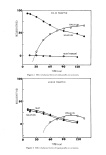
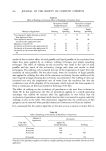
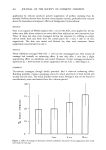
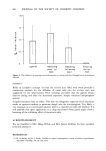
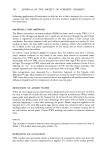
364 JOURNAL OF THE SOCIETY OF COSMETIC CHEMISTS application by roll-ons produces greater suppression of axillary sweating than by aerosols. Roll-on devices have become more popular recently, probably from concern about the hazardous atmospheric effects of halogenated hydrocarbons. METHOD Four 5-cm squares of Webril soaked with 2 ml of 20% A1C13 were applied for 10 min either once daily (three subjects) or twice daily (four subjects) on two successive days. Three of these test sites were massaged during the exposure by rubbing an empty roll-on bottle back and forth over the cotton patch for 1 min, 5 min or 10 min, respectively. The skin was rinsed and blotted dry after each treatment. Sweat suppression was estimated on day 3. RESULTS Sweat inhibition averaged 49% (S.D. _+ 25%) on the unmassaged site. One minute of massage had virtually no enhancing effect. It was only after 5 min that a slight augmenting effect on anhidrosis was noted. However, 10-min massages produced a significant (p 0.05) increase in sweat suppression (67.5%, S.D. + 20%) (Figure 2). COMMENT Ten-minute massages, though hardly practical, had a clear-cut enhancing effect. Rubbing probably creates a pumping action by which aluminum is both forced and sucked into the duct. The result justifies further study. Perhaps a way can be found to use effectively some mechanical force for a shorter period. 100 - 75 - 50- 25 - i I rnin 5 min 10min Figure 2. Effect of massage on aluminum chloride anhidrosis. Occlusive, 10-min applications were made twice daily for two days.

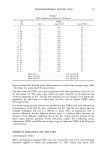
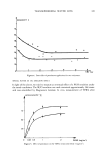
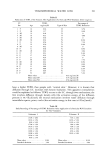
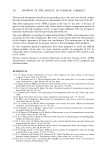
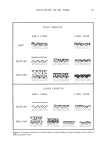
ANTIPERSPIRANT ACTION OF ALUMINUM SALTS 365 STUDY 5. THE INFLUENCE OF SWEATING Those experienced in evaluating antiperspirants appreciate that the physiologic activity of the eccrine glands prior to, during or after the test is one of the most important sources of variable results. Reller & Luedders (13) obtained enhanced effects when the subjects were briefly sweated and then inactive while applying the antiperspirant. They reasoned that the sweat-filled ducts of nonsweating glands would provide a static medium for the diffusion of ions. METHODS Influence of sweating before and after application of aluminum chloride Once daily for two days, for 15-rain periods 5 x 5 squares of Webril saturated with a 20% aqueous solution of A1CI 3 ß 6H20 were applied to three sites on eight subjects. Scheduling was as follows: the first site was exposed in the morning and the subject placed in an environmental hot room at 55øC and 30% R.H., remaining there for 2 rain after the onset of sweating (monitored by the starch-iodine technique). After removal to a cool place, the second site was treated for 15 min. The third site was exposed in the afternoon and served as a nonsweating control, the subject having remained in a passive state for 2 hr before and afterwards. This sequence was repeated on the second day sweat suppression was assessed on day 3. Effect of scopolamine Six subjects had 20% A1CI 3 ß 6H20 applied via chambers for 3 hr to two sites on their volar forearms. Preceding this, one site was iniected intradermally with 0.1 ml of 0.001% scopolamine hydrobromide in saline. This results in a total block of sweat secretion in a 2-cm area for 4 to 6 hr. Anhidrosis was assessed 24 hr later. Application of aluminum chloride during sweating Profuse sweating was induced in three subiects in the hot box. Then Webril patches soaked in 20% A1C13 were occlusively applied to the forearms for 45 min. The subiects remained in the chamber during this time and, of course, became drenched with sweat. RESULTS 1) Two 15-min exposures daily without sweating (control) produced an average anhidrosis of 47.5% (+27%). When applications were made in the resting state after a short period of sweating, suppression increased to 62.5% (_ 20%). There was a decrease to 32.5% (___30%) when sweating was induced immediately after exposure to A1CI 3 (Figure 3). Only the difference between treatments before and after a short sweat stimulus was statistically significant (p 0.05). 2) Scopolaminization prior to the application of A1C13 had no effect on the degree of anhidrosis. 3) When aluminum chloride was applied while subjects were actively sweating the antiperspirant activity was completely nullified.
Purchased for the exclusive use of nofirst nolast (unknown)
From: SCC Media Library & Resource Center (library.scconline.org)