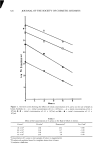
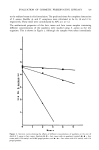
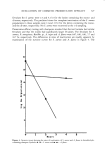
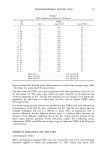
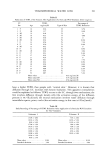
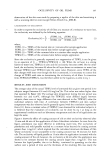
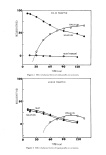
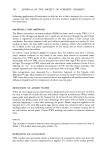
SKIN MOISTURIZATION ASSAY 371 Table I Detection of Added Water Additional Water (mg/cm2/hr) % Increase Over Basal TWL Time (Min) Wet Gauze Plastic Wrap Wet Gauze Plastic Wrap 2 1.31 1.03 344 271 15 0.29 0.40 83 118 30 0.25 0.18 76 55 45 0.20 0.12 53 32 60 0.01 0.07 3 18 tum, aquaphor, and aquaaquaphor (20% water mixed with aquaphor) were applied to skin and tested as stated earlier. RESULTS The occlusive capacity of these compounds is clear (Table 2). But for this to have clinical significance moisture must be retained in the stratum corneum. By wiping away the remaining compound and measuring the TWL we find added detectable moisture present (Table 2). Table II Detection of Occlusion Amount of TWL Suppression % Suppression Time After (mg/cm-2/hr-•) of TWL Application (Min) Petrolatum Aquaphor AquaAquaphor Pet A AA 30 .42 .25 .18 89 68 49 60 .36 .22 .16 84 65 47 90 .33 .16 .15 70 53 50 Wiped Off ND .20 • .11 • ND 62 • 34 • ND = Not Done. • = Increased TWL, see text. EVALUATION OF MOISTURIZERS Products to be tested were applied in duplicate, 0.02 ml to 6.25 Cm 2 of skin. A steady reading for 30 sec was required as an end point. The tests were repeated on four separate days. The products tested include a water in oil emulsion, a 10% urea lotion, a polyethylene glycol lotion and a viscous concentrate. Since several of the products contain either water or strongly hydroscopic agents, all were applied to plastic film in the same concentration as they were applied to skin. Readings generated on plastic would indicate water in the product and would constitute water present, but not necessarily available to skin. RESULTS The moisture enhancement provided by the products tested can be seen in Table 3. Each was initially applied to a plastic film in the concentration to be used on the skin.

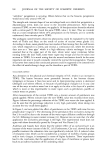
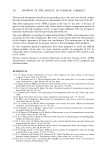
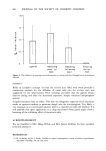
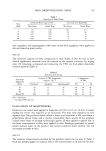
372 JOURNAL OF THE SOCIETY OF COSMETIC CHEMISTS Table III Moisture Enhancement Over Basal TWL t Time After mg/cm-2/hr-t Application (Min) Lotion % Increase Urea PEG Conc Lotion Urea PEG Conc 30 0.06 0.10 0.21 60 0.06 0.11 0.20 90 0.07 0.12 0.21 120 0.09 0.14 0.24 180 0.11 0.17 0.26 Average 0.43 19 31 66 134 0.43 20 37 67 143 0.32 25 43 75 114 0.28 36 56 96 112 0.30 48 74 113 130 -- -- 30 48 83 127 •All values represent averaged data of the four days of study. After 15 min most of the water present in the products had evaporated by both gross inspection and measurement. After 30 min the highest reading generated by the hydroscopic products was 0.03 mg/cm2/hr, a small artifact. Readings taken beyond 30 min which are above control values represent moisture available to the horny layer. Each product added moisture to a different degree. None were occlusive. This allowed for rank ordering of the moisturizers. The products were tested on four separate days and the rank orders were compared by an analysis of variance for ranked data (Friedman's test). The rankings were consistently maintained from day to day (p 0.01). To investigate the possibility that the moisturizers had both moisture enhancing and occluding properties a wipe-off test was done at the end of the study. Moisture detectable at the skin surface diminished toward basal values suggesting no occlusive moisture was going undetected. DISCUSSION A method to indirectly, but objectively study skin moisturizers is available. The technique does not measure the absolute in vivo moisture content, but when more water is present it is detected. Four common moisturizers were studied. None were found to be occlusive and their moisture enhancing capacities vary greatly. How do they add water to the stratum corneum? None of the products produce the kind of damage to the horny layer required to increase TWL (7,9,10). An increase in sensible sweating is, likewise, not a normal reaction to application of these products. The water present in the products themselves was given ample opportunity to evaporate before the tests were run (30 min). Could the increase in TWL measurements represent an effect on stratum corneum which allows an increase in insensible water loss ? Yes, in fact, one way to do just that is to hydrate the horny layer which in turn allows a greater transpirational water loss (11). Whether this is the mechanism of action or the humectants present in these products are able to impart water to keratin, the net effect is hydration of the stratum corneum. REFERENCES (1) I. H. Blank, Factors which influence the water content of the stratum corneum,J. Invest. Dermatd., 18, 433-440 (1952).
Purchased for the exclusive use of nofirst nolast (unknown)
From: SCC Media Library & Resource Center (library.scconline.org)