J. Soc. Cosmet. Chem., 31, 29-36 (January/February 1980) Modern nail enamel technology MITCHELL L. SCHLOSSMAN, Tevco, Inc., Carlstadt, NJ 07072. Received June 8, 1979. Synopsis The efficient production of nail polish comprises one of the most highly specialized branches of cosmetic manufacture. NAIL LACQUER constituents and the basis for their selection are reviewed together with PROPERTIES, FORMULATION and MANUFACTURING TECHNIQUES, equipment and plant requirements, manufacturing problems, dermatological considerations, as well as quality control testing of nail enamels. Techniques described for the evaluation of nail enamels include adhesion, colormatching, flow characteristics, and wear resistance. INTRODUCTION According to a recent issue of Advertising Age (1), nail enamels have estimated annual retail sales of $150,000,000 with a 10-20% gain predicted from 1979 over 1978. This growth has been influenced by (1) the return to color in women's fashion, (b) the influx of nail products into food stores, and (c) the greater attention that women are paying to their nails. The efficient production of nail enamels comprises the most highly specialized division of cosmetic manufacture. In addition to the stringent requirements of consistency, shade and performance, there are fire and explosion risks to be considered, necessitating suitable precautions. For large-scale manufacture of nail lacquers, skilled and experienced technical personnel working in a well-equipped, specialized plant are essential. Expensive equipment is needed to prepare a quality, saleable product. Most nail enamels are purchased ready packaged or prepared in bulk from a reputable contract manufacturer. Nail lacquers form the largest group of manicure preparations. Their components are selected on the basis of the required functional attributes. They should be easy to apply and should dry and harden rapidly. They should be waterproof, well adherent and glossy, elastic, resistant to chipping and abrasion. The raw materials should be nontoxic and dermatologically innocuous. DISCUSSION Nail enamel constituents are selected on the basis of the aforementioned required functional properties. Before proceeding to discuss the selection of constituents and 29

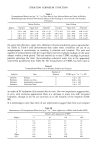
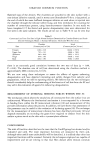
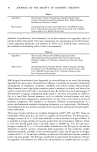
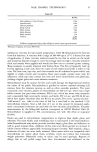
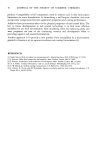
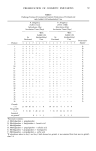
30 JOURNAL OF THE SOCIETY OF COSMETIC CHEMISTS Table I Ingredients: May Contain: Butyl Acetate, Toluene, Nitrocellulose, Isopropyl Alcohol, Ethyl Acetate, Toluenesulfonamide/formaldehyde Resin, Dibutyl Phthalate, Stearalkonium Hectorite, Camphor Titanium Dioxide, Guanine, Iron Oxides, D & C Red if6 Barium Lake, D & C Yellow//5 Zirconium Lake, Ferric Ferrocyanide, D & C Red//34 Calcium Lake, D & C Red//7 Calcium Lake methods of production, and evaluation, let us first examine the ingredient label of typical modern nail enamel. The main constituents of a nail enamel are the film former, a resin, pigments, plasticizer, and solvents. In Table I and Table II, these constituents are reviewed in descending order of their concentrations. Table II Ingredients: May Contain: Butyl Acetate, Toluene, Nitrocellulose, Isopropyl Alcohol, Toluenesulfonamide/formaldehyde Resin, Ethyl Acetate, Dibutyl Phthalate, Camphor, UV Absorber-l, Stearalkonium Hectorite, Butyl Alcohol Bismuth Oxychloride, Titanium Dioxide, Titanium Dioxide (and) Mica, Iron Oxides, D & C Red if6 Barium Lake, D & C Red//7 Calcium Lake, D & C Red//34 Calcium Lake, D & C Yellow//5 Aluminum Lake, Ferric Ammonium Ferrocyanide Nail lacquer formulations have depended on nitrocellulose as its main film-forming ingredient for many years. Derived from cellulose, it provides an unusual combination of properties of toughness, durability, solubility, and solvent release. Nitrocellulose films, however, have a high gloss transition point, a tendency to shrink, and have to be used in conjunction with one or more plasticizers. By itself, it has the disadvantages of discoloration on aging, undergoing sharp drops in viscosity, and losing its ability to dry to a hard film. Several materials, such as cellulose acetate-butyrate and ethyl cellulose have been suggested as replacements (2), but none so far match in terms of hardness, toughness, and resistance to abrasion. Cellulose acetate-propionate is a recent developmental material undergoing evaluation as a replacement. Additionally, nitrocellulose does not oxidize and polymerize. It produces waterproof and atmospher- ically stable films. Three types of nitrocellulose are available, designated as RS ©, AS ©, and SS ©. These are trademarks of Hercules, Inc., the sole U.S. supplier of nitrocellulose. The RS type has a nitrogen content of 11.2--12.8% with solubility in esters, ketones, and glycol ethers. It is available in a large number of viscosity grades from 18 centipoises to 5000 sec. There is even one special grade with a viscosity equal to 200,000 sec. The AS type has a nitrogen content of 11.3--11.7% with similar solubilities as the RS type. It can also be dissolved in solvent systems containing high proportion of low molecular weight anhydrous alcohols, available in two viscosity grades. Lastly, the SS type has a nitrogen content of 10.7--11.2% and has solubility in mixtures of alcohol and toluene, available in five viscosity grades. The RS type is preferred in nail enamel formulations. Peirano (3) regarded a 15% solution of a RS 0.5 sec nitrocellulose in suitable solvents to yield a
Purchased for the exclusive use of nofirst nolast (unknown)
From: SCC Media Library & Resource Center (library.scconline.org)