J. Soc. Cosmet. Chem., 31, 37-40 (January/February 1980) Are cosmetic emulsions adequately preserved against Pseudomonas? PHILIP A. BERKE and WILLIAM E. ROSEN, Sutton Laboratories, Inc., 116 Summit Avenue, Chatham, NJ 07928. Received June I, I979. Presented at Annual Scientific Meeting, Society of Cosmetic Chemists, December 1979, New York, New York. Synopsis Twenty-six COSMETIC EMULSIONS PRESERVED with parabens and currently on the market were purchased and challenge tested with PSEUDOMONAS AERUGINOSA ATCC15442 and Pseudomonas aeruginosa ATCC 13388. Half of the products failed to kill both microorganisms after seven days. Challenge testing of the same products after fortifying them with 0.3% imidazolidinyl urea (CAS //39236-46-9) resulted in complete kill of both pseudomonad types within three days. INTRODUCTION Pseudomonas contamination of cosmetic products is recognized as the pre-eminent problem in cosmetic preservation. This spoilage organism and opportunistic pathogen is widely distributed in natwe and is resistant to antimicrobial agents. Among the various pseudomonads, Pseudomonas aeruginosa is the species of greatest concern because it is a health hazard in eye and burn infections and it is exceptionally resistant to both natural defenses and antimicrobial chemicals (1,2). Although different Pseudomonas species have been shown (3) to have somewhat different vulnerabilities to preservative systems, P. aeruginosa is almost always included in preservative screening experiments. In order to determine whether cosmetic emulsions presently being sold in the United States were protected against P. aeruginosa contamination, the authors purchased twenty-six currently available commercial cosmetic products and challenge tested them with two different strains of P. aeruginosa. Since parabens are the most widely used preservatives in the cosmetic industry (4), the authors selected cosmetic products which used parabens as the sole, or primary, preservative. Recent work (3,5) suggests that parabens alone may not provide sufficient protection against P. aeruginosa contamination. To permit interested microbiologists to repeat these challenge tests on their company's products, the authors chose readily available (6) challenge organisms, P. aeruginosa ATCC 15442 and P. aeruginosa ATCC 13388. After challenge testing the twenty-six commercial cosmetic emulsions as purchased, 37

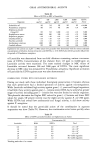
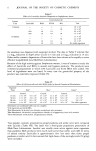
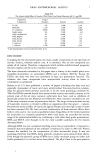
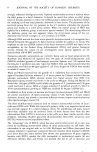
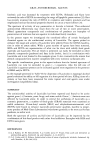
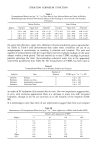
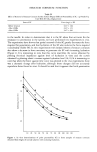
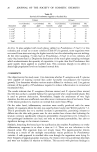
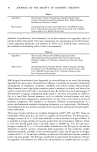
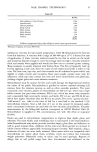
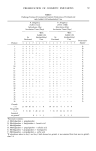
38 JOURNAL OF THE SOCIETY OF COSMETIC CHEMISTS each of the preservative systems was strengthened by the addition of 0.3% imidazolidi- nyl urea (Germall 115 ©, registered trademark of Sutton Laboratories, Inc.), incorpo- rated as a 50% aqueous solution added to a sample of stirred warm emulsion. The highly water-soluble imidazolidinyl urea was therefore dissolved into the water phase. The resultant fortified emulsions were then challenge tested again with P. aeruginosa ATCC 15442 and P. aeruginosa ATCC 13388. EXPERIMENTAL The microorganisms, P. aeruginosa ATCC 15442 and P. aeruginosa ATCC 13388, were purchased from the American Type Culture Collection (6). The cultures were maintained on Tryptic Soy Agar (TSA, Difco Laboratories, Detroit, Michigan) at 5øC. They were transferred approximately once a month. A 24-hr A.O.A.C. Letbeen Broth (BBL 10914) culture (7) was added (0.5 ml to 4.5 ml) to the sample emulsion and mixed well. The sample, challenged with ca 106 microorganisms per ml, was stored at 35øC in a hot air•'incubator for the duration of the test. After 24 hr, 48 hr, 72 hr, and, where required, 7 days(d), a 0.1-ml loopful was aseptically transferred into tubes containing A.O.A.C. Letbeen Broth. The subculture tubes were incubated at 35øC for 48 hr and then examined for the presence of growth. If the initial 0.1 ml sample turned the subculture Letbeen Broth cloudy immediately, the subculture was incubated for 24 hr at 35øC and then subcultured a second time into fresh medium and incubated at 35øC for 48 hr. Since growth in a subculture could theoretically result from as few as one transferred microorganism, a "no growth" result represents less than 10 microorganisms per mi. Because "no growth" in subcultures was invariably followed by subsequent "no growth" on subsequent sampling and subculturing of the emulsions, "no growth" on subculture is assumed to represent effective elimination of the microorganism from the cosmetic emulsion. DISCUSSION OF RESULTS The products tested were manufactured by fourteen large and seven small-to- medium-sized companies, and included several large-volume products. Two different products from each of four large companies and one small company were examined. Thirteen of the products used preservative systems consisting of methylparaben plus propylparaben, seven products used methylparaben alone, and five products used methylparaben plus propylparaben plus a third preservative (butylparaben in three cases, salicylic acid in one case, and sorbic acid in one case). One product used a preservative system of methylparaben plus butylparaben plus benzoic acid. The results are listed in Table I. Only three of the twenty-six products as now sold eliminated both pseudomonad types within 24 hr (8). In fact, in only half the products (13) was P. aeruginosa ATCC 15442 killed even after 7 d. In general, P. aeruginosa ATCC 15442 had longer survival times in the products than did P. aeruginosa ATCC 13388.
Purchased for the exclusive use of nofirst nolast (unknown)
From: SCC Media Library & Resource Center (library.scconline.org)