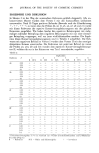
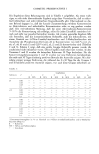
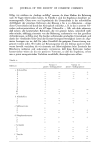
224 JOURNAL OF THE SOCIETY OF COSMETIC CHEMISTS DEFINITIONS The term, foam, is a broad, generic term which includes the entire range from a dense, creamy shave cream-type to a wispy, large cell, loose, open network of fragile, interconnected bubbles. Lather, on the other hand, is generally thought of as a close packed, dense foam which exhibits viscoelastic flow properties and a finite, weight-supporting mechanical strength. Also associated with this phenomenon is the optical property of sheen and the tactile properties of lubricity and slip. g•/hile the quantification of foaming t•er se is of some general interest to the cosmetic chemist, it is the determination and optimization of lather that is of principal concern. Often, however, the foaming properties of surfactants and shampoos are relied upon because of the ease, simplicity and reproducability of foam measurements such as the Ross-Miles test. Lathering determinations have been proposed and used but often lack simplicity and/or reproducibility. EXPERIMENTAL METHOD Our work on incorporating quaternary ammonium compounds into anionic shampoo formulations utilizing sarcosinate surfactants led us to develop a simple method for examining the lathering properties of these mixtures. During our initial investigation, we examined several methods which are described in the literature. Of particular interest were procedures which were simple and allowed reasonably reproducible comparisons of lathering properties. Following the lead of mussman and Lennon (1), we attempted to correlate the sinking times of various solid objects through the volume of lather obtained in a kitchen food blender. In our hands, we found sinking times to vary several hundred per cent on identical samples. We also examined the method proposed by Moldovanyi and Hungerbuhler (2) which consists of introducing air into the solution at constant rate and determining the volume and density of the generated foam for various time intervals. Again, we were unable to obtain reasonably consistent results with a standard test solution. Volumes and weights of generated foams varied seventy per cent or more. Little improvement and simplification in the estimation of lathering ability has been reported since Neu (3) published his work in 1960. Working with active surfactant concentrations of 1.5-2.0%, this method was intended to generate and measure lathers comparable to actual shampoo lathers. This technique utilized a kitchen food mixer which allows maximum generation and expansion of lather. The shearing effect of the beaters simulates the high surface area and high shear rates produced during the actual lathering of the hair. This highly dynamic action was found to produce lather results far closer to those obtained in practice than do more static methods such as the cylinder shake test, Ross-Miles test or use of an oscillating perforated disc in a cylinder of surfactant solution. While no simple method of lather estimation can adequately simulate the actual action of lathering on the hair, we have developed a rapid, simple, inexpensive and

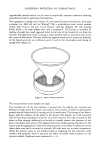
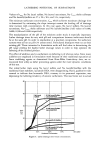
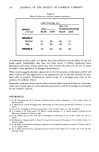
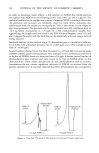
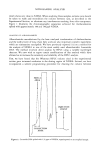
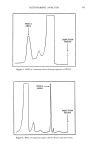
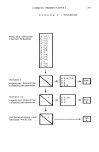
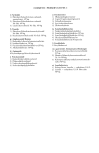
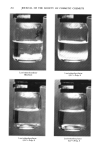
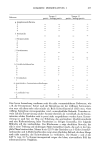
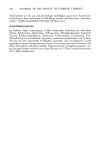
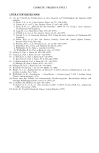
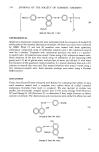
LATHERING POTENTIAL OF SURFACTANTS 225 reproducible method which can be used to empirically examine surfactant lathering properties and aid in optimizing formulations. The equipment is simple and consists of a two speed kitchen food blender, with glass container (ca. 1000 ml) such as Waring © 700, a polyethylene wide mouth powder funnel with 15.0-cm top and 3.5-cm bottom opening (Nalgene PF 150, Catalog #4242-0150), a 20 mesh (840ix) sieve and a stopwatch. The funnel is modified by melting through two small opposed holes in the side of the funnel 8.0 cm from the bottom. Through these holes is strung a small stainless steel or nichrome wire across the center of the funnel. This wire should be approximately 9.0 cm across the diameter of the funnel and acts as a reference point to aid in the observation and timing of sample flow (Figure 1). Figure 1. Lather drainage apparatus. The test procedure is also simple and rapid. Two hundred ml of the test solution is poured into the blender jar, covered and blended on high speed for exactly one minute. This amount of lather is immediately poured into the funnel which is resting on the 20 mesh sieve. The timing of the flow is begun with the addition of the lather to the funnel. The blender jar is held inverted over the funnel and allowed to drain for 15 s, then removed. The time is noted for the lather to flow through sufficiently to be able to visually observe the presence of the wire in the lather from above. This elapsed time from initial pouring of lather into the funnel until the appearance of the wire reference point in the lather is referred to as the lather drain time and is recorded in seconds. All trials were run at room temperature. While the authors chose to use distilled water in preparing the test solutions, other workers will probably wish to examine the effect of added water hardness on the systems studied. Replicates were measured to +_ 2 s.
Purchased for the exclusive use of nofirst nolast (unknown)
From: SCC Media Library & Resource Center (library.scconline.org)