224 JOURNAL OF THE SOCIETY OF COSMETIC CHEMISTS 2,4-diaminoanisole (DAA, ring •4C, specific activity 104/xCi/mg) was added to Miss Clairol Creme Formula//52, Black Azure, containing 1.74% DAA p-phenylenediamine (PPD, ring •4C, specific activity 203 /xCi/mg) was added to Nice'n Easy//124, Blue Black, containing 2.7% of PPD. Semi-permanent hair color was enriched with N4,N4-Bis-(2-hydroxyethyl)-N'-methyl-2-nitro-p-phenylenediamine (HC Blue //1, ring •4C, specific activity 113.6 /xCi/mg) in Loving Care Lotion //795, Darkest Brown, containing 1.48% of HC Blue//1. 2. DYEING PROCEDURE Process instructions, specific for each hair color product, were followed. Net weights of single application hair coloring products vary between 3 (semi-permanent dyes) and 4 fl. oz. (oxidative, permanent dyes). While this is sufficient to color up to 120g of hair, the average weight of female scalp hair 4 inches long is about 60g. The lotion/hair ratio commonly operative during hair coloring is thus 1.5-2.0 and the latter value was ,chosen to arrive at the quantity of the dye mixture that should be used in the studies with Rhesus monkey (the larger the lotion/hair ratio the greater is the availability of the dye for scalp penetration). A. Rhesus Monkeys Animals were anesthetized with 0.2 ml of ketamine and placed comfortably in a supine position on a laboratory bench top. The head of each monkey was rested on a specially designed sink support to facilitate the coloring process and assure quantitative collection of the rinse water. The dye lotion (total of 5g, in the case of oxidative dyes consisting of 2.5g of the dye solution and 2.5g of 6% aqueous hydrogen peroxide) was worked into the dry scalp hair until all the dye mixture was used (•3 min). The operator wore vinyl disposable gloves. Twenty minutes were allowed for the dyeing process to proceed (30 min in the case of the semi-permanent dye where a plastic turban was also used). After dyeing, the hair was rinsed with a microshower until the rinsing water was free of color. The excess water remaining on the hair was blotted with a paper towel and the dyed hair was shaven with electric clippers. B. Human Volunteers The coloring was performed with one subject at a time. The subject was seated in a chair having his head rested on a specially constructed sink support for comfort and easy collection of rinse water. The dye mixture (---110g for the oxidative color and T88g for the semi-permanent) was applied to dry hair and worked gently into the hair mass over a period of 5-8 min and left on the hair for an additional 20 (permanent color) or 30 (semi-permanent color) min. In the latter case, a plastic turban was wrapped around the hair for the dyeing period. The dyed hair was thoroughly rinsed, towel blotted, and shaven off with an electric clipper. 3. URINE COLLECTION A. Rhesus Monkeys After the dyeing procedure was completed, all of the monkeys were restrained in ophthalmological chairs, thus preventing their touching the scalp area. Urine samples

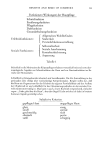
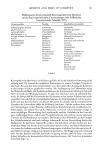
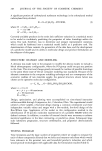
PERCUTANEOUS PENETRATION OF HAIR DYES 225 were collected at 6, 12, and 24 hours and from then on at 24-hour intervals for seven days. B. Human Volunteers The subjects were given plastic urine containers for each time period: 0-4, 4-8, 8-12, 12-24, 24-48, etc., up to 144 hours. For both species and for each time period, total urine weights were recorded and an aliquot removed for analysis. 4. RADIOACTIVITY DETERMINATION IN URINE All urine samples were filtered and assayed in PPD-triton-toluene with a liquid scintillation spectrometer. A •4C toluene internal standard (100,000 cpm) was added to each counting vial to determine the extent of quenching. The counting cocktail was 81% efficient and the background was 22 cpm. Most specimens were also counted by the wet ashing method (8). 5. DETERMINATION OF RADIOACTIVITY IN DYED HAIR Hair samples of known dry weight (40-80 mg) were digested overnight in counting vials, each containing 1 ml of Unisol. The digested samples were decolorized by the addition of 50% H20 2 and each was diluted with 15 ml of Unisol complement. Clear samples were equilibrated in the counting chamber at 4øC before counting on a Packard Tricarb liquid scintillation spectrometer. Three samples were analyzed for each hair lot with three radioactivity determinations for each sample. RESULTS 1. PERMANENT HAIR COLOR A. 2,4- Diaminoanisole The data on total excretion of radioactive dye are given in Table I. In the case of the rhesus monkey, they.reflect the counts obtained over 144 hours following application of the dye. In the case of human subjects, the time span was 96 hours as the counts at longer times were within background counts. Table I Scalp Penetration of 2,4-diaminoanisole Under Practical Hair Dyeing Conditions Species Radioactivity Radioactivity Dose Total Dye Total Dye Applied Excreted Excretion Applied Excreted (•tCi) (•tCi) (%) (•g) (•tg) Rhesus Monkey Rhesus Monkey Human (#1, male) Human (#2, male) Human (//3, male) 52 0.0! 2 0.023 43,500 !0.0 52 0.0!0 0.0!9 43,500 8.3 675 0.014 0.0021 642,860 13.5 493 0.027 0.0055 674,550 37.1 539 0.194 0.036 6! 2,220 220.4
Purchased for the exclusive use of nofirst nolast (unknown)
From: SCC Media Library & Resource Center (library.scconline.org)