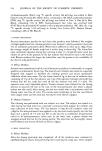
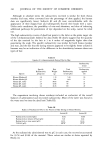
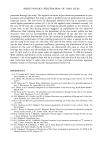
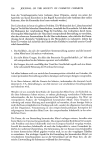
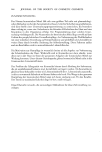
226 JOURNAL OF THE SOCIETY OF COSMETIC CHEMISTS Although in absolute terms the radioactivity excreted is similar for both rhesus monkey and man, when converted into the percentage of dose applied, the human data are significantly lower. Subjects //2 and //3 were uncomfortable with the appearance of their clipped hair and subsequently shaved their heads with a razor. Under such conditions, the possibility of cuts and abrasions, and thus of inducting additional pathways for penetration of dye deposited on the scalp, cannot be ruled out. The high radioactivity counts of dyed hair points to the latter as the prime target site of the 2,4-diaminoanisole. Indeed, the data (Table II) clearly suggest that the quantity of the dye retained by the hair is 3 to 4 orders of magnitude higher than that penetrating the scalp. The specific radioactivity was similar for both rhesus monkey and man, and the fact that the dyeing mixture appeared to be slightly better utilized in humans may be an indication of the difference in the absorbtivity between these two types of hair. Table II Uptake of 2,4-diaminoanisole-Derived Dye by Hair. Species Radioactivity in hair Specific Hair Total Radioactivity Radioactivity Weight Radioactivity applied /zCi/g hair (g) in hair (/zCi) (%) Rhesus Monkey ffl 2.9 1.78 5.18 10 Rhesus Monkey if2 3.3 2.01 6.64 12 Human (#1, male) 3.7 38.92 144 21 Human (#2, male) 2.8 32.86 95 19 Human (#3, male) 3.4 46.76 159 29 The experiment involving rhesus monkeys included an evaluation of the overall balance of administered and recovered radioactivity. Most of the latter was found in the water used to rinse the dyed hair (Table III). Table III Balance of Radioactive DAA in the Process of Hair Dyeing in Rhesus Monkey. Animal #1 Animal #2 Radioactivity excreted Radioactivity in shaven off hair Radioactivity in rinse water (t•Ci) TOTAL 0.012 0.010 5.18 6.64 43.55 41.10 48.74 47.75 As the radioactivity administered was 52/aCi in each case, the recoveries accounted for 93.7% and 91.8% of the material. These values are similar to those reported by Hruby (2).

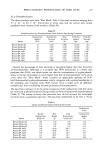
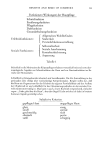
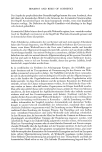
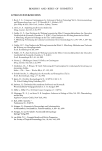
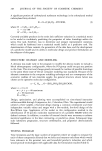
PERCUTANEOUS PENETRATION OF HAIR DYES 227 B. p- Phenylenediamine The three monkeys dyed with "Blue Black" Nice'n Easy had excretions ranging from 3.5 X 10 -2 tO 8.6 X 10 -2 microcuries in seven days and the human data closely paralleled those obtained with monkeys (Table IV). Table IV Scalp Penetration of p-Phenylenediamine Under Practical Hair Dyeing Conditions. Species Radioactivity Radioactivity Dose Total Dye Total Dye Applied Excreted Excretion Applied Excreted (•Ci) (•Ci) (%) (•g) (•g) Rhesus Monkey #3 42 0.035 0.083 67,950 56.4 Rhesus Monkey if4 42 0.059 0.140 67,950 95.1 Rhesus Monkey #5 42 0.081 0.190 67,950 129.1 Human (#4, male) 701 0.87 0.124 1,564,520 1,940 Human (#5, male) 787 1.55 0.196 1,584,690 3,106 Human (3{6, male) 564 1.17 0.207 1,565,700 3,241 Human (if7, male) 559 0.402 0.072 1,558,330 1,122 Human (#8, male) 577 0.690 0.119 1,563,020 1,860 Overall, the percentage of dose excretion is somewhat higher than that found for 2,4-diaminoanisole. Although it is possible that PPD intrinsically is a better skin penetrant than DAA, one should point out that the concentration of p-phenylenedi- amine in the dye formulation is much higher than that of diaminoanisole (2.7% versus 1.7%). Also, the "Blue Black" shade contains an appreciable quantity of N,N- bis(2-hydroxyethyl)-p-phenylenediamine which competes with p-phenylenediamine in the oxidizing and coupling steps. Both factors favor a larger pool of diffusion- available dye, thus contributing to more pronounced skin penetration. The dyed hair continues to be the prime receptacle of the radioactivity with the values for recovered p-phenylenediamine being similar to those obtained with diaminoanisole (Table V). The urinary recovery data presented here do not account for incomplete excretion from a parenteral injection. This has been determined to be 72% + 7% for Table V Uptake of p-Phenylenediamine-Derived Dye by Hair. Species Radioactivity in hair Specific Hair Total Radioactivity Radioactivity Weight Radioactivity applied /xCi/g hair (g) in hair (•Ci) (%) Rhesus Monkey #3 2.86 1.90 5.45 12.9 Rhesus Monkey #4 2.92 1.99 5.80 13.8 Rhesus Monkey #5 3.20 1.91 6.12 14.5 Human (#4, male) 2.50 42.20 105.5 15.2 Human (#5, male) 2.74 60.98 167.1 21.2 Human (3{6, male) 2.82 53.01 149.5 26.5 Human (#7, male) 2.21 36.97 81.7 14.1 Human (#8, male) 1.61 89.0 143.3 24.8
Purchased for the exclusive use of nofirst nolast (unknown)
From: SCC Media Library & Resource Center (library.scconline.org)