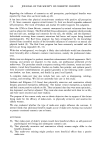
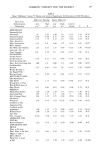
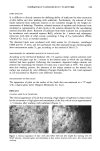
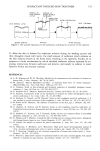
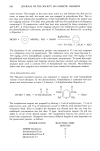
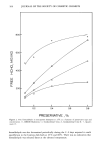
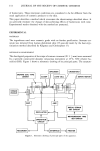
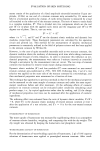
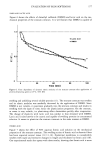
SURFACTANT INDUCED SKIN TIGHTNESS 149 LIPID ANALYSIS It is difficult to directly measure the deffating ability of surfactant by ether extraction of skin before and after washing with surfactant. Furthermore, the amount of total lipids extracted from surfactant solution is not consistent enough for the weight de- termination of defatting. Therefore, released amounts of squalene and cholesterol were estimated as representative of skin lipids in the solution obtained by the cup-shaking method described above. Removal of surfactant from these mixtures was accomplished by incubation with saturated aqueous BaC12 solution for 1 minute and subsequent extraction with 8ml of ethyl acetate containing 2.5mg of C34 hydrocarbon (Wako Chemical Co. Ltd.) as internal standard. The obtained lipids were incubated with ethyl acetate for 10 minutes, centrifuged (3000 rpm for 15 min), and the supernatant was then analyzed by gas chromatography after concentration under N2 gas, according to the method of Abe (13). MEASUREMENT OF ADSORBED AMOUNTS OF SURFACTANTS According to the method of Imokawa (10), 1% aqueous indigo carmine solutions were attached with glass cups for 1 minute to the forearm areas at which the cup shaking method had been applied. Following this treatment, deposited indigo carmine was removed by immersing the forearm 10 times into a water bath at 40øC. Ten minutes after this washing process, the intensity of the indigo carmine on the stained skin surface was evaluted by color difference (Nippon Denshyoku Co. Ltd.) and expressed as AE (calculated by Hunter's color difference formula). MEASUREMENT OV SKIN GLOSS The appearance of gloss on the surface of the cheek skin was measured at a 75 ø angle with a digital gloss meter (Nippon Denshyoku Co. Ltd.). RESULTS CLINICAL ASPECTS OF TIGHTNESS The clinical appearance of facial skin showing a high degree of tightness is characterized by the occurrence of high gloss and smoothness of the skin which occurs approximately 1-5 minutes after washing with surfactant (Figure 1). -. • •. } --s . . . . .... Figure 1. Clinical appearance of male cheek skin before (left) and after (right) f•e washing with 5% SOAP solution. Abnormal gloss and smoothness of skin surface structure were seen a few minutes after washing.

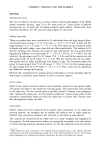
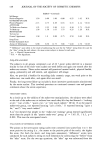
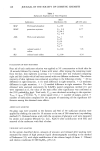
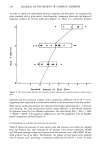
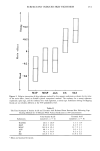
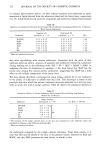
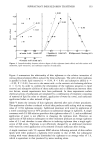
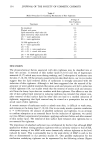
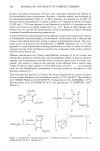
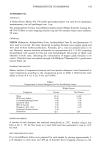
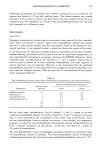
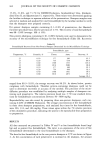
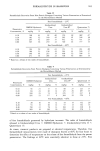
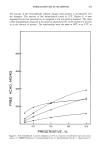
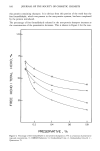
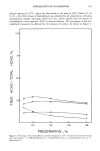
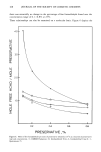
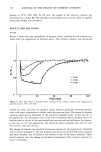
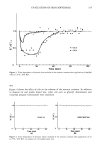
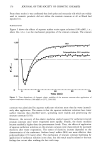
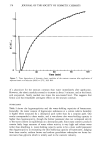
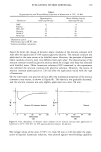
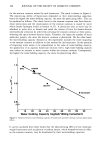
150 JOURNAL OF THE SOCIETY OF COSMETIC CHEMISTS In order to clarify the relationship between tightness and skin gloss, we measured the gloss intensity with a gloss meter, simultaneously comparing gloss with the degree of tightness induced by several surfactants (Figure 2). There is a correlation between {] //' I i i 0 I 2 • '• • Increased Amount of Skin Gloss Figure 2. The relationship between the intensity of skin tightness and increased amount of skin surface gloss. tightness and the occurrence of gloss, with a correlation coefficient of 0.61 (P 0.01), suggesting that tightness is to some extent related to the smoothness of the skin surface. Most anionic surfactants produce the tightness of facial skin approximately 1-5 minutes after washing, but close examination reveals a large difference in the relative intensity of tightness caused by five different surfactants, the order being: SLS ES-2 AGS = SOAP MAP, with significant differences at the 5% probability level by Scheff6's paired comparison method (Figure 3). PHYSICOCHEMICAL ACTIONS OF SURFACTANTS ON SKIN Table II shows the amounts of total amino acids and urocanic acid which are released from the forearm skin after washing for 10 minutes with various surfactants. SOAP and SLS most strongly release total amino acids and urocanic acid, while MAP, ES and AGS produce less of an effect. Furthermore, the release of total amino acids parallels that of urocanic acid, providing a correlation coefficient of 0.98 (P 0.01). In order
Purchased for the exclusive use of nofirst nolast (unknown)
From: SCC Media Library & Resource Center (library.scconline.org)