j. Soc. Cosmet. Chem., 35, 147-156 (May/June 1984) The induction of skin tightness by surfactants MICHIO KAWAI and GENJI IMOKAWA, Kao Tochigi Research Laboratories, 2606 Akabane, Ichikaimachi Hagagun Tochigi 321-34, Japan. Received September 8, 1983. Synopsis We have examined the relationship between surfactant structure and the sensation of tightness which ordinarily occurs on facial skin a few minutes after face washing. Most anionic surfactants cause various degrees of skin tightness, the order being, TEA-lauryl phosphate potassium myristate = TEA-cocoyl glutamate sodium laureth-2 sulfate sodium lauryl sulfate. The physicochemical characteristics of these surfactants, e.g., the ability to remove skin surface lipids, the ability to release amino acids and urocanic acid from the horny layers, and adsorption onto the skin were examined to learn about the causative factors responsible for the induction of skin tightness. Among these factors, the degree of tightness was shown to be related to both the lipid removal and the adsorption abilities of the surfactant. However, we conclude that residual surfactant present after removal of skin surface lipid is primarily responsible for inducing the tightness sensation. INTRODUCTION There have been a number of reports describing the cutaneous effects, including skin irritation (1,2,3) and skin roughness (4,5,6,7), of surfactants. However, little is known about other skin effects, e.g., those associated with the sensation of tightness. It is well known that facial skin is more susceptible to tightness than are other skin areas. Among various skin sensations, tightness frequently arises from washing with a surfactant. There is no available data on the cause of surfactant-induced skin tightness. The ob- jective of this paper is to describe the relationship between surfactant structure and the degree of tightness occuring on facial skin and to further analyze physicochemical factors associated with this action. MATERIALS AND METHODS SURFACTANTS Sodium lauryl sulfate (SLS), sodium laureth-2 sulfate (ES), potassium myristate (SOAP), TEA-cocoyl glutamate (AGS) and TEA-lauryl phosphate (MAP) are identical with those reported previously except for their salt type (8,9,10). Table I summarizes the analytical data on the surfactants employed in this study. 147

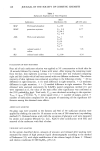
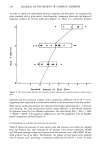
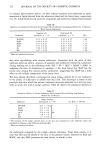
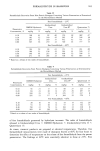
148 JOURNAL OF THE SOCIETY OF COSMETIC CHEMISTS Table I Surfactants Employed and Their Properties Alkyl Surfactants Distribution (%) pH (1% soln.) MAP TEA-lauryl phosphate %2:100 7.73 SOAP potassium myristate C•2:0.8 10.77 C•4:98.5 %6:0.6 AGS TEA-cocoyl glutamate C•0:1 5.21 C12:55 Cs4:24 C•6:11 C18:9 ES sodium laureth-2 C•2:100 7.05 sulfate SLS sodium lauryl sulfate %2:100 6.34 EVALUATION OF SKIN TIGHTNESS Four ml of each surfactant solution was applied at 5% concentration to facial skin for 10 seconds followed by rinsing 5 times with water. After wiping the remaining water from the face, skin tightness occurring 1 to 5 minutes later was evaluated comparing right and left cheeks which had been treated with two different surfactants. The relative intensity of skin tightness was evaluated according to the following criteria: - (0) no difference in tight sensation, ___ (1) weak difference in tight sensation, + (2) moderate difference in tight sensation, + + (3) marked difference in tight sensation. The data obtained were analyzed statistically by ScheffCs paired comparison method (11) and were expressed as o•, the value of the main effect after significance was confirmed at the 95% probability level. Yard stick, Y0.05 was calculated according to the equation: Y0.05 = q0.05 X/V•/2rm. V• = mean square error, r = number of judges, and m = number of surfactants compared for the purpose of examining all the significant dif- ferences among the obtained main effects. AMINO ACID ANALYSIS Six glass cups were attached to the forearm and 8ml of 1% surfactant solution were applied by shaking the arms for 10 minutes at the rate of 200 times/min (cup-shaking method) (7). Released amino acids with the exception of glutamic acid were measured by amino acid analysis (Hitachi Co. Ltd., KLA-5) after acidification with HCi and removal of the surfactant with 8ml of ether. UROCANIC ACID ANALYSIS In the system described above, amounts of urocanic acid released after washing were measured by means of high pressure liquid chromatography according to the method of Nakamura (12), with slight modification of the column length (4.6mm X 150mm) and elution conditions (0.5M aa2SO4, pH 2.2).
Purchased for the exclusive use of nofirst nolast (unknown)
From: SCC Media Library & Resource Center (library.scconline.org)