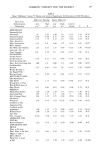
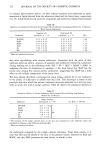
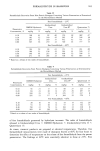
FORMALDEHYDE IN SHAMPOOS 161 Following condensation, the samples were cooled by immersion in an ice bath for one minute and diluted to 25 ml with distilled water. The diluted samples were passed through a 0.45 p, filter to remove any haze which may have formed during the con- densation step. The absorbance at 413 nm of the diacetyldihydrolutidine was measured and compared to a calibration curve. DISCUSSION ANALYTICAL Shampoos containing no protein and no preservative were analyzed for free formalde- hyde. These were found to contain 5 ppm of free formaldehyde. Overall this amount was two to three decades smaller than the concentration found in the shampoos inves- tigated and hence it was ignored because it would not distort the results of the study. ß • was ........... the ........ ch (lutidine) reaction is dependent on the type of formal- dehyde-releasing preservative and the time of reaction at steam bath temperatures. It was experimentally determined in aqueous solutions that DMDM Hydantoin, Imid- azolidinyl Urea, and Quaternium 15 required 15, 5, and 3 minutes, respectively, of reaction time to release all of their combined formaldehyde. The time required in anionic shampoos was not measured. However, it was determined that the combined formaldehyde contained in these preservatives was completely released using these reac- tion times for shampoo systems. This was true for all concentrations of each preser- vative examined (Table II). Table II Total Formaldehyde Liberated From Various Preservatives as Determined by the Hantzsch Reaction moles Formaldehyde/moles Preservative Reaction Time, Preservative Minutes Found Theory DMDM Hydantoin 15 2.0 2.0 Quaternium 15 3 6.0 6.0 Imidazolidinyl Urea 5 2.0 2.0 Imidazolidinyl Urea II 5 2.1 4.0 15 2.4 30 3.2 6O 3.3 On the other hand, Imidazolidinyl Urea II released 2.1 and 2.4 moles of its total combined formaldehyde (theory: 4.0 moles, Table II) at 5 and 15 minutes of reaction time. It never liberated its full complement of four moles, even at 60 minutes. Since the two Imidazolidinyl Ureas are similar in structure, it was decided, for comparative purposes, to utilize the total formaldehyde determined by heating Imidazolidinyl Urea II for 5 minutes. Therefore, all calculations, in this case, were based on a release of 2.0 moles of formaldehyde. The total formaldehyde content of shampoos containing formalin was calculated using the formaldehyde content of formalin. The total formaldehyde content of shampoos containing preservatives was calculated using combined formaldehyde values of 17.5%,

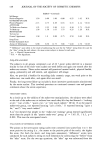
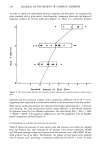
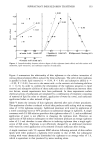
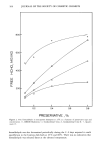
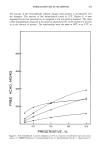
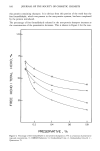
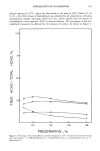
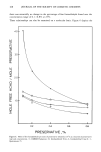
162 JOURNAL OF THE SOCIETY OF COSMETIC CHEMISTS 15.4%, 21.6%, and 71.7% for DMDM Hydantoin, Imidazolidinyl Urea, Imidazoli- dinyl Urea II, and Quaternium 15, respectively. These values were determined applying the lutidine technique to aqueous solutions of the preservatives. Shampoo samples were selected at random and analyzed for total formaldehyde by the lutidine method to verify that the shampoos were prepared correctly. For anionic shampoo samples containing 0.1-0.8% of preservatives, the Hantzsch (lutidine) procedure has a relative precision of _ 7%. The recovery of total formaldehyde was 88-130% (average: 100 _ 8%). Non-protein shampoos containing 0.10-0.80% formalin were used to demonstrate the accuracy of the microdiffusion technique for free formaldehyde (Table III). Recoveries Table III Formaldehyde Recovery From Non-Protein Shampoo Determined by the Microdiffusion Technique Formaldehyde, ppm Temperature, øC Formalin, % Theory Assay Recovery, % 23 0.10 377 360 95.5 23 0.20 754 678 89.9 23 0.40 1508 1553 103.0 23 0.80 3016 2980 98.8 60 0.10 377 360 95.5 60 0.20 754 696 92.3 60 0.40 1508 1501 99.5 60 0.80 3016 2873 95.3 Average 96.2 ranged from 89.9-103% the average recovery was 96.2%. As shown below, protein complexes with formaldehyde. Therefore protein-containing shampoos could not be used to determine recoveries or accuracy of the method. The precision of the micro- diffusion procedure was established by analyzing multiple samples of shampoos con- taining each preservative. The relative precision found was -7% (one standard devia- tion) for formaldehyde concentrations between 50-3000 mg/kg. Reproducibility was also tested by preparing three non-protein shampoos, each con- taining 0.40% of DMDM Hydantoin. The average concentrations of free formaldehyde in these three shampoo preparations, each analyzed four times for free formaldehyde, were 294, 314, and 306 mg/kg. These values agree within the 7% relative precision of the colorimetric procedure, indicating the system to be reproducible from preparation to preparation. RESULTS All data measured are presented in Tables IV and V as free formaldehyde found (mg/ kg) and as percent free formaldehyde. The latter is an expression of the ratio of free formaldehyde determined to the total formaldehyde in the shampoo. The data for free formaldehyde in the non-protein shampoo at 23øC are shown in Figure 2. As the concentration of each preservative is increased in the shampoo, the amount
Purchased for the exclusive use of nofirst nolast (unknown)
From: SCC Media Library & Resource Center (library.scconline.org)