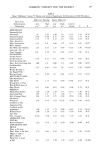
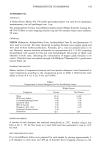
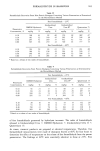
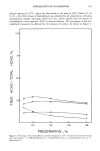
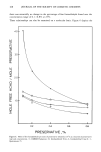
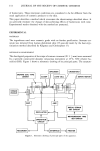
FORMALDEHYDE IN SHAMPOOS 159 EXPERIMENTAL APPARATUS A Perkin-Elmer Model 595 UV/visible spectrophotometer was used for all absorbance measurements the cell pathlength was 1 cm. The polypropylene Conway microdiffusion dishes utilized (Fisher Scientific Catalog No. 08-764-15) have a center trapping solution ring and two annular moats (outer diameter: 59 mm). CHEMICALS DMDM Hydantoin, Imidazolidinyl Urea, Imidazolidinyl Urea II, and Quaternium 15 were used as received. All other chemicals including formalin were reagent grade and were used without further purification. Formalin, per se, was not analyzed prior to its use. However, aqueous solutions of formalin at concentrations of 0.1-0.8% containing formaldehyde were assayed for free and total formaldehyde. Recoveries of 100% were obtained in both cases, indicating the concentration of reagent grade formalin to be correct. Distilled water was passed through a NANOpure © (Barnstead Co.) purification system before use. SHAMPOO PREPARATION Master batches of unpreserved protein and non-protein shampoos were formulated at room temperature according to the compositions given in Table I. Preservatives were added at levels of 0.10, 0.20, 0.40, and 0.80%. Table I Compositions of Anionic Shampoos Used for Formaldehyde Assays Weight Percent Component Protein Non-Protein Water 59.30 61.80 TEA Lauryl Sulfate 25.00 25.00 Cocoamphocarboxyglycinate 5.00 5.00 Lauramide DEA 5.00 5.00 PEG-50 Lanolin 3.00 3.00 Phosphoric Acid, 85% 0.20 0.20 Hydrolyzed Animal Protein 2.50 - Preservative Q.S. Q.s. SAMPLE TREATMENT A portion of each shampoo was analyzed immediately at 23øC. Another aliquot was kept at 60 --- IøC for four hours in a water bath and then permitted to cool to 23øC by itself. FREE FORMALDEHYDE ASSAY Four microdiffusion dishes were prepared for each sample by placing approximately 4 g of shampoo in each moat and 200 I•l of distilled water (trapping solution) in the

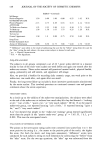
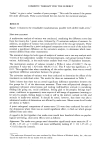
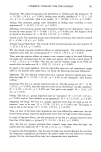
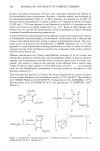
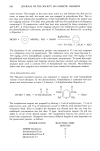
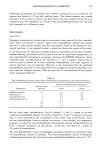
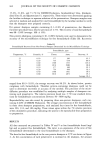
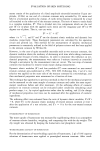
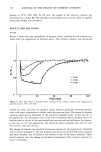
160 JOURNAL OF THE SOCIETY OF COSMETIC CHEMISTS center section. The sample in the outer moat acted as a seal between the dish and its cover to insure the seal, the entire unit was wrapped in polyethylene film. Two to four days were allowed for equilibration of free formaldehyde between the sample and the trapping solution. Two days were generally sufficient for equilibration of shampoos containing 0.1% preservative, while four days were required for those containing 0.4 and 0.8%. A 20 •1 aliquot of the trapping solution was withdrawn for analysis using the phenylhydrazine colorimetric procedure of Tanenbaum and Bricker (6), according to Equation 1. HCHO + • NHNH2' HCI + NaOH K3[Fe(CN)6] ) =N-N=CH2 + 2 H20 + NaC1 The absorbance of the condensation product was measured at 513 nm and compared to a calibration curve for quantitation. The calibration curve was linear between 0- 350 mg/kg of free formaldehyde samples containing more than 350 mg/kg of free formaldehyde were diluted prior to the colorimetric measurement. To insure that equil- ibration between sample and trapping solution had been reached, each shampoo was analyzed daily until a constant level of formaldehyde was obtained. Microdiffusion dishes that were sampled were discarded and never resealed for subsequent analysis. TOTAL FORMALDEHYDE ASSAY The Hantzsch (lutidine) reaction was employed to measure the total formaldehyde content of each shampoo. In this determination, formaldehyde is condensed with am- monia and acetylacetone to form 3,5-diacetyl-l,4-dihydrolutidine (Equation 2). O o o I1 II CH3C HCHO + NH 3 + 2CH3CCH2CCH 3 H3C O CCH 3 CH 3 + 3H20 The acetylacetone reagent was prepared by diluting 1.0 ml of acetylacetone, 1.5 ml of glacial acetic acid, and 75 g of ammonium acetate to 500 ml with distilled water in a volumetric flask. Prior to analysis the shampoo was diluted such that the total for- maldehyde concentration was less than 15 ppm. Acetylacetone reagent (10 ml) was added to 10 ml of the diluted sample. The condensation reaction was carried out at steam bath temperature. Shampoos were heated different lengths of time dependent on the preservative present, as follows: PRESERVATIVE REACTION TIME, MINUTES DMDM Hydantoin 15 Imidazolidinyl Urea 5 Imidazolidinyl Urea II 5 Quaternium 15 3
Purchased for the exclusive use of nofirst nolast (unknown)
From: SCC Media Library & Resource Center (library.scconline.org)