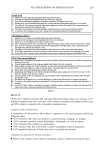
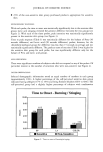
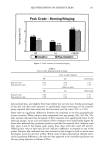
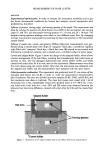
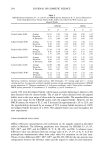
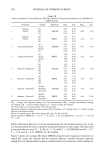
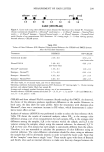
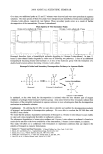
268 JOURNAL OF COSMETIC SCIENCE proportion respond positively. Producers of skin care products are well aware that many women report that they are intolerant to a variety of cosmetic formulations, citing sunscreens, fragrances, and moisturizers as most often troublesome. By "sensitive skin" some respondents mean any adverse event including various rashes, breakouts, and assorted visible dermatoses, mainly focused on the face (1). A sizeable number of women with self-assessed "sensitive skin" record a variety of purely subjective discomforts that occur in the absence of clinical signs. These include stinging, burning, itching, tight- ness, and other vague sensations. The question arises regarding the credibility of these assessments, especially the sub- clinical neurosensory reactions. Among the pressing issues are: Can women with sensi- tive skin be identified by clinical examinations? Is there a recognizable phenotype such as oily, dry, or photodamaged skin? What tests are available to validate the presence of sensitive skin? Should pre-marketing surveys of new skin care products be carried out in panels of women who have been objectively identified as having sensitive skin? We examined the sensitivity of chemical probes to assess the prevalence and severity of sensitive skin. MATERIALS AND METHODS Approximately 1000 adult white females (ages 18 to 65) were recruited from five geographically diverse locations in the North American continent: Arizona, Ohio, New Jersey, Manitoba, and Florida. This study compared the responses of two populations who by self-assessments perceived themselves to have sensitive or non-sensitive skin to three chemical probes, each of which elicited characteristic reactions. In each test site approximately 200 women participated, 40% of whom had sensitive skin while 60% were non-sensitive. There was an attempt to enroll 50% from each group. At the first visit each subject answered a 20-item questionnaire that specifically asked, "Do you have sensitive skin?" and gave a detailed account of adverse reactions to facial skin care products. Applications of the chemical probes were randomized to opposite sides of the face. There were three visits at least two days apart, with one probe being applied at one time. The three chemical probes were applied on separate visits in accordance with the meth- ods outlined below see (Figure 1). A script was provided to standardize the wording used when communicating with the subjects regarding subjective responses. Burning/ stinging responses were recorded each minute for up to ten minutes, utilizing the following grading scale: 0 = none, 1 = mild, 2 = moderate, 3 -- severe. The endpoints for analysis were (a) time in minutes to perceived burning/stinging and (b) maximum score achieved. STATISTICAL ANALYSIS The data used in the statistical analysis were the times to perceive the specified sensory response and the maximum score achieved. Student's t-test was used to establish whether there were statistically significant differences to each of the three probes between the two groups (sensitive vs non-sensitive)at the 0.05% level.

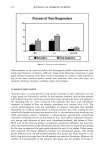
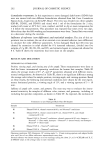
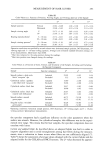
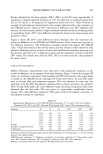
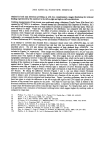
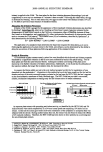
SELF-PERCEPTION OF SENSITIVE SKIN 269 Lactic Acid 1) Subjects are to be seated in an upright position facing the technician. 2) Wipe the nasolabial fold and adjacent cheek area with a dry cotton pad. 3) Dip a clean cotton-tipped applicator in a container containing 10% aqueous lactic acid. 4) Briskly/gently rub the nasolabial fold/cheek area with the saturated cotton-tipped applicator for 10 seconds. 5) Set a timer for 10 minutes immediately following the application and ask the subject if she is experiencing any sensation and to describe the sensation, if any. 6) The subject will be asked each minute thereafter to grade the test site until the ten minutes has expired. 7) At the end of the 10 minutes, the test site is wiped with a cotton pad moistened with distilled water. 10% Balsam of Peru 1) Subjects are to be seated in an upright position facing the technician. 2) Wipe the cheek area adjacent to the nasolabial fold with a dry cotton pad. 3) Pipette 0.1cc of 10% Balsam of Peru probe on the test site. 4) Rub in the Balsam of Peru for ten seconds with a glass rod using a circular motion over an area the size of a dime. 5) Set a timer for 10 minutes immediately following the application and ask the subject if she is experiencing any sensation and to describe the sensation, if any. 6) The subject will be asked each minute thereafter to grade the test site until the ten minutes has expired. 7) If the subject experiences a sensation of 3 (severe), the solution is removed and the time and grade are recorded. 8) At the end of the 10 minutes, remove the Balsam of Peru using a cotton pad moistened with distilled water. 10:90 Chloroform/Methanol 1) Subjects are to be seated in an upright position with head slightly tilted back to create a level surface or subject may lay down on her back. 2) Wipe the malar eminence of the cheek area (apple of the cheek) with a dry cotton pad. 3) Make a shallow circular well, 8 mm in diameter, on the test site by gently pressing the skin with the end of a plastic cylinder previously dipped in a layer of stopcock grease. The grease forms the wall of the well. 4) Pipette 20gl of the chloroform/methanol solution into the well. 5) Immediately after filling the well with the chloroform/methanol, place a plastic disc over the well to seal. Set the timer for 5 minutes once the disc is in place. 6) Once the solution is placed in the grease ring, ask the subject if she is experiencing any sensation and to describe the sensation, if any. 7) The subject will be asked every 15 seconds thereafter to grade the test site until the five minutes has expired. 8) If at any time the subject experiences a sensation of 3 (severe), the solution is removed and the time and grade are recorded. 9) At the end of the 5 minutes or subsequent to a grade 3 sensation, remove the grease well using a dry cotton pad and wipe the area with a cotton pad moistened with distilled water. Figure 1. RESULTS Of the 1017 subjects enrolled, 405 indicated they had sensitive skin 612 did not. 1017 subjects completed the lactic acid test, 1001 subjects completed the balsam of Peru test, and 889 subjects completed the chloroform methanol test. CLASSIFICATION OF SENSITIVITY A breakdown of the sensitive skin subjects' responses to the questionnaire yielded the following data: © 42% indicated that skin care products caused burning, stinging, or itching. © 30% indicated products caused blackheads, whiteheads, or ache breakouts. © 25% indicated that products caused rashes. © 56% reported that dry cold winter weather exacerbated sensory symptoms. © 14% reported irritation of facial skin due to physical stimulation. COMPARATIVE ANALYSIS OF BUYING PATTERNS 80% of the sensitive skin subjects purchased products labeled for sensitive skin.
Purchased for the exclusive use of nofirst nolast (unknown)
From: SCC Media Library & Resource Center (library.scconline.org)