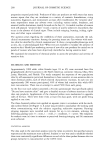
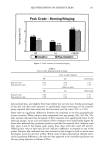
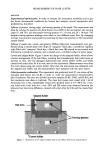
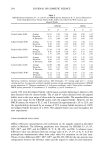
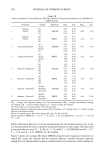
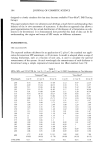
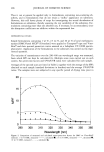
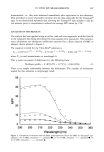
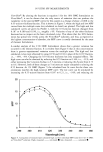
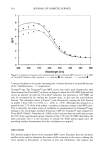
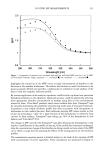
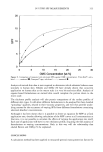
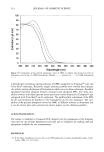
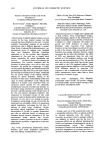
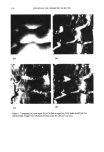
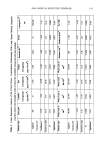
294 JOURNAL OF COSMETIC SCIENCE Table V CIELAB System Parameters L*, a*, and b* and FMCII System Parameters X, Y, and Z, Obtained for Three Dark-Brown Hair Tresses (D-B1, D-B2, D-B3 ethyl ether/8 h) With Current and Adapted Holder CIELAB FMCII L* a* b* X Y Z Current holder D-B1 Adapted holder D-B1 Current holder D-B2 Adapted holder D-B2 Current holder D-B3 Adapted holder D-B3 Average Deviation % Deviation Average Deviation % Deviation Average Devmtion % Deviation Average Deviation % Deviation Average Deviation % Deviation Average Deviation % Deviation 23.03 3.96 5.46 3.88 3.80 3.23 0.35 0.11 0.16 0.10 0.10 0.08 1.52 2.88 2.89 2.59 2.66 2.56 21.14 3.89 5.34 3.35 3.28 2.71 0.20 0.16 0.33 0.06 0.05 0.04 0.98 4.03 6.13 1.74 1.67 1.33 23.38 3.78 4.87 3.97 3.91 3.36 0.40 0.18 0.18 0.13 0.12 0.01 1.75 4.99 3.89 3.25 3.10 2.87 20.79 3.84 5.47 3.25 3.19 2.61 0.20 0.12 0.24 0.06 0.05 0.02 0.98 3.21 4.41 1.76 1.64 0.91 22.88 3.80 4.03 3.82 3.72 3.22 0.47 0.15 0.31 0.14 0.03 0.09 2.08 4.07 7.59 3.73 3.69 2.81 21.31 3.72 4.99 3.38 3.32 2.81 0.44 0.16 0.22 0.12 0.12 0.11 2.11 4.26 4.49 3.62 3.57 3.94 Operating conditions: horizontal sample position, D65 illuminant, 10 ø viewing angle and 5 x 10-mm viewing aperture. Averages and estimated standard deviation among quintuplicate measurements. CIELAB system parameters: L* (lightness coordinate), a* (red-green coordinate), and b* (blue-yellow coordinate). FMCII system parameters: X (coordinate x), Y (coordinate y), and Z (coordinate z). mately 10% with the adapted holder, which means a sample darkening in relation to the data obtained with the current holder. The a* and b* values obtained with the adapted holder were in the error range of those with the current holder. The reproducibility was in the same range for the CIELAB system with the adapted holder. However, for the FMCII system, the values of X, Y, and Z decreased by approximately 12% to 22%, and the reproducibility decreased by an average of 25% (current holder deviation of 3.00% and adapted holder deviation of 2.24%). The adapted holder was used throughout the next experiments. COLOR PARAMETER EVALUATION Diffuse reflectance measurements were performed on the samples treated as described earlier in Methods. The following parameters were obtained: for CIELAB: L*, a*, b*, DL*, DC*, and DE* and for FMCII: X, Y, Z, DL, DC, and DE. A reference (zero- difference) value was obtained from the average value of L*, a*, b*, or X, Y, Z of the quintuplicate measurements taken from ethyl ether 8-h treatment on the hair tress. Values of color differences (DL*, DC*, DE*, and DL, DC, DE) for the two systems were comparatives between the reference values and the respective values for each treatment.

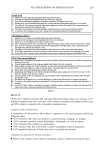
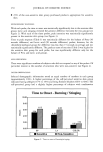
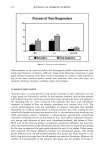
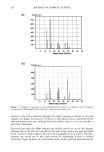
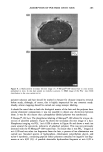
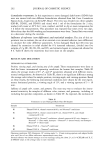
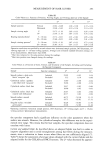
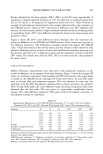
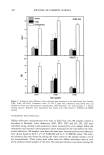
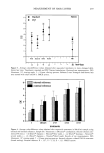
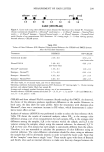
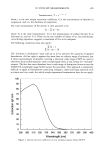
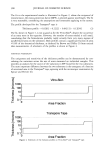
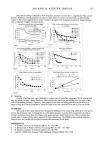
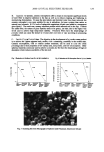
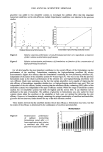
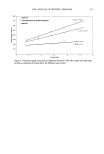
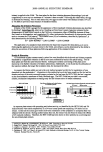
MEASUREMENT OF HAIR LUSTER 295 Results obtained for the three samples (DB-1, DB-2, and D-B3) were reproducible. A maximum estimated standard deviation of 12% was observed in coordinate parameters (L*, a*, b* and X, Y, Z) except for L* (lightness), which was 4.5%. Table V! shows an example of quintuplicate measurements and averages obtained after soap treatment in the CIELAB system. Values of DC* (chromaticity difference) and DL* (lightness dif- ference), for both systems, showed a high estimated standard deviation, hindering them in quantifying luster. DE* (color difference) showed the lowest error range among color parameter values. Figure 2 shows DE, DE* (color difference) values obtained, after the treatments de- scribed in Methods, for the CIELAB and FMCII systems. These values were sensitive to the different treatments. The brilliantine treatment showed the highest DE (FMCII) value. Visual observation of the treated tresses and the reference (ethyl ether/8 h) tress showed a darkening and an increase in luster after brilliantine treatment, agreeing with the decrease observed in L*, L (lightness) values and the significant increase in the DE, DE* values. The overall data indicates DE*, DE as the most sensitive color parameter for means luster. CUMULATIVE TREATMENTS Diffuse reflectance measurements were done after every sequential treatment, as de- scribed in Methods. As an example of the data obtained, Figure 3 shows the average DE values in cumulative treatments with standard and PQ7 formulations (the graph shape is similar in the CIELAB system, although DE values were lower). As seen, DE values tend to increase after each treatment sequence. This was observed in every case, but especially with the PQ7 formulation, meaning that no luster saturation was attained. After 30 days (fifth wash), the color-difference values decreased, being lower than those obtained after the first wash. This may point to a hair-surface modification during storage. The color-difference parameter (DE) again showed the highest sensitivity to discriminate among the treatments. Table VI Quintuplicate Measurements of the CIELAB System Parameters L*, a*, and b* and the Calculated Parameters DL*, DC*, and DE*, Obtained With Sample D-B1 Treated With Commercial Soap Readings L* a* b* DL* DC* DE* 1 22.49 4.09 4.75 -0.92 -0.21 1.04 2 23.27 4.19 4.97 -0.14 0.02 0.39 3 23.11 3.95 4.96 -0.30 -0.14 0.38 4 22.49 4.05 5.43 -0.92 0.30 0.97 5 22.31 4.07 5.23 -1.10 0.15 1.11 Average 22.73 4.07 5.07 -0.68 0.02 0.78 Estimated standard deviation 0.38 0.09 0.26 0.38 0.19 0.32 % Deviation 1.68 2.11 5.22 -56.43 776.66 41.64 Operating conditions: horizontal sample position, D65 illuminant, 10 ø viewing angle, 5 x 10-mm viewing aperture, and adapted holder. CIELAB system parameters: L* (lightness coordinate), a* (red-green coordinate), b* (blue-yellow coordi- nate), DL* (lightness difference), DC* (chromaticity difference), and DE* (color difference). Reference tress (ethyl ether/8 h) and sample D-B 1 (dark-brown hair) were used.
Purchased for the exclusive use of nofirst nolast (unknown)
From: SCC Media Library & Resource Center (library.scconline.org)