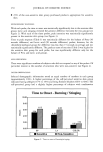
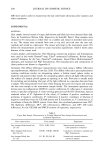
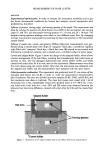
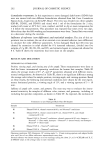
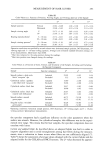
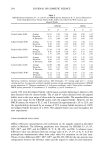
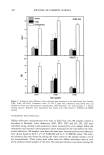
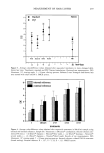
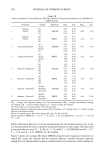
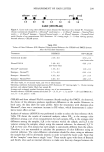
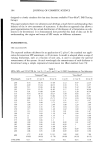
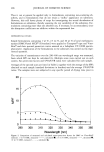
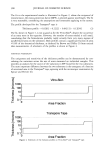
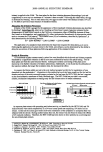
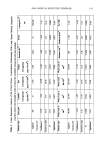
300 JOURNAL OF COSMETIC SCIENCE light-scattering properties of the reference and the treated hair were attributed only to the effects of the treatment (5). The cumulative effect of luster can also be observed in Table VII. Color-difference (DE) values increased after each treatment, especially after sequential shampoo-plus- conditioner treatments. Therefore, in order to build a scale, the luster should be satu- rated. Table VII shows the DE and DE* values obtained after sequential treatments in sample B3. As seen before, in both cases the data show the same profile. The treatments with shampoo plus Neutrox © produce an increase in DE and DE* values, which demonstrates a cumulative luster effect on hair. Figure 5 shows the luster scale built with Table VIII DE*/CIELAB data. The luster scale was built from 0 (zero luster value as internal reference) to 3 (maximum luster value) for the CIELAB system. The DE* estimated standard deviation was about 0.5, as calculated for each sample from a set of DE* values using the internal reference. In the FMCII system the luster scale ranged from 0 (zero luster value as internal reference) to 6 (maximum luster value). In this case, the DE estimated standard deviation was about 1.5. Visual luster observations of the treated samples agree with the DE and DE* data. CONCLUSIONS We have show that diffuse reflectance is a suitable technique for the measurement of hair luster. Being a spectrophotometric technique, it avoids the subjective factor that is associated with human perception. This can be an advantage in cases in which a quick check is needed. As expected, the cylindrical geometry of human hair hindered the use of the specular component as the main luster variable. The overall color difference is the best parameter both in CIELAB and in FMCII color equation systems. From this, the luster scale is not an absolute scale, since it depends on hair color characteristics. The luster scale should be built using as zero-luster the color values of the sample before applying the luster treatment. Diffuse reflectance equipment is relatively cheap and easy to handle. The luster scale has enough sensitivity to discriminate among treatments, although the estimated standard deviation of luster between measurements is somewhat high, in the range of 20%. This error range forces one to do a relatively high number of measurements on each sample, but since the measurements are taken just by moving the sample in the sample holder, this takes no more than one minute per replicate. ACKNOWLEDGMENTS The authors acknowledge the financial support of Inddstria e Com•rcio de Cosm•ticos Natura Ltda, Insddstrias Gessy Lever Ltda-Divis•o Elida Gibbs, and Conselho Nacional de Pesquisa e Desenvolvimento (CNPq).

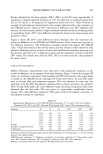
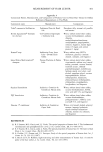
MEASUREMENT OF HAIR LUSTER 301 Appendix A Commercial Names, Manufacturers, and Composition of Products Used to Rinse Hair Tresses for Diffuse Reflectance Measurements in This Work Commercial name Manufacturer Composition Tabu © commercial brilliantine Revlon Aquamarine © shampoo for dry hair Rexona © soap L6real Els•ve Multivitamina © shampoo Standard formulation PQ7 formulation Neutrox 1 © conditioner Perfumens Dana do Brasil S.A. Ceil Com•rcio Exportagio e Indfistria Ltda. Insddstrias Gessy Lever Ltda--Divisio Elida Gibbs Procosa Produtos de Beleza Ltda. Indfstria e Com6rcio de Cosm6ticos Natura Ltda. Ind•stria e Com•rcio de Cosm6ticos Natura Ltda. Indfistria de Cosm6ticos Coper Ltda. Petroleum jelly, mineral oil, paraffin, and essence Water, sodium lauryl ether sulfate, coconut diethanolamine, sodium chloride, methylchloroisothiazolinone, methylparaben, propylparaben, colorant, fragrance, marine algae extract (5 mg/g), and animal protein (1 mg/g) Water, sodium soap, EDTA, thickeners, glycerol, titanium dioxide, colorants, and fragrance Water, sodium lauryl ether sulfate, nicotinamide, sodium cetyl stearyl sulfate, pantenol, coconut betaine, tocoferol acetate, chloride guarhydroxypropyl, dimethicone, hydroxy stearyl cetyl ether, cetyl alcohol, propylene glycol, coconut isopropanolamide, sodium methylparaben, hydantoine, phenoxyethanol, methylparaben, ethlyparaben, propylparaben, butylparaben, and fragrance Water, sodium lauryl ether sulfate, coconut diethanolamine, EDTA, citric acid (pH 5.5), and fragrance Water, sodium lauryl ether sulfate, coconut diethanolamine, polyquartenium 7, EDTA, citric acid (pH 5.5), and fragrance Water, cetyl stearyl alcohol, glyceryl stearate, isopropyl palmitate, alquil trimethyl ammonium chloride, mineral oil, colorants, and fragrance REFERENCES (1) R. F. Stamm, M. L. Garcia, and J. J. Fuchs, The optical properties of human hair. I. The fundamental considerations and goniophotometer curves. J. Soc Cosmetic Chem., 28, 571-599 (1977). (2) R. F. Stamm, M. L. Garcia, and J. J. Fuchs, The optical properties of human hair. II. The luster of hair fibers. J. Soc Cosmetic Chem., 28, 601-609 (1977). (3) A. Guiolet, J. C. Garson, and J. L. Levecque, Study of the optical properties of human hair, Int. J. Cosmet. Sci., 9, 112-123 (1987). (4) C. Reich and C. R. Robbins, Light-scattering and shine measurements of human hair: A sensitive probe of the hair surface, J. Soc Cosmet. Chem., 44, 221-243 (1993).
Purchased for the exclusive use of nofirst nolast (unknown)
From: SCC Media Library & Resource Center (library.scconline.org)