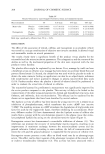
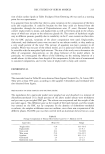
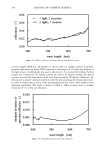
ANTI-CELLULITE ACTIVITY 209 ATP •UPRARENAL GL.•.• • AMPc •' 5' AMP Membranear Adenylcyclase • Phophodiesterase receptor Inactive Active Tr•ase Trigiceride lipase glycerides '• • Free fatty acids + Glycero Sho Noradrenaline• l inergic Catechølamines:AdrenaX•drenergic •g-YMPATHETIC NERVOUS SYSTE•"• BLOOD Figure 3. Mechanisms acting on lipolysis (enzymatic, nervous, and suprarenal). significant increase in lymphatic and venous flow, with a reduction in capillary perme- ability (12). More recently, retinol has been shown to have a beneficial effect on cellulite (4,14). This effect might result from the action of retinol on dermal collagen deposition, improving both thickness and firmness of the dermis (14-16). A direct effect of retinol on prea- dipocytes has also been demonstrated recently, since the exposure of cultured human preadipocytes to retinol results in a marked reduction in the differentiation of the fat cells and a decrease in the number of mature adipocytes (17). The different methods used allowed us to detail the activity of the product compared to baseline and placebo. The assessment of the dermal-hypodermal structure conducted by a novel method allowed us to characterize skin texture during the use of the two products (active product and placebo) and, therefore, to assess a possible result of the product activities on the dermis and hypodermis. The skin firmness improvement observed with the two products, measured conventionally, is probably due, in great part, to the massage, because the placebo increases it at the same level as the product. The flowmerry of skin perfusion was more improved with the product than with the placebo. This activity may be explained by the presence of ruscogenine extract (12,13). CONCLUSION The association of the three tested active ingredients was significantly active on the "orange peel" appearance of the skin, which is the most apparent manifestation of cellulite (53.1% at T84 versus 14.1% for the placebo). The skin microcirculation, whose dysfunction is involved in the pathophysiology of cellulite, was also significantly and durably improved by the product, compared to the placebo. The combination of these different methods allowed measurement of different skin parameters, which change

210 JOURNAL OF COSMETIC SCIENCE according to the appearance of cellulite, and demonstrated a measurable activity for the active product. REFERENCES (1) G. W. Lucassen, W. L. N. Van der Sluys, J. J. Van Herk, A.M. Nuijs, P. E. Wierenga, A. O. Barel, and R. Lambrecht, The effectiveness of massage treatment on cellulite as monitored by ultrasound imaging, Skin Res. TechnoL, 3, 154-160 (1997). (2) C. Fox, Technically speaking--Skin and skincare: Cellulite, Cosmet. Toilerr., 113 (April 1998). (3) W. P. Smith, Cellulite treatments: Snake oils or skin science. Investigate what, if any, measurable cellulite reduction results from herbal, exothermic, retin-A, AHA and xanthine treatments, Cosmet. Toilerr., 110, 61-70 (1995). (4) C. Pierard-Franchimont, G. E. Pierard, C. Letane, F. Henry, L. Rakis, and G. Cauwenberg, A ran- domized, placebo controlled trial of topical retinol to mitigate cellulite, Am. J. Clin. Dermatol. (in press). (5) F. Perin, C. Perrier, J. C. Pittet, S. Schnebert, P. Perrier, and P. Beau, Assessment of skin improvement treatment efficacy using the photograding of mechanically-accentuated macrorelief of thigh skin., Int. J. Cosmet. Sci. (in press). (6) C. Bertin, P. Pineau, H. Zunino, D. CasteIll, J. Hopkins, and M. Massonneau, A new method for the assessment of cellulite three-dimensional ultrasound scanning, Skin Res. TechnoL, 5 (May 1999). (7) A. B. Cua, K. P. Wilhem, and H. I. Maibach, Elastic properties of human skin: Relation to age, sex and anatomical region, Arch. DermatoL Rev, 283-288, (1990). (8) K. Wardell, Laser doppler perfusion imaging. Methodology and skin application (Linkoping 1994). (9) M. Verdy, Effect of caffeine, nicotine and ethanol on lipolysis. Rev. Can. BioL, 26, 179-184 (1967). (10) M. W. Rothlin, C. B. Rothlinand, and W. E. Wendt, Free fatty acid concentration and composition in arterial blood, Am. J. PhysioL, 203, 306 (1962). (11) J. Buxeraud and C. Comby, Traitement de la cellulite: L'int•r& de la cafeine, Actualit&pharmaceutiques, 376 (1999). (12) A. Franco, Lipolyse et amincissement: Nouveaux actifs, Parrums et Cosmgtiques, 121, 36-43 (1995). (13) R. M. Facino, M. Carini, R. Stefani, G. Aldiniand, and L. Saibene, Anti-elastase and anti hyaluronidase activities of saponins and sapogenins from Hedera helix, Aesculm hippocastanum, and Ruscm aculeatm: Factors contributing to their efficacy in the treatment of venous insufficiency, Arch. Pharm., 328, 720-724, (1995). (14) A.M. Kligman, A. Pagnoni, and T. Stoudemayer, Topical retinol improves cellulite, J. Dermatol, Treat., 10, 119-126, (1999). (15) E. Schwartz, F. A. Crueshank, J. A. Mezik, and A.M. Kligman, Topical all-trans retinoic acid stimu- lates collagen synthesis in vivo, J. Invest. DermatoL, 96, 975-978 (1991). (16) A.M. Kligman, G. L. Grove, R. Hirose, and I. I. Leyden, Topical treatment for photoaged skin,J. Am. Aca• DermatoL, 15,836-839 (1986). (17) E. Garcia, D. Lacasa, B. Agli, D. Castelli, and Y. Giudicelli, Antiadipogenic properties of retinol in primary cultured differentiating human adipocyte precursor cells, Int. J. Cosmet. Sci. (February 2000).
Purchased for the exclusive use of nofirst nolast (unknown)
From: SCC Media Library & Resource Center (library.scconline.org)