ANTI-CELLULITE ACTIVITY 207

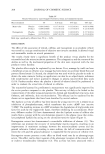
208 JOURNAL OF COSMETIC SCIENCE Table IV Results Obtained by Laser Doppler Flowmetry (mean and standard deviation) Microcirculation TO T28 days T56 days T84 days Mean value Placebo 0.094 (0.009) 0.117 (0.013) 0.112 (0.011) 0.095 (0.008) Product 0.096 (0.008) 0.132 (0.021) 0.133 (0.017) 0.121 (0.026) Homogeneity Placebo 0.160 (0.019) 0.244 (0.038) 0.166 (0.015) 0.157 (0.014) Product 0.156 (0.014) 0.237 (0.035) 0.222 (0.045) 0.223 (0.054) Bold type: significantly different from TO (p •0.05). DISCUSSION The effect of the association of retinol, caffeine, and ruscogenine in an alcoholic vehicle was tested by a unique combination of objective non-invasive methods. It allowed visual and measurable results on several parameters. The results clearly show a significant benefit of the product versus placebo for the microrelief and the microcirculation parameters. The echogenicity and the texture of the dermis as well as the mechanical properties of the skin were improved with the two products versus baseline. The placebo effect might be explained by two factors. First, massage by itself can have a beneficial action on cellulite since massage has been shown to accelerate blood flow and prevent fibrosclerosis (1). Second, the ethanol that was used with the placebo in order to obtain the same cosmetic feeling on application can also be an adipo-kinetic substance like noradrenaline and induce qualitative changes in plasma non-esterified fatty acids (9,10). Further studies where the placebo is devoid of ethanol should be performed in order to evaluate the actual role of ethanol in cellulite. The macrorelief assessed by profilometric measurement was significantly improved by the active product compared to the placebo. This activity is likely to be linked to the improvement of the other measured parameters: dermal and hypodermal structures, skin firmness, and indirectly, skin microcirculation. This efficacy can be explained by the chosen active ingredients that have been described by several authors. The lipolytic activity of caffeine has been known for a long time (11). It is related to an inhibition of phosphodiesterase, which transforms the active cAMP into inactive 5'AMP. The resulting increase in cAMP stimulates the degradation of triglycerides into fatty free acids by the triglyceride lipase, therefore inhibiting fat accumulation. How- ever, different studies (12) have demonstrated that the lipolytic action of caffeine also results from a synergy with the catecholamines present in the adipose tissue that stimu- late peripheral lipolysis by acting on the adrenalino-sensitive lipase (Figure 3). Ruscogenine extract has demonstrated a remarkable inhibition of elastase (13). This inhibition can promote the recovery of extracellular matrix integrity, resulting in an improvement in nutriment exchange between the microcirculatory system and the ground substance. Indeed, according to some authors, the lack of communication be- tween the cells and the ground substance is responsible for the process of cellulite (12). Ruscogenine extract presents a tonic effect on blood vessel tone by an adrenergic-type action. This effect can be direct (agonist of the adrenergic receptors of the smooth cells) or indirect (noradrenaline liberation) (12). This activity has been associated with a
Purchased for the exclusive use of nofirst nolast (unknown)
From: SCC Media Library & Resource Center (library.scconline.org)