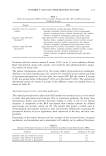
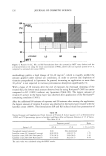
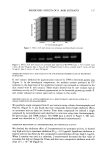
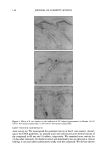
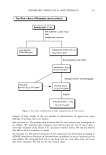
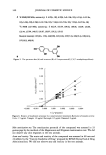
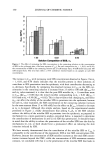
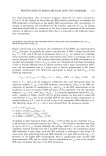
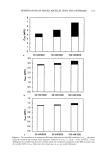
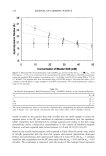
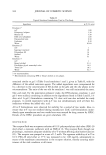
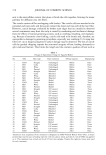
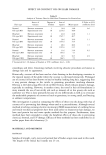
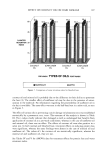
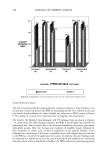
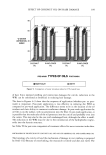
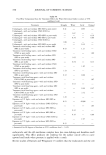
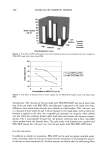
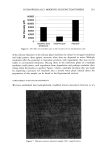
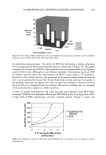
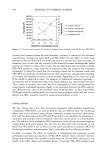
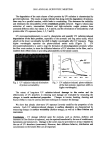
INHIBITORY EFFECTS OF R. MORI EXTRACTS 141 Human skin irritation test. We studied the potential of the compound to irritate human skin in 50 healthy female volunteers using a 24 hour closed patch test. No skin irritation occurred after application in 50 volunteers. DISCUSSION In human skin, pigmentation results from the synthesis and distribution of melanins. Melanins are heterogenous biopolymers and the major determinants of skin color. They play an important role in the absorption of UV radiation, in free radical scavenging, and in protection against carcinogenesis and aging induced by UV rays. Melanin is formed through the progressive oxidation of the amino acid tyrosine. In these steps, tyrosinase, a copper-containing monophenol monooxygenase, plays a critical role (6,7). Several chemicals, including arbutin, kojic acid, and ascorbic acid, have been used as whitening ingredients for their anti-tyrosinase activity. In this study, we selected Ro mori extracts as a melanogenic inhibitor and checked their activity on the inhibition of tyrosinase activity and melanin synthesis. Ro mori extracts showed high tyrosinase inhibition ac- tivity and melanin synthesis inhibition. We examined the inhibition mechanism on melanogenesis using zymography and RT-PCR and found that R. mori extracts showed anti-tyrosinase activity in vitro, but no inhibitory activity in tyrosinase synthesis. Also, we purified a single compound from R. mori extracts. It was identified as 2,3',4,5'- tetrahydroxystilbene(2-oxyresveratrol) and showed inhibition in tyrosinase activity by competitive manner. In the animal tests, Ro mori extracts showed inhibition activity on UVB-induced pigmentation in brownish guinea pigs. In the histological examination, the remarkable reduction of melanin granules in the epidermis was observed in com- parison with the control skin. We did a clinical test for 79 volunteers having skin pigmentation disorders. The clinical test showed that the cream containing R. mori extracts [5% (v/v)] improved the condition of volunteers' pigmented faces. The visual assessment was evaluated and graded on a 0-9-point scale and demonstrated a statisti- cally significant improvement in pigmented faces, with the R. mori extracts-containing cream providing better results than the placebo (p 0.05). The melanin index for objective data by Mexameter (Courage+Khazaka, Germany) was also evaluated, and it demonstrated an improvement in pigmented faces (p 0.05). The results of safety tests showed that the extracts have no irritation and sensitization potential. CONCLUSION We selected R. mori extracts as a whitening ingredient and found that the extracts have a strong inhibitory activity against melanogenesis and are strongly expected to be an effective ingredient for the improvement of skin darkness. REFERENCES (1) J. M. Pawelek, A.K. Chakraborty, M.P. Osber, and J. L. Bolognia, Cosmet. Toiletr., 107, 61-68 (1992). (2) K. Maeda and M. Fukuda, In vitro effectiveness of several whitening cosmetic components in human melanocytes, J. Soc. Cosmet. Chem., 42, 361-368 (1991).

142 JOURNAL OF COSMETIC SCIENCE (3) K. T. Lee, B. J. Kim, J. H. Kim, M. Y. Heo, and H. P. Kim, Biological screening of 100 plant extracts for cosmetic use. I. Inhibitory activities of tyrosinase and DOPA auto-oxidation, I,t. J. Cosmet. Sci., 19, 291-298 (1997). (4) F. Qiu, K. Komatsu, K. Saito, K. Kawasaki, X. Yao, and Y. Kano, Pharmacological properties of traditional medicines (XXI), Nat. Meal., 50, 103-108 (1996). (5) G. Imokawa and Y. Mishima, Functional analysis of tyrosinase isozymes of cultured malignant mela- noma cells during the recovery period following interrupted melanogenesis induced by glycosylation inhibitor, J. I,vest. DermatoL, 83, 196-201 (1984). (6) V.J. Hearing and K. Tsukamoto, Enzymatic control of pigmentation in mammals, FASEB J, 5, 2902-2909 (1991). (7) V.J. Hearing and M. Jirnenez, Mammalian tyrosinase: The critical regulatory control point in mela- nocyte pigmentation, I,t. J. Blochem., 19, 1131-1147 (1987).
Purchased for the exclusive use of nofirst nolast (unknown)
From: SCC Media Library & Resource Center (library.scconline.org)