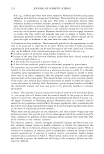
216 JOURNAL OF COSMETIC SCIENCE HISTORY OF RESEARCH ETHICS Ethics are the moral principles governing the conduct of a particular activity. As morals are accepted behavioral patterns dictated by the society, they change as societies vary temporally and geographically. Most of the very early experimentation on man was done with medical disciplines in mind (anatomy, physiology, pathology, etc), and it is only in more recent times that research has become focused on consumer benefits. While these are key to the progress of the consumer goods industry, special consideration should be given to the risk benefit analyses of such work. The impetus for human testing originates from the advancement of medical knowledge, with examples dating back to Hippocrates, who observed movements in the contralateral side of a child's body as he scratched the surface of the cortex from which he was removing bone splinters (1). Early reports of concern for the ethics of such work date back ca 2000-2500 years. A Persian prince in the second century AD advised a medical student to "experiment freely, but not on people of high rank or political importance" (2). The Hippocratic oath, written between 470 and 360 BC, states I will follow that system of regime which, according to my ability and judgment, I consider for the benefit of my patients and abstain from whatever is deleterious and mischievous. I will give no deadly medicine to anyone if asked, nor suggest any such counsel. Its scope does not include "experimentation," which was only first addressed in the 18th century in Medical Ethics by the English physician Percival (3a). He acknowledged the need for medical research with judgment of the ethical validity of experimental procedure based on test design, its basis in established or analogous theory, and on peer review and expert advice: Whenever cases occur, attended with circumstances not heretofore observed, or in which ordinary modes of practice have been attempted without success, it is for the public good, and in especial degree advantageous to the poor (who, being the most numerous class of our society, are the greatest beneficiaries of the healing art) that new remedies and new methods of chirugical treatment should be devised but, in the accomplishment of the salutary purpose, the gentlemen of the faculty should be scrupulously and conscientiously governed by sound reason, just analogy, or well-authenticated facts. And no such trials should be instituted without a previous consultation of the physicians or surgeons according to the nature of the case. Given the paternalistic culture prevailing within the medical profession at the time, it is not surprising that even these principles ignore important ethical considerations such as protection of the subjects and their consent to procedures to which they may be subjected. Reference to the benefits for the poorest members of society is surprising since at the time medical care would have been beyond their grasp, unless this amounts to tacit direction to use the poor for experimentation. Beaumont in 1833 performed numerous non-therapeutic human studies into gastric physiology. Like Percival, he required that the investigator be conscientious and re sponsible and that the experiment be well planned, methodical and designed to provide the maximum amount of information possible. He extended Percival's code by incor poration of the need for voluntary (if not informed) consent and showed concern for the subject's well-being (4): "The experiment is to be discontinued when it causes distress to the subject." He also addressed risk-benefit analysis.

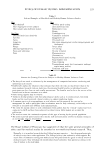
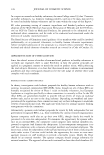
ETHICS OF HUMAN TESTING: BACKGROUND 217 However, based on the Christian doctrine of "do no ill to thy neighbor," Claud Bernard, a French physiologist and ethicist, in 1927 developed a code (5) forbidding experimen tation on man which "might be harmful to him to any extent, even though the result might be highly advantageous to science, i.e. to the health of others." He concluded, "among the experiments that might be tried on man, those that it can only do harm are forbidden. Those that are innocent are permissible and those that may do good are obligatory." This effectively ruled out all non-therapeutic human studies. To establish the possibility of immunizing against syphilis by inoculation with serum from syphilitic patients, Albert Neisser in 1892 used, without their full knowledge and consent, three adolescent prostitutes as the test group and four healthy children as the control group. The prostitutes developed syphilis. This otherwise renowned scientist was fined and ordered to pay significant costs and his reputation was tarnished. The well publicized study led in 1900 to the first governmental position on research using human subjects (6). It states (I) ... medical interventions for purposes other than diagnosis, therapy and immunization are absolutely prohibited, even if all other legal and ethical requirements ... are fulfilled if: The person in question is a minor or is not fully competent on other grounds The person concerned has not declared unequivocally that he consents to the intervention The declaration has not been made on the basis of a proper explanation of the adverse conse quences that may result form the intervention (II) In addition ... Interventions of this nature may only be performed by the director of the institution himself or with his special authorization In every intervention of this nature an entry must be made in the medical case-record book, certifying that the requirements laid down in Items 1-3 of section 1 have been fulfilled, speci fying details of the case. (III) This directive shall not apply to medical interventions intended for the purpose of diagnosis, therapy and immunization. This Prussian directive provides for informed consent, delineates non-therapeutic and therapeutic research, and offers protection for the most vulnerable groups against use in non-therapeutic experiments. It reinforces the ethos of the competency of the investi gator and of peer review by restricting the work to the unit director or his nominee. One of the weakest elements is the absence of risk-benefit considerations since there is no requirement for the investigator to weigh the risks to the subject in relation to any benefits to society. The nearest assessment is that conducted by the volunteers them selves, who decided whether or not to consent after being informed of the hazards. The rapid expansion of the pharmaceutical industry in Germany during the 20th century brought about a shift from ad hoc, small-scale, individual physician-controlled investi gations to widespread industry-controlled research. Despite the existence of the com prehensive German directive, research trials were frequently criticized in the German press, and following the death of 7 5 children in a program of studies on tuberculosis vaccines, the Reich Minister of the Interior published guidelines (3 b, 7) in 1931, key elements of which include • All staff entering into employment must sign the guideline • An explanation provides for the need for therapeutic and non-therapeutic research • Confirmation that responsibility for the "life and health" of the subject rests with the physician
Purchased for the exclusive use of nofirst nolast (unknown)
From: SCC Media Library & Resource Center (library.scconline.org)