J. Cosmet. Sci., 5 7, 223-231 (May/June 2006) Ethics of studies involving human volunteers. II. Relevance and practical implementation for cosmetic scientists P.A. CARSON and J. HOLT, Capenhurst Independent Research Ethics Committee, "Rowanlea," 2 Green fields Avenue, Bromborough, Wirral CH62 6DD (P.A.C.), and 4-Front Research, Unit 6, Capenhurst Technology Park, Capenhurst, Chester CHI 6ER U,H.), U.K. Accepted for publication January 19, 2006. Synopsis The importance to the personal products industry of testing novel products in healthy human volunteers and the need to ensure the trials were both safe and ethical were addressed in Part I. The historical development of ethical standards for human testing was also summarized. The present paper highlights the ethical principles to be considered when testing novel non-medicinal products on human volunteers, and it describes how they can be implemented in a pragmatic manner to avoid delay to the sponsor's research program. The structure and function of ethics committees is discussed. INTRODUCTION Part I provided a brief overview of the history of the ethics of medical research on humans (1). The present paper discusses implications and implementation for non medical research. The principles that flow from the historical review detailed in Part I may be described as a set of ethical norms that provide a framework for the decision process by which proposals for research with healthy human volunteers may be reviewed. They embrace: (a) Autonomy. The principle of autonomy holds that the individual is free to make choices and is self-governing. This right of individuals to decide their own course of action is a key pillar of modern ethical codes and includes maintaining volunteer confidentiality and obtaining informed consent. • Confidentiality. Autonomy also provides individuals with the right to control access to information about themselves and for it to be shared only on a "need to know basis" for professional purposes. The control over disclosure is an important responsibility for the researcher. • Informed consent. Volunteers must give their consent to the research process after being given a full explanation of the experiment, its risk, and potential benefits (if any). It is also incumbent upon the investigator to ensure the volunteer is capable of making an informed decision, i.e., be able to receive the relevant information, retain it, process it, and formulate a decision. Consideration should be given to the vulner- 223

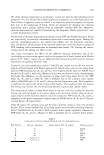
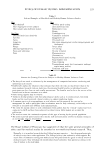
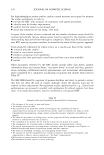
224 JOURNAL OF COSMETIC SCIENCE able, e.g., children and those with severe mental or behavioral disorders and persons unfamiliar with medical concepts and technology. There should be no coercion, undue influence, or intimidation to take part. This point is particularly relevant when volunteers include co-workers, students, prisoners, or members of the military. Simi larly, there should be no excessive inducement to take part: the level of remuneration (if any) should reflect the inconvenience to the volunteer during the trial and reim burse any out-of-pocket expenses. Payments should not be used to engage volunteers in studies that they would not normally take part in simply to benefit from a substantial monetary reward. Once accepted onto a study, subjects should also be given the right to withdraw at any time from the study if they so wish. ( b) Beneficence and non-maleficence. These essentially provide for the experimenter to seek only to do good and to explicitly do no harm. Within the field of medical research, arguments for these principles can be made for much of the work carried out. However, they can be difficult if the research participant does not benefit directly, e.g., • in safety studies on medicines using healthy volunteers, or • because of the long delay between obtaining results from basic clinical research and commercial exploitation, or • if the study did not provide a positive result, or • if the trial was conducted purely as an educational program for practitioners. The arguments are even more difficult to substantiate in the cosmetics arena, where the benefits to the individual and society as a whole are less easy to justify. It is therefore incumbent upon experimenters to carry out a risk-benefit analysis to justify to them selves and to an ethics committee that the proposed study's benefits outweigh the potential risks to the participants. This should include a review of the scientific validity of the study, since research that is flawed will present no benefit to either the subject or society and cannot be ethically valid. Furthermore, poorly designed studies could affect the risk-benefit analysis and may even prove to be positively harmful to volunteer participants. ( c) Justice. The principle of justice requires the burden of research to be distributed fairly, i.e., the group that will benefit from the research should be the group on which the research is carried out. This prevents the abuse of disenfranchised bodies of society, e.g., the export of research to developing nations. Obviously, there is a scientific drive to ensure the test population closely reflects the target population. Also, a researcher who has clinical or teaching responsibilities might be accused of neglecting these daily duties in the event of conducting excessive research. While these ethical principles are not exhaustive, and their relative weight may vary between societies, they provide a set of core values against which the researcher and the ethics committee (as guardian of these principles) should measure their work. But what of the relevance to the cosmetic scientist? The chemical, cosmetic, toiletry, detergent, household cleaning, and food sectors con duct extensive human testing on healthy volunteers to evaluate the quantitative and qualitative effects of chemical, physical, biological, and radiological agents. Work is conducted in academia, in industry, and by independent commercial contract clinical research organizations. A selection of common routine, non-medical, healthy human volunteer tests is presented in Table I. These human studies must be conducted safely and ethically to protect the health and well-being of the volunteers. Drivers are illus trated by Table II.
Purchased for the exclusive use of nofirst nolast (unknown)
From: SCC Media Library & Resource Center (library.scconline.org)