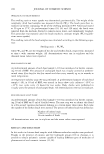
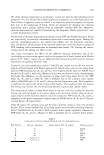
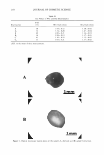
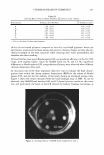
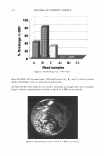
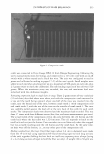
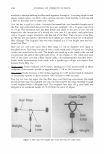
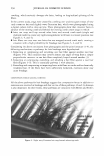
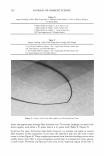
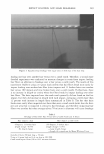
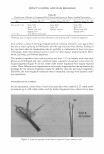
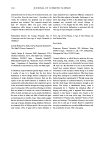
212 100 LL. 80 m m C 60 ·- Ill 40 Ill m 20 � a JOURNAL OF COSMETIC SCIENCE / /j ______ ... ·---------····,.····--------· ... ----·· // i A B C Al Bead samples Bl Figure 3. Bead breakage assay in BBF results. �------- ···-------- : Cl about 60-80%. On the other hand, TPP-bead batches (A 1 , B 1 , and C 1 ) did not present marks of breakage, even in conditions of great stress. All bead batches were stable for six months, estimated as storage time. As an example, Figure 4 shows a digital photo of beads in batch A in BBF at six months. Figure 4. Digital photo of beads in batch A in BBF at six months.

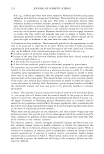
CHITOSAN BEADS IN COSMETICS 213 CONCLUSIONS In this paper we describe the feasibility of using chitosan beads as colloidal carriers for the encapsulation and delivery of volatile molecules such as Mentha piperita E.O. in a fast-release cosmetic formulation such as a bath foam. To this purpose, it is very im portant to assess the stability of the structure of the beads during the storage time of the cosmetic formulation and the breakage ability of the beads for the release of Mentha piperita E.O. during use. The analyses carried out have shown that the different bead batches show different behaviors. Compared to TPP beads (A 1 , B 1 , and C 1 ), NaOH beads (A, B, and C) showed much better swelling properties and a greater release of Mentha piperita E.O., thanks to the fact that their structures are loose and therefore break more easily. This behavior is probably due to the chitosan gelling process in view of obtaining NaOH beads-in other words, coacervation, where the interactions between the chitosan chains are relatively weak. However, it has been observed that the structure of NaOH beads remains whole in the cosmetic formulation during the estimated storage time. In-use testing has shown that beads A, B, and C break easily without leaving any annoying residues on the skin, since the chitosan polymeric matrix was homogenically distributed in the formulation and easily washes away. The sensory effect is a pleasing sensation of freshness due to the release of the Mentha piperita E.O. fragrance, which is particularly intense during the application of the bath foam on the skin. This effect has also been observed after six months of storage time, showing that a notable quantity of Mentha piperita E.O. remains encapsulated in the beads. In contrast, TPP beads are more resistant, in agreement with the ionic crosslinking process where the electrostatic interactions between the TPP polyvalent anions and the positive chitosan charges give rise to a complete, dense structure with remarkable mechanical stability. Hence their shrinkage leads to a release of Mentha piperita E.O. that is too slow for the intended purpose. NaOH beads are therefore promising for the use of essential oils in the prompt release of cosmetic formulations. REFERENCES (1) Council of Europe, Natural Flavouring Substances (EEC, Strasbourg, 1970). (2) E. Guenther, The Essential Oils, II-III (Van Nostrand Company, USA, 1963). (3) Dram Soc, Fragrance and Active Substances for Plants, (Dram, Munich, 1975). (4) H. Picard, Utilisazion Therapeutique des Oligo-Elements (Maloine, Paris, 1989), pp. 164-169. (5) P. Franchomme, L'Aromatherapia Therapeutique de Pointe en Medicine Nature/le (Sinceiro Entreprise Ltd., Hong Kong, 1999). (6) R. Della Loggia, A. Tubaro, and L. Lunder, Evaluation of some pharmacological activities of a peppermint extract, Rev. Fitoterapia, 61(3), 215-222 (1990). (7) J. V. Larrondo et al., Antimicrobial activity of essences from labiates, Microbios., 82, 171-172 (1995). (8) C. Anchisi, A. M. Maccioni., and M. C. Meloni., Physical properties of chitosan dispersions in glycolic acid, II Farmaco, 59, 557-561 (2004). (9) J.B. Wilkinson and R. J. Moore (Eds.), Harry's Cosmeticology (Chemical Publishing Co., New York, 1982), p. 749. (10) J. Knapczyk, L. Krowczynski, B. Pawlik, and Z. Liber, Chitin and Chitosan: Sources, Chemistry, Bio-
Purchased for the exclusive use of nofirst nolast (unknown)
From: SCC Media Library & Resource Center (library.scconline.org)