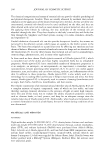
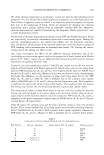
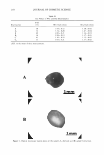
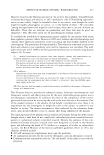
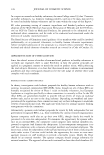
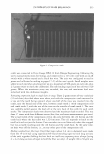
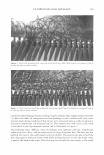
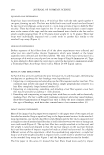
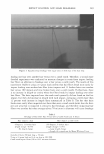
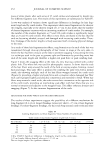
210 Bead batches A Al B Bl C C l JOURNAL OF COSMETIC SCIENCE Table II Size Values of Wet and Dry Bead Samples Yield (%) 50 32 69 36 43 33 Wet beads (mm) 3.94 ± 0.32 3.34 ± 0.28 3.00 ± 0.21 2.98 ± 0.19 3.10 ± 0.22 3.09 ± 0.21 Dry beads (mm) 1.58 ± 0.05 1.47 ± 0.04 1.24 ± 0.01 1.37 ± 0.03 1.15 ± 0.02 1.37 ± 0.02 ±S.D. on the mean of three measurements. r A 1mm B 1mm � Figure 1. Optical microscope digital photo of: (A) sample A 1 dry bead and (B) sample A dry bead.

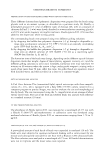
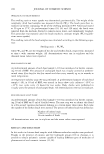
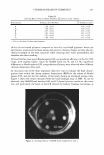
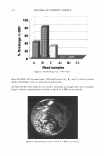
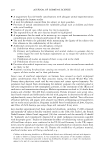
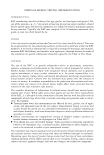
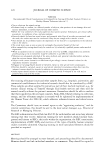
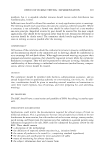
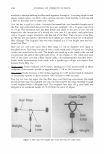
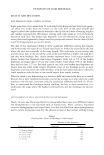
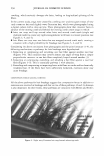
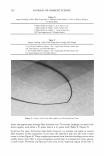
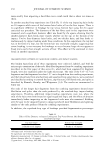
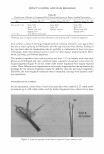
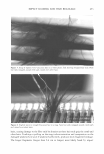
CHITOSAN BEADS IN COSMETICS 211 Table III Swelling Ratio (w/w) and Mean Diameter (L) (mm) at Time t Values. Bead batches Swelling ratio (W /W 0) I q (mm) at time t A 1.40 ± 0.03 4.24 ± 0.36 A l 1.06 ± 0.01 3.36 ± 0.27 B 1.05 ± 0.02 2.99 ± 0.25 B l 1.03 ± 0.01 2.85 ± 0.19 C 1.87 ± 0.04 3.15 ± 0.22 C l 1.40 ± 0.03 2.67 ± 0.14 ± S.D. on the mean of three measurements. ability of coacervated polymers compared to ionically crosslinked polymers, where the electrostatic interactions between anions and positive chitosan charges increase the me chanical strength of the bead structures while reducing their water permeability and therefore also their swelling. All bead batches show good Mentha piperita E.O. encapsulation efficiency in the 65-70% range, with slightly higher values for NaOH beads (A, B, and C). No significant differences in Mentha piperita E.O. encapsulation efficiency were observed when different chitosan dispersions were used. At this point one of the most important objectives was to evaluate the bead disinte gration time within the chosen cosmetic formulation (BBF) for the release of Mentha piperita E.O. and also for the stability of the beads during an estimated storage time. Figure 3 shows the results obtained from the bead-breakage assay in BBF. As can be observed, only NaOH-bead batches (A,B, and C) showed positive results to this stress test, and particularly the beads in batch B showed the highest breakage percentage, at Figure 2. Swelling behavior of NaOH beads (sample B) at time t.
Purchased for the exclusive use of nofirst nolast (unknown)
From: SCC Media Library & Resource Center (library.scconline.org)