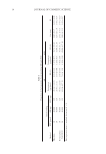
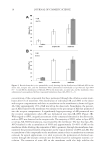
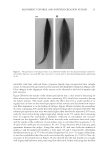
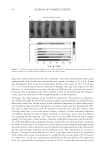
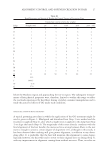
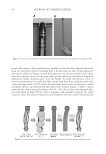
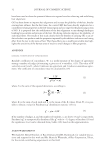
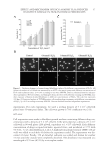
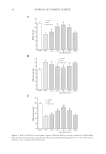
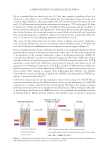
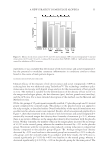
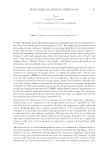
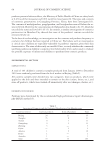
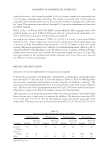
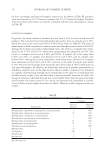
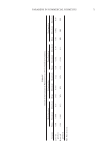
JOURNAL OF COSMETIC SCIENCE 12 and/or AVO encapsulated in the liposomes was determined by monitoring the absorbance of AR and AVO after disrupting the liposomes with 95% ethanol. Reference standards (free AVO and AR) were measured using the same processing conditions. The fi nal con- centration of liposomes was determined using the phosphate assay (11), which was sub- sequently used to calculate the EE(%) as follows: f i EE(%) P Lfu100 P Li where EE is the entrapment effi ciency, Li and Lf are the initial and recovery concentra- tions of phosphate, respectively, and Pi and Pf are the initial and recovery concentrations of drugs (AR or AVO, measured in micrograms), respectively. IN VITRO PERMEATION STUDY Franz diffusion cells were used to evaluate the in vitro permeability of AVO and AR across a cellulose acetate membrane with an average pore size of 2.0 μm. The donor chamber was loaded with 500 μl of the liposome formulations, whereas the receptor chamber contained 0.9% NaCl solution. The receptor chamber was stirred using a magnetic bar at 500 rpm and maintained at 37 ± 0.5°C using a circulating water bath system. At predetermined time intervals, 600 μl samples were withdrawn from the receptor chamber, diluted with fresh media, and analyzed spectrophotometrically for AVO and AR. RESULTS AND DISCUSSION SPECTRAL ANALYSIS OF AR AND AVO The absorption spectra of various concentrations of AR and AVO solutions are shown in Figure 1. Maximal absorption was found to be at 285 and 358 nm for AR and AVO, re- spectively. A linear correlation between absorbance and concentration was obtained with an r2 = 0.9998 and 0.9995 for AR and AVO, respectively. To identify potential interfer- ences between AVO and AR after their coencapsulation in the liposomes, the absorption spectra of various concentrations of AR in the presence of AVO and EPC were evaluated (Figure 1C). Although a general increase in AR absorbance was observed in the presence of AVO and EPC, a linear relationship between the concentration and absorbance was maintained and used for the quantifi cation of AR. CHARACTERIZATION OF THE FORMULATIONS The entrapment and EE of AR and AVO in the liposomes that were prepared by either the thin fi lm hydration or the reverse-phase evaporation methods are given in Table I. In the thin fi lm hydration method, increasing the concentration of EPC in the liposomes resulted in a decrease in the entrapment of AR and AVO. The highest EE of AR and AVO were only 1.0%

PREPARATION OF LIPOSOMES LOADED WITH AVO AND AR 13 Figure 1. (A) Absorption spectra of AR in 95% ethanol with AR concentrations ranging from 12.5 to 200 μg/ml. The linear relationship between the absorbance at 285 nm versus concentration is shown in the inset. (B) Absorption spectra of AVO in 95% ethanol, with AVO concentrations ranged from 1.25 to 20 μg/ml. The linear relationship between the absorbance at 358 nm versus concentration is shown in the inset. (C) Absorp- tion spectra of AR in 95% ethanol in the presence of AVO and EPC. Here, 7.5 μg/ml AVO and 0.5 μmol EPC were added to the AR solutions. AR concentrations ranged from 12.5 to 200 μg/ml. The linear relation- ship between the absorbance at 285 nm versus concentration is shown in the inset.
Purchased for the exclusive use of nofirst nolast (unknown)
From: SCC Media Library & Resource Center (library.scconline.org)