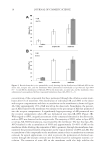
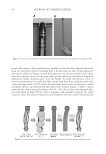
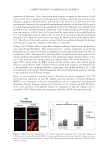
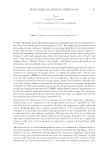
JOURNAL OF COSMETIC SCIENCE 60 this herb is believed to be empowered with immortal strength and fertility. The Sanskrit word for the plant “amaranth” means “King of Immortality.” Aztec soldiers ate a very thick soup of this herb before going to war. The amaranth plant was outlawed by Spanish missionaries who were disturbed by its association with human sacrifi ce. In fact, they believed the key to the suppression of the Aztec culture was the annihilation of the plant. The Swedish Order of the Amaranth dates back to the 1653 reign of Queen Christina. The amaranth represented distinction and honor and was formed into the “Amaranthine Wreath,” symbol of the Swedish order of the bond of fraternal friendship representing the strength and power of the plant (1). Like the Aztecs who drank a soup of amaranth, ancient warriors of Japan and China—and even the Maoris of New Zealand—were known to drink shark liver oil before leaving for war. We can, therefore, trace cultural recognition of squalene-rich products with unique survival qualities to the Mediterranean region, Scandinavian, the Indian subcontinent, the Far East, and Central America (1). Chinese healers were the fi rst to conduct prescientifi c research into a rich natural source of squalene. In 1596, Lee Ji Chin, a Chinese healer of the Ming dynasty (1369–1644), composed a 52-volume compendium of some 2000 herbs, including the liver oil of the deep sea shark. Chinese traders brought the book to Japan, where it was known as Honzo Komoku. Samurai warriors used this oil to increase their strength. Villagers of Suruga Bay on the Izu Peninsula of Japan were accustomed to drinking the same oil. The local name of this special extract was “samedawa” or “cure all.” In 1906, Dr. Mitsumaru Tsujimoto, a Japanese industrial engineer, discovered that samedawa contains extremely large quantities of an unsaturated hydrocarbon. He named the hydrocarbon squalene. Dr. Tsujimoto was presented the Imperial Award of the Japan Academy in honor of this achievement (1). SQUALENE AND ITS SOURCES Squalene is a highly unsaturated hydrocarbon from the triterpenoid family, consisting of six isolated double bonds (Figure 1). The molecule of squalene was discovered by a Japanese chemist Mitsumaru Tsujimoto as a major component of the liver oil of certain varieties of deep sea sharks. It is a low-viscous oil. When purifi ed, it is very pale yellow to colorless with almost no odor. Shark liver oil is the general and most popular source of squalene (35–80%), which is also widely present as a component of vegetable oils (2–4). Oil of olive from Olea europaea contains 0.6–0.7% of squalene, whereas amaranth (Amaranthus sp.) oil contains appreciable quantities of squalene. Depending on the variety, the oil obtained from the amaranth seeds can contain up to 8% of squalene (2,3,5). The 13% of squalene has been found as a natural constituent of human skin lipids (6). The best source of squalene is the liver of the deep sea shark (2,4,7). The last 40 years has brought a huge interest in squalene as a valuable compound in pharmacy or cosmetology fi shing on Squalus sp. went so far that some of them (i.e., Squalus acanthias, Squalus albifrons, Squalus brevirostris) are on the International Union for Conservation of Nature Red List of Threatened Species (8).

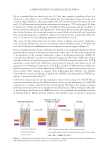
PLANT-BASED SQUALENE IN COSMETOLOGY 61 Oceana—the largest non-profi t international ocean conservation and advocacy organization— has started the sharks’ protection program in 2005. The campaign achievement was a declaration of some cosmetics companies to stop using shark liver oil in their products. L’Oreal (R)—as soon it was sure that there is applicable plant-based squalene supplies— had started switching to plant source as an ingredient of their creams, lotions, and glosses. Unilever® said it had stopped using shark oil in high-street brands such as Pond’s® and Dove® some years ago and was now ensuring that beauty spas the fi rm owns in Spain did likewise. Boots®, Henkel®, Sisley®, Estée Lauder®, and Clarins® have either made similar decisions or never used shark sources in the fi rst place (9). In the interest of protecting biodiversity, raw materials of animal origin must be replaced by alternative sources that respect our environment. The main problem for the cosmetics industry is an authenticity of squalene source: is it shark oil or plant source? Isotope ratio mass spectrometry (IRMS) is a well-known and widely used technique to control authen- ticity (2). The method is based on the 13C/12C isotope ratio. The ratios of stable isotopes of a molecule are directly related to its origin (plant, animal, fossil, synthetic). Results indi- cated clear isotopic difference between the two principal sources of squalene (animal and vegetable) (2). The same authors’ also proposed the gas chromatography combustion isotope ratio mass spectrometry (GC-C-IRMS), which allowed cosmetic manufacturers to be sure the squalene employed in their cosmetics is 100% plant origin. For consumers, this increases signifi cantly the assurance that the products they use comply fully with the best industrial ethical and ecological standards (10). Searching for an alternative source of squalene went to plant substitutes. Squalene is widely present as a component of the unsaponifi able fraction of vegetable oils. The very low level of squalene in vegetable oils does not represent a viable industrial source. Although olive oil (O. europaea) contains only 0.6–0.7% of squalene (2,5), large tonnages of oil are physically refi ned. During this process, the unsaponifi able fraction is concentrated in the refi ning condensate. This provides the bases of an industrial source of olive squalene. The industrial production of squalene from olive oil is consider- ably more complicated than the production from shark liver oil. This has a signifi cant impact on the costs of olive squalene as compared to squalene obtained from shark liver oil (2). The Amaranth sp. is a well-known plant because of its common use, followed by ben- efi ts from chemical structure of leafs and seeds. It was widely used by Mayas, Aztecs, and Incas (11,12). Amaranth contains appreciable quantities of squalene. Depending on the variety, the oil obtained from the seeds can contain up to 8% squalene. A lipid extract of the leaves has an average squalene concentration of 0.26%, which is clearly insuffi cient for industrial production (2). The studies on different transgenic crops Figure 1. Squalene—structure and chemical nomenclature (2).
Purchased for the exclusive use of nofirst nolast (unknown)
From: SCC Media Library & Resource Center (library.scconline.org)