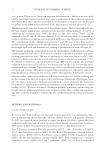
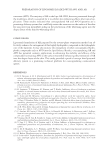
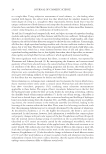
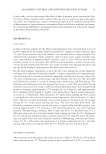
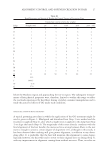
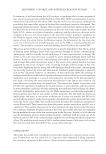
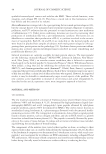
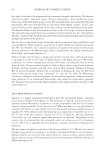
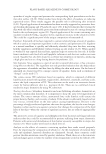
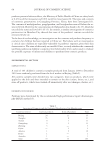
JOURNAL OF COSMETIC SCIENCE 68 parabens potential adverse effects, the Ministry of Public Health of China set safety levels at 0.4% (acid) for monoester and 0.8% (acid) for mixed esters (8). The types and contents of cosmetics preservatives in Guangdong Province, China, have been investigated (3). The contents of methylparaben, propylparaben, and butylparaben were all below the re- stricted levels. However, the concentration of ethylparaben was found to be 2%, which far exceeded the restricted level of 0.4% (3). In contrast, a similar investigation of cosmetics preservatives in Shenzhen City showed that none of the parabens’ content exceeded the restricted levels (4). To the best of our knowledge, no investigation on the contents and parabens frequency in cosmetics for children has been reported in China yet. We believe such an investigation is critical since children are especially vulnerable to parabens’ exposure given their skin characteristics. The aims of this study are twofold: First, to study whether the commonly used four parabens in children’s cosmetics were below safety level, and second, to evaluate the possible exposure of infants and children to parabens from cosmetic products. EXPERIMENTAL SECTION SAMPLES SOURCE A total of 105 children’s cosmetics samples produced from January 2009 to December 2010 were randomly purchased from the local market in Beijing (Table I). All cosmetic samples were divided into two categories: leave-on products, which were applied to the skin and then intended to remain on the skin (cream, lotion, etc.), and rinse-off products, which were washed off immediately after use (shampoo, shower, etc.). DETERMINATION METHOD Parabens were determined by the recommended high-performance liquid chromatogra- phy (HPLC) method (5). Table I Investigated Cosmetics and the Geological Distribution of the Manufacturers Country or district Leave-on products Rinse-off products Total Beijing 24 11 35 Shanghai 23 8 31 Tianjin 8 3 11 Guangdong 9 2 11 Zhejiang 3 — 3 Fujian — 2 2 America 1 9 10 France 1 — 1 Australia 1 — 1 Total 70 35 105

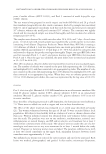
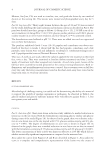
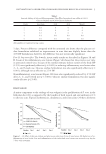
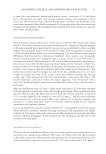
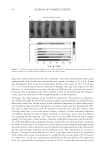
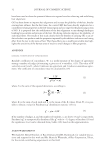
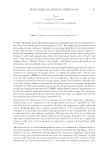
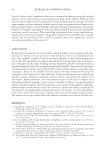
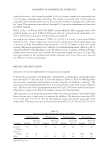
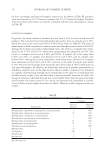
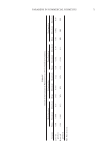
PARABENS IN COMMERCIAL COSMETICS 69 Sample pretreatment. An accurately weighed 1.00 g of cosmetic sample was transferred into a 10-ml glass centrifuge tube with plug. The sample was mixed with 10-ml methanol and subjected to ultrasound for 10 min. The solution was then centrifuged at 12,000 rpm for 5 min. The supernatant was fi ltered through 0.45 μm nylon membrane and then used for HPLC analysis. HPLC analysis. A Waters 2695-996 HPLC system (Milford, MA) equipped with a 600 gradient pump was used. A Waters Empower software workstation for instrument con- trol as well as data acquisition and processing was applied. An analytical column of Inertsil® ODS-3 C18 (250 × 4.6 mm, 5 μm) from Dikma (GL Science Inc. Tokyo, Japan) was used at room temperature. The mobile phase was a mixture of V(A):V(methanol):V(ac etonitrile) = 50:35:15 (where A was 0.05 mol/l sodium dihydrogen phosphate and 2 mmol/l cetyltrimethylammonium chloride, pH 3.5 adjusted with 85% orthophosphoric acid). The fl ow rate was 1.5 ml/min. A Waters 996 pho- todiode array detector was used, and the detection wavelength was set at 254 nm. The injection volume of the standard and sample solutions was 10 μl. They were injected by a Waters 717 plus autosampler. RESULTS AND DISCUSSION FREQUENCY OF USE OF PRESERVATIVES IN COSMETICS FOR CHILDREN In this study, four parabens (methylparaben, ethylparaben, propylparaben, and butylparaben) were detected in 70 leave-on and 35 rinse-off samples as shown in Table II. Methylparaben was the most commonly used paraben in both categories of children’s cosmetics. The detection rate of methylparaben was 93% in leave-on products and 46% in rinse-off prod- ucts. The detection rates of propylparaben were 69% and 43% for the leave-on and rinse- off products, respectively. Rinse-off samples contained no butylparaben. The frequencies of using mixed esters (more than two kinds of parabens) were higher than those of using only a single ester in cosmetics for children. The detection rates were 69% (72 of 105) and 17% (18 of 105) for the products using mixed esters and single ester, respectively. The detection rates of mixed esters were 89% (62 of 70) and 29% (10 of 35) Table II Frequency of Using Parabens in Cosmetics for Children Category Methylparaben Ethylparaben Propylparaben Butylparaben Number Detection rate (%) Number Detection rate (%) Number Detection rate (%) Number Detection rate (%) Leave-on products 65 93 30 43 48 69 11 16 Rinse-off products 16 46 1 3 15 43 ND ND Total 81 77 31 30 63 60 11 10 ND: Not detected.
Purchased for the exclusive use of nofirst nolast (unknown)
From: SCC Media Library & Resource Center (library.scconline.org)