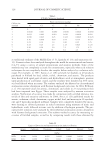
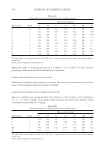
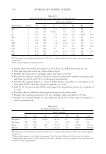
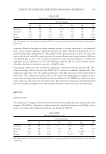
JOURNAL OF COSMETIC SCIENCE 142 Table XXVIII. Face Paint Summary (n = 10) Results (mg/kg) As Cd Cr Co Pb Hg Ni Maximum 1.40 0.15 15000 10 4.0 0.0040 24 Minimum TR NF 0.26 0.092 0.24 NF 0.17 Mean 0.42 0.02 1600 1.4 1.0 NF 4.7 Median 0.28 NF 2.7 0.36 0.44 NF 1.3 NF: Not found, or less than detection limit TR: Trace, or greater than detection limit, but less than quanti- tation level. Table XXIX. All Cosmetic Categories Summary Results (mg/kg) As Cd* Cr Co Pb Hg Ni Maximum 1.7 1.20(0.36) 22000 64(14) 14 0.06 1600(42) Minimum NF NF NF NF NF NF NF 95th percentile 0.95 0.067(0.062) 46 7.7(7.2) 6.9 0.010 18(18) Mean 0.33 0.020(0.012) 300 2.2(1.8) 2.1 NF 16(5.5) Median 0.21 NF 3.1 0.91(0.91) 0.85 NF 2.7(2.7) NF: Not found, or less than detection limit TR: Trace, or greater than detection limit, but less than quanti- tation level. *Signifi cantly high values for Cd, Co, and Ni were removed for the calculated values in parentheses. an eye shadow, 14 mg/kg for lead in a blush, 0.060 mg/kg mercury in a mascara, and 42 mg/kg for nickel in an eye shadow. High values for cadmium (1.2 mg/kg), cobalt (64 mg/kg), and nickel (1600 mg/kg) were identifi ed as outliers, as described below. Overall, cosmetic products were found to contain median values of 0.21 mg/kg arsenic, 3.1 mg/kg chromium, 0.91 mg/kg cobalt, 0.85 mg/kg lead, and 2.7 mg/kg nickel. Me- dian values of cadmium and mercury were below the limits of detection of the methods. Median values for each element give a better indication of typical amounts than the mean values because a few samples had results that were very different from the mean values. The most prominent result is the high value for chromium in one eye shadow. Cosmetic products can be divided into those with chromium present at low mg/kg levels as a con- taminant and those with chromium present at percent levels from use of chromium-based pigments as ingredients. “Chromium oxide greens” and “chromium hydroxide greens” are permitted color additives in cosmetics. Eye shadows and face paints contain the high- est levels of chromium (approximately 2%) and blushes contain elevated levels (approxi- mately 0.5%), not surprisingly because green pigments are likely to be used in these products. In other products, chromium content is less than 20 mg/kg. Cobalt and nickel values were found at higher levels in eye shadows, blushes, and com- pact powders than in the other cosmetic types. A t-test comparing the mean cobalt values for the group of data from eye shadows, blushes, and compact powders with the mean for values from the remaining nine cosmetic groups indicated the difference to be statistically

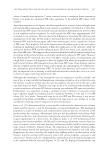
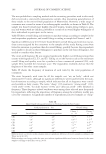
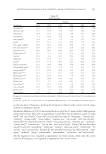
SURVEY OF COSMETICS FOR SEVEN INORGANIC ELEMENTS 143 signifi cant (p 0.0001). A similar comparison of mean nickel values also showed the means for eye shadows, blushes, and compact powders to be signifi cantly different (p 0.0001). One eye shadow contained a value of cobalt (64 mg/kg) that was about 10 times higher than the other eye shadows and a value of nickel (1600 mg/kg) that was about 100 times higher. A qualitative x-ray fl uorescence scan of the tray holding the eye shadow did not fi nd cobalt and nickel, suggesting that the cosmetic itself was the source of the met- als. It was unclear whether this sample was contaminated, so another portion was ana- lyzed for cobalt and nickel, and the original results were reproduced. Both of the high values were identifi ed as outliers by the Grubbs test at a signifi cance of p = 0.05 and were rejected from the t-tests. Summary results are reported both with and without the high cobalt and nickel values for that eye shadow. The mean arsenic values are 0.2 mg/kg or less in lotions and shaving creams, and the mean values are signifi cantly higher in eye shadows, blushes, and compact powders than in all of the other products (t-test, p 0.0001). The arsenic results exhibit large differ- ences between median and mean values, with the median lower than the mean, indicating that only a few samples have relatively higher elemental content. The median values for lead in eye shadows, blushes, and compact powders were each 3 mg/kg or greater. Lipsticks and foundations had median values under 1 mg/kg, and the other products were less than 0.5 mg/kg. A few of the face paints had relatively higher lead content as underscored by the difference in median and mean. Signifi cantly higher lead values again were obtained from eye shadows, blushes, and compact powders com- pared to the other products, as verifi ed by a t-test (p 0.0001). Both cadmium and mercury were found near or below their respective LODs, except that one blush contained 1.2 mg/kg cadmium, approximately 10 times higher than in other blushes. This value was identifi ed as an outlier using the Grubbs test at a signifi cance of p = 0.05, and the tables report results with and without this value. FDA limits the level of mercury to less than 1 ppm (1 mg/kg) in most cosmetics and none of the products examined exceeded that limit. The amounts we found for each element are generally in the same order of magnitude as results reported by other researchers. Most of the studies to which we compared our data either analyzed the total sample by a solid technique, such as neutron activation analysis, or used a total dissolution technique similar to ours, incorporating hydrofl uoric acid. Some studies, however, noted that fi ltering was required after digestion, indicating that some solid material was not completely dissolved. It is possible, in those instances, that some pre- cipitated metal fl uorides were not analyzed, which would have produced low values. Our signifi cantly higher values for arsenic, cobalt, lead, and nickel in eye shadows, blushes, and compact powders, when compared with other cosmetic types, were found in products with high solid fi ller (such as clay or talc) and pigment content, suggesting that the contaminants may originate in the mineral components. CONCLUSIONS We report total amounts of arsenic, cadmium, chromium, cobalt, lead, mercury, and nickel in 150 cosmetic products of 12 types sold on the U.S. market. The data from our broad survey of cosmetics marketed in the United States are consistent with data from
Purchased for the exclusive use of nofirst nolast (unknown)
From: SCC Media Library & Resource Center (library.scconline.org)