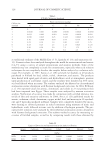
JOURNAL OF COSMETIC SCIENCE 144 other reports of more limited scope and from various other western markets. We found that cosmetics with solid fi ller content, such as eye shadows, blushes, and compact powders, contained relatively more elemental contaminants than the other cosmetic types, suggesting that the contaminants originate from minerals that are used as solid fillers as well as pigments in these products. The information in this study will help FDA and others make appropriate decisions regarding elemental contaminants in cosmetics. ACKNOWLEDGMENTS We appreciate the assistance of Patrick Garcia and all the laboratory analysts at Frontier Global Sciences, Inc. REFERENCES (1) U.S. Department of Health and Human Services, Public Health Service, Agency for Toxic Substances and Disease Registry, ToxFAQs: Arsenic, Cadmium, Chromium, Cobalt, Lead, Mercury, and Nickel, accessed September 16, 2013, http://www.atsdr.cdc.gov/toxprofi les/index.asp (2) Code of Federal Regulations (2012) Title 21 (U.S. Government Printing Offi ce, Washington, DC), Parts 73, 74, and 82 and Section 700.13. (3) A. F. M. Y. Haider, R. S. Lubna, and K. M. Abedin, Elemental analyses and determination of lead con- tent in kohl (stone) by laser-induced breakdown spectroscopy, Appl. Spectros., 66, 420–425 (2012). (4) O. Al-Dayel, J. Hefne, T. Al-Ajyan, and A. Al-Drahim, Determination of heavy metals in eyeliner, kohl samples, Asian J. Chem., 23, 3408–3412 (2011). (5) R. M. Al-Ashban, M. Aslam, and A. H. Shah, Kohl (surma): A toxic traditional eye cosmetic study in Saudi Arabia, Public Health, 118, 292–298 (2004). (6) N. M. Hepp, W. R. Mindak, and J. Cheng, Determination of total lead in lipstick: Development and validation of a microwave-assisted digestion, inductively coupled plasma-mass spectrometric method, J. Cosmet. Sci., 60, 405–414 (2009). (7) N. M. Hepp, Determination of total lead in 400 lipsticks on the U.S. market using a validated micro- wave-assisted digestion, inductively coupled plasma-mass spectrometric method, J. Cosmet. Sci., 63, 159–176 (2012). (8) P. Atkins, H. Lang, W. Driscoll, and L. Ernyei, Analysis of lipstick for toxic elements using ICP-MS, 2011 Pittsburgh Conference on Analytical Chemistry and Applied Spectroscopy, Atlanta, Georgia, March 13–18, 2011 (poster presentation). (9) P. Piccinini, M. Piecha, and S. F. Torrent, European survey on the content of lead in lip products, J. Pharm. Biomed. Anal., 76, 225–233 (2013). (10) I. Al-Saleh and S. Al-Enazi, Trace metals in lipsticks, Tox. Environ. Chem., 93, 1149–1165 (2011). (11) F. L. Melquiades, C. R. Appoloni, A. S. G. Lonni, D. D. Ferreira, and F. Lopes, Determination of inor- ganic elements in sunscreen by using energy dispersive x-ray fl uorescence, Latin Am. J. Pharm., 29, 1000–1003 (2010). (12) G. A. Zachariadis and E. Sahanidou, Multi-element method for determination of trace elements in sunscreens by ICP-AES, J. Pharm. Biomed. Anal., 50, 342–348 (2009). (13) N. Maleki, A. Safavi, and M. M. Doroodmand, Solid reagents for hydride generation atomic absorption spectrometric determination of inorganic arsenic species in environmental water and cosmetic products, Chem. Anal. (Warsaw), 54, 1285–1295 (2009). (14) C. Zemba, C. Romaguera, and J. Vilaplana, Allergic contact dermatitis from nickel in an eye pencil, Contact Dermatitis, 27, 116 (1992). (15) I. Al-Saleh, S. Al-Enazi, and N. Shinwari, Assessment of lead in cosmetic products, Reg. Tox. Pharm., 54, 105–113 (2009). (16) N. M. Najafi , A. M. Bagheri, E. Ghasemi, and R. Alizadeh, Chemical analysis of some cosmetics, detergent and pharmaceutical minerals used in traditional medicine of Iran, Asian J. Chem., 23, 199–202 (2011).

SURVEY OF COSMETICS FOR SEVEN INORGANIC ELEMENTS 145 (17) T. Amemiya, K. Itoh, S. Suzuki, and Y. Watanabe, Contents of nickel and cobalt in cosmetics, Tokyo- toritsu Eisei Kenkyusho Kenkyu Nenpo, 41, 75–77 (1991). (18) M. G. Volpe, M. Nazzaro, R. Coppola, F. Rapuano, and R. P. Aquino, Determination and assessments of selected heavy metals in eye shadow cosmetics from China, Italy, and USA, Microchem. J., 101, 65–69 (2012). (19) N.-R. Cha, J.-K. Lee, Y.-R. Lee, H.-J. Jeong, H.-K. Kim, and S.-Y. Lee, Determination of iron, copper, zinc, lead, nickel and cadmium in cosmetic matrices by fl ame atomic absorption spectroscopy, Anal. Lett., 43, 259-268 (2010). (20) E. K. Kang, S. Lee, J.-H. Park, K.-M. Joo, H.-J. Jeong, and I. S. Chang, Determination of hexavalent chromium in cosmetic products by ion chromatography and postcolumn derivatization, Contact Derma- titis, 54, 244–248 (2006). (21) G. D. Kanias, Determination of trace elements in eye shadow face powder and rouge make-up cosmetics by neutron activation analysis, J. Rad. Nucl. Chem., 89, 487–496 (1985). (22) W. G. van Ketel and D. H. Liem, Eyelid dermatitis from nickel contaminated cosmetics, Contact Der- matitis 7, 217 (1981). (23) V. L. Atz and D. Pozebon, Graphite furnace atomic absorption spectrometry (GFAAS) methodology for trace element determination in eye shadow and lipstick, Atomic Spectroscopy, 30, 82–91 (2009). (24) J. A. Omolaoye, A. Uzairu, and C. E. Gimba, Heavy metal assessment of some eye shadow products imported into Nigeria from China, Arch. Appl. Sci. Res., 2, 76–84 (2010). (25) M. Aslam, S. S. Davis, and M. A. Healy, Heavy metals in some Asian medicines and cosmetics, Public Health, 93, 274–284 (1979). (26) Environmental Defence (Canada), Heavy Metal Hazard: The Health Risks of Hidden Heavy Metals in Face Makeup, May 2011, accessed September 16, 2013, http://environmentaldefence.ca/reports/heavy-metal- hazard-health-risks-hidden-heavy-metals-in-face-makeup (27) G. D. Kanias, Instrumental neutron activation analysis of iron and zinc in compact cosmetic products, Fresenius Z. Anal. Chem., 327, 351–354 (1987). (28) M. Corazza, F. Baldo, A. Pagnoni, R. Miscioscia, and A. Virgili, Measurement of nickel, cobalt and chromium in toy make-up by atomic absorption spectroscopy, Acta Derm. Venereol., 89, 130–133 (2009). (29) E.-L. Sainio, R. Jolanki, E. Hakala, and L. Kanerva, Metals and arsenic in eye shadows, Contact Derma- titis, 42, 5–10 (2000). (30) S.-M. Lee, H.-J. Jeong, and I. S. Chang, Simultaneous determination of heavy metals in cosmetic prod- ucts, J. Cosmet. Sci., 59, 441–448 (2008). (31) E. A. A. El-Shazly, Sh. F. Abo Zahra, F. H. El-Sweify, and G. D. Kanias, Simultaneous multi-element determination in some cosmetic samples of different origins using neutron activation analysis, Radio- chim. Acta, 92, 111–117 (2004). (32) L. Sneyers, L. Verheyen, P. Vermaercke, and M. Bruggeman, Trace element determination in beauty products by k0-instrumental neutron activation analysis, J. Radioanal. Nucl. Chem., 281, 259–263 (2009). (33) I. C. Nnorom, J. C. Igwe, and C. G. Oji-Nnorom, Trace metal contents of facial (make-up) cosmetics commonly used in Nigeria, African J. Biotech., 4, 1133–1138 (2005). (34) U.S. Food and Drug Administration, FDA Alerts Consumers to Recall of Water-Based Face Paints, May 12, 2009, accessed September 16, 2013, http://www.fda.gov/NewsEvents/Newsroom/PressAnnouncements/ ucm152301.htm (35) U.S. Food and Drug Administration, Rose Art Industries, Inc., Issues Alert and Voluntary Recall on Certain Face Paints, March 25, 2005, accessed September 16, 2013, http://www.fda.gov/safety/recalls/archiv- erecalls/2005/ucm111786.htm (36) Campaign for Safe Cosmetics, Pretty Scary: Could Halloween Face Paint Cause Lifelong Health Problems? October 27, 2009, accessed September 16, 2013, http://safecosmetics.org/article.php?id=584
Purchased for the exclusive use of nofirst nolast (unknown)
From: SCC Media Library & Resource Center (library.scconline.org)