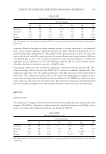
JOURNAL OF COSMETIC SCIENCE 148 method due to the limitation of measurement techniques (12). In 2011, Cosmetics Eu- rope, formerly known as COLIPA, provided guidelines for an in vitro method for the de- termination of the UVA protection factor and critical wavelength values for sunscreen products using PMMA plates (polymethylmethacrylate) as a substrate for applying the tested sunscreen product (13,14). However, in the case of having limitation on the assess- ment of SPF and PA values using the standard guidelines, in vitro preliminary screening of processing variables in an earlier stage of sunscreen formulations such as sun protection effi cacy using UV spectrophotometer appears to be practical. Moreover, the physical properties measurements, texture profi les, and stability studies should be simple, rapid, and reproducible, and provide important information before proceeding to the in vivo test, which is very expensive, time-consuming, and prone to having risks related to UV ex- posure of human volunteers. In addition, the relationship between the product texture measurement and sensory skin perception may be useful to predict consumer responses. In this study, although in vitro SPF testing methods demonstrated that the in vitro SPF values underestimated the in vivo SPF values, using a linear regression equation for the relationship between labeled SPF value and calculated SPF by UV transmission spectros- copy appears to be simple and directly proportional to the in vivo SPF values (15). More- over, texture analysis may also be used for product characterization and stability evaluation. Many studies have demonstrated that there is a relationship between sensory and instru- mental texture profi les in some aspects of food and cosmetic emulsions (16–20). As a re- sult, a correlation between physical measurements and certain sensory attributes of the semi-solid products can be useful for a fast in-line screening study. The aim of this study was to investigate factors affecting SPF and PA values of sunscreen formulations and their texture profi les. The SPF and PA values of the formulation were carried out using UV transmission spectroscopy. MATERIALS AND METHODS MATERIALS Titanium dioxide (and) diethylhexyl carbonate (and) polyglyceryl-6 polyhydroxystearate was a gift from Evonic, Bangkok, Thailand. C12-15 Alkyl benzoate (and) dipropylene glycol dibenzoate (and) PPG-15 stearyl ether benzoate and other ingredients at cosmetic grade were purchased from Numsieng, Bangkok, Thailand. Two standard sunscreen products, which were the standard homosalate sunscreen (8%) with the mean SPF value of 4.47 and the high standard SPF value of 15, were prepared according to the recom- mendation of theUnited States Food and Drug Administration (FDA) (21) and COLIPA (22), respectively. The international counter-brand sunscreen products were purchased from a drug store. METHODS Factorial design experiments. Sunscreen formulations were prepared based on 23 factorial designs. The following three factors were investigated: (i) oil to water phase volume ratio (PVR), concentrations of (ii) Xanthan gum, and (iii) stearic acid. Their levels are shown

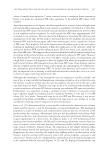
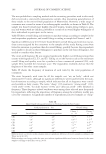
FACTORS AFFECTING SPF AND PA VALUES OF SUNSCREEN CREAM FORMULATIONS 149 in Table I. The response parameters are calculated SPF and PA values as well as texture profi les of the developed formulations. Formulations and preparation of sunscreen products. The ingredients of sunscreen formulations (F1–F8) in Table II were prepared based on a 23 factorial design layout shown in Table III. The center point of each factor was presented in F9. The oil phase containing octylmeth- ylcinnamate, titanium dioxide (and) diethylhexyl carbonate (and) polyglyceryl-6 polyhy- droxystearate, light mineral oil, stearic acid, C12-15 alkyl benzoate (and) dipropylene glycol dibenzoate (and) PPG-15 stearyl ether benzoate, Span 80, and butylated hydroxy toluene were mixed and heated in a water bath to 70°C. The water phase containing Table I Factorial Design Parameters and Experimental Conditions Factors Levels Low (−) High (+) (A) Phase volume ratio (oil:water) 25:75 30:70 (B) Xanthan gum 0% 0.30% (C) Stearic acid 3% 5% Table II Ingredients of Sunscreen Formulations Based on 23 Factorial Design F1 F2 F3 F4 F5 F6 F7 F8 F9 Octylmethoxycinnamate 7 7 7 7 7 7 7 7 7 Titanium dioxide (and) diethylhexyl carbonate (and) polyglyceryl-6 polyhydroxystearate 10 10 10 10 10 10 10 10 10 Mineral oil 2.5 7.5 2.5 7.5 0.5 5.5 0.5 5.5 4 Stearic acid 3 3 3 3 5 5 5 5 4 C12-15 alkyl benzoate (and) dipropylene glycol dibenzoate (and) PPG-15 stearyl ether benzoate 2 2 2 2 2 2 2 2 2 Vitamin E acetate 0.5 0.5 0.5 0.5 0.5 0.5 0.5 0.5 0.5 Span 80 2.5 2.5 2.5 2.5 2.5 2.5 2.5 2.5 2.5 Propylene glycol 3 3 3 3 3 3 3 3 3 Cabopol 940 0.2 0.2 0.2 0.2 0.2 0.2 0.2 0.2 0.2 Xanthan gum — — 0.3 0.3 — — 0.3 0.3 0.15 Triethanolamine 0.6 0.6 0.6 0.6 0.6 0.6 0.6 0.6 0.6 BHT 0.1 0.1 0.1 0.1 0.1 0.1 0.1 0.1 0.1 EDTA 0.1 0.1 0.1 0.1 0.1 0.1 0.1 0.1 0.1 Tween 80 2.5 2.5 2.5 2.5 2.5 2.5 2.5 2.5 2.5 Propylene glycol (and) diazolidinyl urea (and) methylparaben (and) propylparaben 1 1 1 1 1 1 1 1 1 Purifi ed Water qs to 100 100 100 100 100 100 100 100 100
Purchased for the exclusive use of nofirst nolast (unknown)
From: SCC Media Library & Resource Center (library.scconline.org)