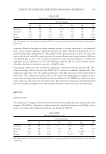
J. Cosmet. Sci., 65, 161–173 (May/June 2014) 161 Selection of fragrance for cosmetic cream containing olive oil MARÍA EMMA PARENTE, ADRIANA GÁMBARO, LUCÍA BOINBASER, and ANTONELLA ROASCIO, Cátedra de Química Cosmética (M.E.P., L.B.), and Sección Evaluación Sensorial (A.G., A.R.), Facultad de Química, Universidad de la República, C.P.11800, Montevideo, Uruguay. Accepted for publication March 10, 2014. Synopsis Perceptions of essences for potential use in the development of a line of cosmetic emulsions containing olive oil were studied. Six cream samples prepared with six essences selected in a preliminary study were evaluated for overall liking and intention to purchase by a 63-women sample. A check-all-that-apply (CATA) question consisting of 32 terms was used to gather information about consumer perceptions of fragrance, affective as- sociations, effects on the skin, price, target market, zones of application, and occasions of use. Hierarchical cluster analysis led to the identifi cation of two consumer clusters with different frequency of use of face creams. The two clusters assigned different overall liking scores to the samples and used the CATA terms differently to describe them. A fragrance with jasmine as its principal note was selected for further develop- ment of cosmetic creams, as it was awarded the highest overall liking scores by respondents of the two clus- ters, and was signifi cantly associated with cosmetic features including nourishing, moisturizing, softening, with a delicious and mild smell, and with a natural image, as well as being considered suitable for face and body creams. The use of CATA questions enabled the rapid identifi cation of attributes associated by respon- dents with a cosmetic cream’s fragrance, in addition to contributing relevant information for the defi nition of marketing and communication strategies. INTRODUCTION The term “fragrance” denotes a scent or essence included in a cosmetic formulation for the purpose of prompting a pleasing reaction in the target consumer. A cosmetic product’s fragrance is intimately associated with its acceptance by consumers, in a manner related to cultural, affective, socioeconomic, age- and gender-related variables, among others (1,2). A product’s fragrance is strongly related to its potential attractiveness and has been attributed a decisive role in selection between otherwise similar products (3,4). Fragrances can be used to emphasize the presence of particular ingredients, but must be compat- ible with the use of other product constituents and effectively contribute to the overall marketing mix (5,6). A fragrance can be used in a cosmetic product to suggest the Address all correspondence to María Emma Parente at eparente@fq.edu.uy.
Purchased for the exclusive use of nofirst nolast (unknown)
From: SCC Media Library & Resource Center (library.scconline.org)