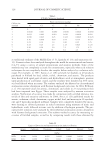
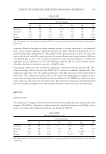
JOURNAL OF COSMETIC SCIENCE 158 compressibility and hardness of F8 was found to be the highest and F1 was the lowest. These might be due to an interaction between xanthan gum and stearic acid causing a signifi cant lowering of the compressibility, hardness, and adhesiveness as well as the SPF value of the formulation (Table VI). In conclusion, in vitro SPF testing using UV transmission spectroscopy shows a good cor- relation with the labeled SPF values of counter-brand sunscreen products. According to the sunscreen product development, the in vitro SPF testing of the formulation showed the calculated SPF values ranging from 21 to 60. However, care should be taken when using Transpore® tape as a substrate for sunscreen in vitro studies due to some limita- tions. However, a selected formulation needs to be confi rmed by a standard method of testing. In addition, the physical, chemical, and biological stability shelf life and sen- sory evaluation of all formulations need to be evaluated. ACKNOWLEDGMENTS The authors are thankful to Mr. Warodom Khemtong and Mr. Wachira Keachaiwee for their technical assistance and the fi nancial support from the Faculty of Pharmaceutical Sciences, Khon Kaen University, Thailand. REFERENCES (1) H. Bendová, J. Akrman, A. Krejcí, L. Kubác, D. Jírová, K. Kejlová, H. Kolárová, M. Brabec, and M. Malý, In vitro approaches to evaluation of sun protection factor, Toxicol. In Vitro., 21, 1268–1275 (2007). (2) B. Herzog, S. Mongiat, C. Deshayes, M. Neuhaus, K. Sommer, and A. Mantler, In vivo and in vitro as- sessment of UVA protection by sunscreen formulations containing either butyl methoxy dibenzoyl methane, methylene bis-benzotriazolyl tetramethylbutylphenol, or microfi ne ZnO, Int. J. Cosmet. Sci., 24, 170–185 (2002). (3) P. J. Matts, V. Alard, M. W. Brown, L. Ferrero, H. Gers-Barlag, N. Issachar, D. Moyal, and R. Wolber, The COLIPA in vitro UVA method: A standard and reproducible measure of sunscreen UVA protection, Int. J. Cosmet. Sci., 32, 35–46 (2010). (4) M. D. Bleasel and S. Aldous, In vitro evaluation of sun protection factors of sunscreen agents using a novel UV spectrophotometric technique, Int. J. Cosmet. Sci., 30, 259–270 (2008). (5) B. Diffey, A method for broad spectrum classifi cation of sunscreens. Int. J. Cosmet. Sci., 16, 47–52 (1994). (6) B. L. Diffey and J. Robson, A new substrate to measure sunscreen protection factors throughout the ultraviolet spectrum, J. Soc. Cosmet. Chem., 40, 127–133 (1989). (7) J. Ferguson, M. Brown, A. Hubbard, and M. Shaw, Determination of sun protection factors: Correlation between in vivo human studies and in vitro skin cast method, Int. J. Cosmet. Sci., 10, 117–129 (1988). (8) L. Ferrero, M. Pissavini, S. Marguerie, and L. Zastrow, Sunscreen in vitro spectroscopy: Application to UVA protection assessment and correlation with in vivo persistent pigment darkening, Int. J. Cosmet. Sci., 24, 63–70 (2002). (9) K. Kelley, P. Laskar, G. Ewing, S. Dromgoole, J. Lichtin, and A. Sakr, In vitro sun protection factor evaluation of sunscreen products, J. Soc. Cosmet. Chem., 44, 139–151 (1993). (10) R. M. Sayre, P. P. Agin, G. J. LeVee, and E. Marlow, A comparison of in vivo and in vitro testing of sun- screening formulas, Photochem. Photobiol., 29, 559–566 (1979). (11) S. Scalia, M. Mezzena, and A. Bianchi, Comparative evaluation of different substrates for the in vitro determination of sunscreen photostability: Spectrophotometric and HPLC analyses, Int. J. Cosmet. Sci., 32, 55–64 (2010). (12) M. Rohr, E. Klette, S. Ruppert, R. Bimzcok, B. Klebon, U. Heinrich, H. Tronnier, W. Johncock, S. Peters, F. Pfl ücker, T. Rudolph, H. Flösser-Müller, K. Jenni, D. Kockott, J. Lademann, B. Herzog, S. Bielfeldt, C. Mendrok-Edinger, C. Hanay, and L. Zastrow, In vitro sun protection factor: Still a challenge with no fi nal answer, Skin Pharmacol. Physiol., 23, 201–212 (2010).

FACTORS AFFECTING SPF AND PA VALUES OF SUNSCREEN CREAM FORMULATIONS 159 (13) COLIPA, In vitro method for the determination of the UVA protection factor and critical wavelength values of sunscreen products, (2011). (14) COLIPA, Method for the in vitro determination of UVA protection provided by sunscreen products, (2007). (15) M. Sheu, C. Lin, M. Huang, C. Shen, and H. Ho, Correlation of in vivo and in vitro measurements of sun protection factor, J. Food Drug Anal., 11, 128–132 (2003). (16) D. S. Jones, M. S. Lawlor, and A. D. Woolfson, Examination of the fl ow rheological and textural proper- ties of polymer gels composed of poly(methylvinylether-co-maleic anhydride) and poly(vinylpyrrolidone): Rheological and mathematical interpretation of textural parameters, J. Pharm. Sci., 91, 2090–2101 (2002). (17) D. S. Jones, A. D. Woolfson, and A. F. Brown, Texture analysis and fl ow rheometry of novel, bioadhesive antimicrobial oral gels, Pharm. Res., 14, 450–457 (1997). (18) T. Kealy, Application of liquid and solid rheological technologies to the textural characterisation of semi-solid foods, Food Res. Int., 39, 265–276 (2006). (19) M. Lukic, I. Jaksic, V. Krstonosic, N. Cekic, and S. Savic, A combined approach in characterization of an effective w/o hand cream: the infl uence of emollient on textural, sensorial and in vivo skin perfor- mance, Int. J. Cosmet. Sci., 34, 140–149 (2012). (20) S. Tamburi, Combining instrumental and sensory evaluation to assess application characteristics of sk- incare emulsions, 5th World Congress on Emulsions, Lyon, France, October 12–14, 2010. (21) Sunscreen drug products for over-the-counter human use, Federal Register, Vol. 76, 35620–35665 (2011). (22) COLIPA, Method for testing effi cacy of sunscreen products, Annex 1: Determination of the sun protec- tion factor (2006). (23) A. F. McKinlay and B. L. Diffey, A reference action spectrum for ultraviolet induced erythrema in hu- man skin, CIE Journal, 6, 17–22 (1987). (24) M. Pissavini and L. Ferrero, Determination of the in vitro SPF. Cosmet. Toiletr., 118, 64–72 (2003). (25) D.R. Sambandan and D. Ratner, Sunscreens: An overview and update. J. Am. Acad. Dermatol., 64, 748–758 (2011). (26) J. Schulz, H. Hohenberg, F. Pfl ücker, E. Gärtner, T. Will, S. Pfeiffer, R. Wepf, V. Wendel, H. Gers-Barlag, and K. P. Wittern, Distribution of sunscreens on skin, Adv. Drug Deliv. Rev., 54, Supplement, S157– S163 (2002). (27) S. A. Wissing and R. H. Müller, The development of an improved carrier system for sunscreen formula- tions based on crystalline lipid nanoparticles, Int. J. Pharm., 242, 373–375 (2002). (28) P. Severino, S. Pinho, E. Souto, and M. Santana, Polymorphism, crystallinity and hydrophilic–lipophilic balance of stearic acid and stearic acid–capric/caprylic triglyceride matrices for production of stable nanoparticles, Colloids Surf. B Biointerfaces., 86, 125–130 (2011). (29) Labsphere Inc., SPF Analysis of Sunscreens—Technical Note, 2006 http://www.labsphere.com, accessed date: Mar 25, 2013.
Purchased for the exclusive use of nofirst nolast (unknown)
From: SCC Media Library & Resource Center (library.scconline.org)