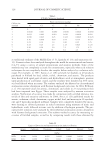
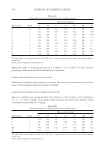
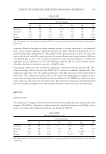
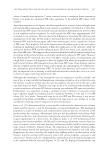
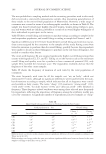
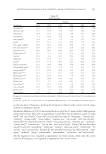
JOURNAL OF COSMETIC SCIENCE 184 DISCUSSION In summary, a novel series of cyclohexane diester derivatives and benzene diester derivatives were prepared and evaluated for the ability to inhibit mushroom tyrosi- nase and melanin production in B16F10 mouse melanoma cells and were assessed for their structure–cytotoxicity relationships. From the structure–cytotoxicity point of view, it was demonstrated that the binding location of diesters (i.e., 1,2-, 1,3-, 1,4-), change in the carbon number of the side chain, and the difference between the linear and branch types were essential variables for determining cytotoxicity. The melanin inhibitory activities of cyclohexane-1,3-diyl bis(decanoate) (1i), cyclohexane-1,4- diyl dioctanoate (1m), and 1,3-phenylene bis(2-ethylhexanoate) (2j)—having low cytotoxicity while showing whitening effects—were measured at 479.3 ± 1.3 μM, 497.9 ± 3.8 μM, and 474.7 ± 9.4 μM, respectively their potential as whitening agents were further verifi ed using Western blotting and RT-PCR. Figure 2. Effects of cyclohexane diester derivatives (1i, 1m) and benzene diester derivative (2j) on expression of mRNA involved in pigmentation in B16F10 cells. (A) 1i, (B) 1m, and (C) 2j. Figure 3. Docking with arbutin and benzene diester derivative (2j) on human tyrosinase. (A) Arbutin dock- ing, (B) 2j docking, (C) cartoon ligand, and (D) surface ligand.

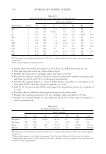
EFFECT OF CYCLOHEXANE AND BENZENE DIESTER ON MELANOGENESIS 185 In addition, through the use of a human tyrosinase inhibitor model for structure-based drug design, the inhibitory action of benzene diester derivative 2j on human tyrosinase was estab- lished, and thereby the whitening mechanism was also identifi ed. Similar studies on potential whitening agents other than 2j will be undertaken to identify their specifi c whitening mecha- nism. In fact, some of them are currently being tested in-vivo for whitening effects. This study on change in cytotoxicity and whitening effects deriving from the structural changes of wide-ranging compounds will contribute to future research on new non-toxic whitening agents. ACKNOWLEDGMENTS This study has been sponsored by the Chungcheonbuk-Do Regional Industry R&D Project (A001100495) in the Republic of Korea. REFERENCES (1) V. J. Hearing, Biogenesis of pigment granules: A sensitive way to regulate melanocyte function, J. Dermatol. Sci., 37, 3–14 (2005). (2) H. Ando, M. S. Matsui, and M. Ichihashi, Quasi-drugs developed in Japan for the prevention or treatment of hyperpigmentary disorders, Int. J. Mol. Sci., 22, 2566–2575 (2010). (3) V. M. Virador, N. Kobayashi, J. Matsunaga, and V. J. Hearing, A standardized protocol for assessing regula- tors of pigmentation, Anal. Biochem., 270, 207–219 (1999). (4) E. J. Land, C. A. Ramsden, and P. A. Riley, The mechanism of suicide-inactivation of tyrosinase: A substrate structure investigation, J. Exp. Med., 212, 341–348 (2007). Figure 4. Binding position of arbutin and benzene diester derivative (2j) on human tyrosinase. (A) Arbutin and (B) 2j.
Purchased for the exclusive use of nofirst nolast (unknown)
From: SCC Media Library & Resource Center (library.scconline.org)